The Pro’s and Con’s of Installing a Smart Thermostat
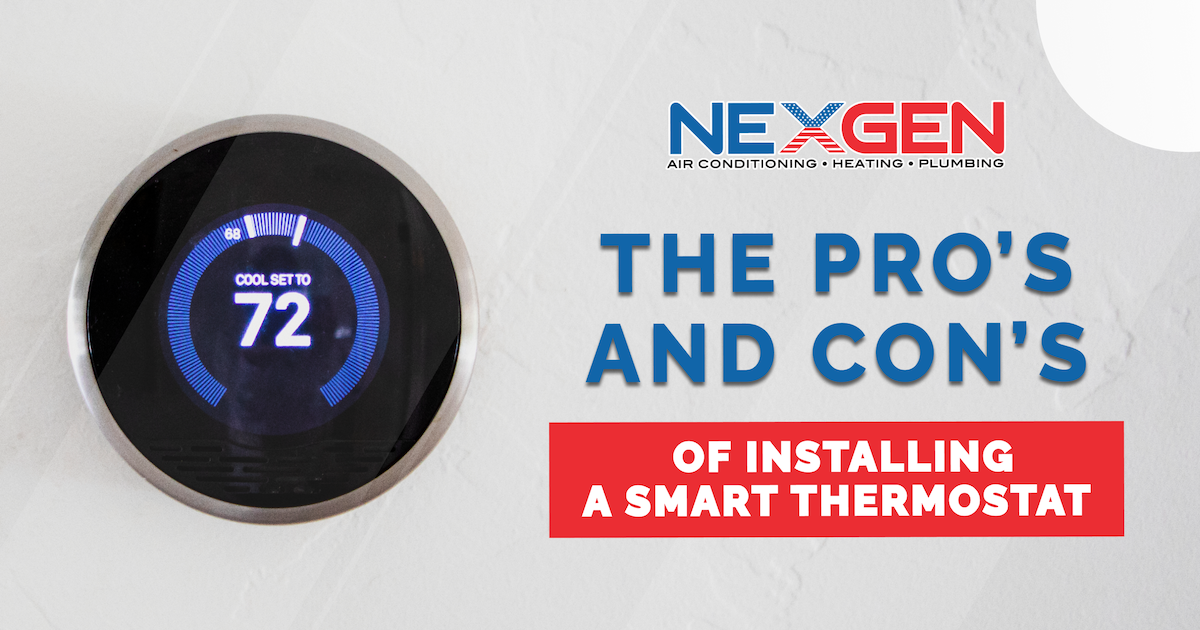
Most of us know how to use a manual thermostat. However, it lacks the accuracy and automatic control that today’s newest models do. A smart thermostat can not only be programmed, but allows you to control your HVAC system remotely.
You can install one if you have an internet connection. It can work via geofencing, or by tracking your smartphone’s GPS or RFID signal to determine your proximity to home, or using algorithm software to learn your behavior, and adjust the temperature automatically. It’s also able to adjust to the seasons and, depending on the model, outside weather conditions.
A smart thermostat can be a worthwhile investment, depending on your needs. But that doesn’t mean it’s an advantage for everyone. Read our pro’s and con’s to help decide whether one may be right for you.
Pro’s of a Smart Thermostat
- Ease of Installation: If you have the proper wiring, replacing an old unit with a smart device is simple. The unit requires a C wire for installation; it allows the most advanced features to work. Follow the manufacturer’s instructions for the specific model. Generally, you’ll need to turn off the power to the old thermostat, remove it, and connect the wires to the new one before you install the faceplate, restore power, and program the device.
- Energy Savings: Running your HVAC system on a schedule means it’ll run less when you’re not home, reducing energy consumption. If you forget to turn off your AC or heater, you can do so remotely. Over the long run, this can yield significant savings on your energy bills.
- Improved Comfort: You can program the thermostat or control it remotely, so your home is the right temperature once you return. Some smart thermostats allow for zoning, enabling you to control temperature room by room.
- Monitoring and Analysis: The thermostat stores data on your daily, weekly, monthly, and yearly energy usage. You can use this to track trends and make adjustments to save even more on energy.
- Maintenance Reminders: You no longer have to remember when it’s time to change an air filter. The thermostat can remind you via text message, email, or an audible alert directly on the unit. If your smart thermostat beeps, it’s likely time for a new filter.
Con’s of a Smart Thermostat
- Installation Is More Expensive: The equipment costs more than a standard thermostat. Depending on the wiring in your home, you may need electrical work. A professional technician is often required to install the system. Expect to spend a few hundred dollars for equipment and installation.
- Compatibility: Not every HVAC system is compatible with a smart thermostat. Even if yours is, check the product specifications to verify whether a particular thermostat will work with your AC make and model.
- Learning to Use It Can Take Time: Most modern systems are user-friendly. However, they can require some technical ability compared to traditional thermostats. For some, there’s a learning curve for mastering advanced features, including the user-interface software on your smartphone, scheduling, and tracking functions.
- It Takes Time for the Investment to Pay Off: It takes around five years for a smart thermostat to pay for itself. Unless you plan on living in your current home for the long term, this might not be a practical update. Renters may require the landlord’s permission.
- Only Provides Efficiency If Nobody Is Home: There’s no need for the advanced features if someone is usually present or works from home. The AC or heater will then always be on anyway. But if you commute to work or are often away for extended periods of time, you can save.
Contact NexGen
Serving all of Southern California, we install the latest digital, programmable, and smart thermostats. These include leading models from Honeywell as well as the Google Nest. We are available 24/7 to address your questions and concerns. Feel free to book an appointment online or call 833-729-9735 today.
What Is a Septic System and How Does It Work?

For most people who rely on utility water and waste connections, a septic system may seem like a foreign idea. But not all homes are connected to a main sewage line. In fact, millions rely on septic tanks. If you’re unfamiliar with the concept and how it works, we will now explain it in detail.
What Is Septic System?
If your home has a sewer connection, waste flushed down a toilet is piped to a sewage treatment plant, where it’s filtered from water that’s discharged into the environment once clean. Leftover waste goes to the landfill or is converted to fertilizer. A septic system works in a similar way, but on a smaller scale. Your waste is essentially treated in an underground tank just 20 to 50 feet from your house. In addition to a tank, the system consists of inlet and outlet pipes and a drain field.
How Does a Septic System Work?
The process begins as wastewater is transported via the inlet pipe from your house. It then collects in the septic tank, which typically has a 1,000-to-2,000-gallon capacity. The tank consists of two chambers; a larger chamber accepts waste that flow from the house. While solids settle at the bottom, liquids can flow over the partial wall into a smaller chamber. Wastewater is primarily moved through the system via gravity.
Anaerobic bacteria break down the solids and three layers form. Oils and grease form a top layer, while wastewater and particles form the middle layer. On the bottom are particles that are heavier than water; they form a thick layer of sludge. As solid waste is broken down, the liquids can separate and drain away, leaving behind material at the bottom that must be periodically cleaned out.
The second chamber of the septic tank has an outlet pipe. Liquid effluent flows towards the drain field through perforated pipes or plastic structures. The effluent can therefore drain into the ground, typically via a bed of gravel that helps disperse it. Remaining particles and bacteria are absorbed by the soil; the water is typically pure enough to drink once it reaches deep underground aquifers. The septic field is usually just one to two feet underground.
Do's of Maintaining Your Septic System
If your septic system isn’t properly maintained, you could have serious problems in your home. Of great importance is knowing the do’s and don’ts of maintenance, which we’ll explain below:
- Do: Inspection and Maintenance – Routine care can extend the system’s life. Gravity systems should be serviced every three years while pressure distribution systems must be maintained annually. Aerobic treatment units, membrane bioreactors, and drip irrigation systems should also be maintained annually.
- Do: Pump the Septic Tank – How often you should pump the tank depends on how much water you use. The higher the water flow, the faster the septic tank will fill. It will thus need to be pumped more frequently.
- Do: Keep Tank Lids Closed/Secured – The lid should always be closed and screwed shut. Otherwise, people could fall into it! Periodically check access lids for cracks or deterioration. Also, tank lids should be accessible; a riser makes pumping and monitoring easier.
- Do: Conserve Water – Water conservation is good for many reasons, including increasing the life of your septic system. Using too much water can make it fail prematurely.
- Do: Improve Drainage to Direct Water Away from the Drain Field – Too much water in one place can overload the drain field. It will then not work properly and can contaminate the ground or even your home.
Don’ts of Septic System Use and Maintenance
- Don’t: Flush Items Other than Toilet Paper – Paper towels, cleaning wipes, facial tissue, or even “flushable” wipes should not be flushed down the toilet. They can clog up or damage your septic system.
- Don’t: Use a Garbage Disposal – Solids and grease that pass through the disposal can build up and cause clogs in the drain field. Limit the use of your garbage disposal to as little as possible.
- Don’t: Use Drain Chemicals or Septic Tank Additives – Chemicals in household cleaners and other products kill off the bacteria that break down solids. Additives should be avoided because they add extra solids that can clog the drain field and pollute groundwater and surface water.
- Don’t: Park Vehicles on the Drain Field or Tank – Soil is compacted and pipes can break if vehicles, carports, decks, patios, storage sheds, sports courts, and landscaping elements are placed on top of the septic tank/field.
- Don’t: Drain from Hot Tubs into the Septic System – The volume of water will be too high for the drain field and chlorine can destroy helpful bacteria. Hot tubs should be drained away from all septic components.
Contact Nexgen Today
At Nexgen, we provide professional plumbing services by fully licensed and insured technicians. Serving much of Southern California, we’re relied upon for pipe, drain, water heater, garbage disposal, and septic system services. If you need more information on how a septic system works, to schedule maintenance, or request 24/7 emergency service, call us at 833-729-9735.
How to Find Your Sewer Line Cleanout
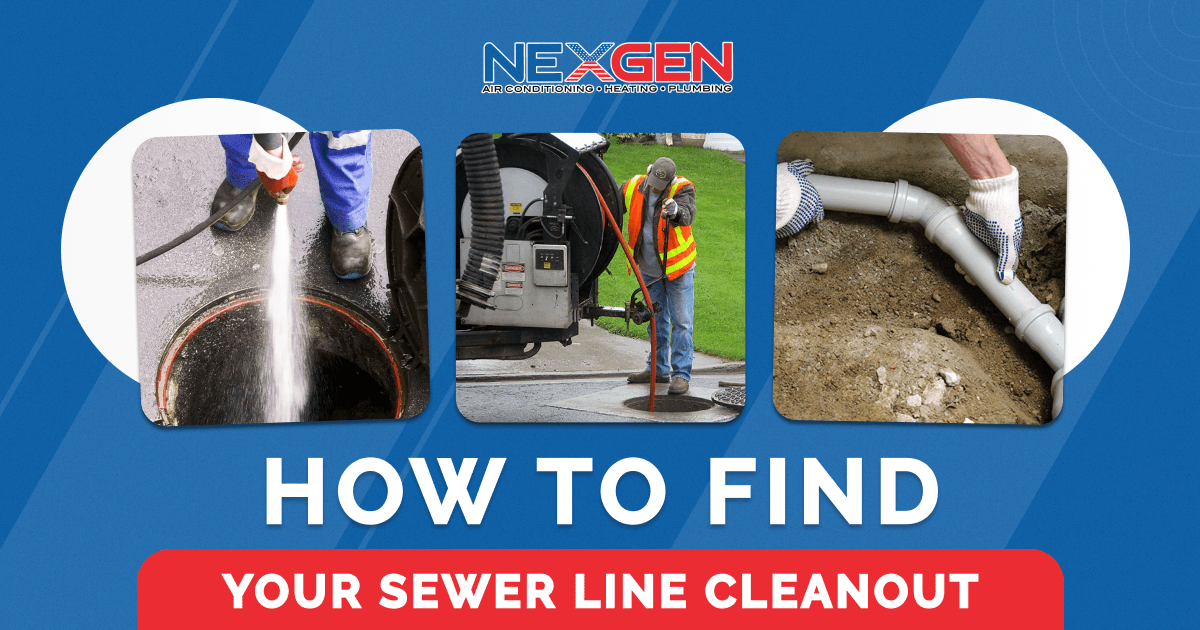
A sewer line cleanout provides direct access to the main sewer line serving your home. It may be located inside or outside your house and is primarily intended for use by plumbing professionals. If your main sewer line is clogged, or there are signs of a blockage such as multiple backed up drains, sewage coming from a floor drain, or water backing up in the shower when the toilet is flushed, the cleanout can be used to reach the source of the problem.
What Is a Sewer Line Cleanout?
It is a 3-, 4-, or 6-inch diameter pipe leading to the main sewer line. Usually white or black, this pipe is often made of ABS plastic and contains a plug and cap (in older homes, it may be made of brass or cast iron). When opened, it allows access to the main sewage line between the foundation of your home and the municipal sewer system; or, in some cases, between a septic tank and drain piping downstream of the main house trap.
Where to Look
If you live in a colder climate, a standard home often has a drain cleanout inside. However, it may be outside if the house is built on a slab foundation. Sometimes the cleanout is in a garage, utility room, or bathroom. Houses in warmer climates usually have an outdoor drain cleanout. The yard is the first place to look for it.
Finding an Indoor Drain Cleanout
Start by following the drainage pipes that lead from each sink, toilet, washing machine, or dishwasher. These may be made of ABS plastic, copper, cast iron, or bronze. The cleanout is located after where the drainage lines meet the main sewer line. It is usually in the form of a T- or Y-shaped pipe fitting, topped by a threaded plug and square nut possibly covered by a plastic cap. If the drain cleanout isn’t on the main line, then check alternate spots for a fitting with this configuration.
In homes where the sewer cleanout is not on the main line, look in areas where drainage pipes are clustered together, such as a bathroom. Use a flashlight to check in dimly lit areas that aren’t frequently accessed. If you can’t find a cleanout there, look around a utility room or garage. The cleanout may be hidden in homes that have been renovated. Contact a plumber if you’re having trouble locating the sewer line cleanout.
Finding an Outdoor Drain Cleanout
First, walk toward the municipal sewer line or septic tank. The location of the sewer line is indicated by an “S” stamped into the concrete or where the nearest manhole is. The cleanout is typically in line with the septic tank or municipal sewer system. If you use a septic system, walk back towards your home and look for a protruding plastic pipe in your lawn or garden.
If the cleanout is on the municipal sewer line, you won’t see the drainage line. But follow a path through the yard to find the cleanout pipe. It’s usually black or white and sealed with a similar threaded plug and square nut as an indoor cleanout. Check the label as well; it may say “S”, “C.O.”, or “cleanout”. Various types of plastic caps or metal lids may be used so check for anything that may be concealing a 3-, 4-, or 6-inch pipe.
Are you still having trouble finding the sewer cleanout? Look where there are drain pipe clusters or move lawn decorations or foliage outside of bathrooms. You can also try estimating where the drainage line is and poking the ground with a long screwdriver, but you’re better off with a professional’s help.
Contact a Plumber
Once you find a cleanout, whether it’s indoors or outdoors, it will need to be tested. The plug may be difficult to remove after years of disuse. And once it’s removed, raw sewage may start backing up. At Nexgen, we offer professional drain and sewer cleaning services; our technicians are licensed, trained, and prompt. They’ll arrive at your home, diagnose the problem, and access the sewer line cleanout and fix the issue for good. To request service, call 805-301-6788 or book an appointment online.
How to Do a Gas Leak Detection Inspection
In the U.S., about half of all homes use natural gas for heating, cooking, and drying clothes, according to the Energy Industries Association. This energy source is safe if your appliances are properly installed and maintained. If not, there’s a risk of gas leaks that can lead to deadly explosions and carbon monoxide poisoning. It’s therefore very important to know the gas leak detection methods that can save your home and your life.
If you suspect a gas leak, here are ways to inspect your home for the source of such potential trouble:
Sniff Around for Rotten Eggs
You are essentially smelling for mercaptan, an additive gas companies use to make natural gas detectable. Otherwise, it does not have an odor of its own. The smell is similar to that of sulfur. As soon as you detect this odor, leave your home; then call 911 and contact your gas company or NexGen right away to have your gas line turned off. A technician will then find the source of the problem and fix it.
Inspect Your Stove or Range Top
When the burner in a gas stove turns on, the flame should be blue. An orange or red flame is an indication of a gas leak. It means gas is present and is consuming oxygen. This same gas is likely elsewhere and putting your entire family in danger.
Listen for Noises Near Your Gas Line
Whistling or hissing sounds mean there’s a serious gas leak. It’s important to note the source of the noise. If an air conditioner is hissing, a damaged valve, refrigerant line, or compressor may be to blame. Upon hearing evidence of a gas line leak, evacuate your home and call for help immediately.
Check Outdoors for Signs of a Leak
Outdoor gas lines can leak too. If so, you may not notice any issues in your home, except for gas-using appliances not working right. Check near gas lines for hissing sounds, bubbling water (if there’s a puddle, pond, creek, or river), or patches of dead grass or vegetation. Also, look for blowing dirt or leaves around a pipeline. If you see flames rising from the ground or something above the ground burning, that’s a sure sign of trouble.
The Soapy Water Test
Mix a teaspoon of dish detergent into a cup of water and apply the solution to where you think the leak may be. Gas leaks often occur at connection and junction points. If gas is escaping, then you will see bubbles in the liquid you place on the surface.
Use a Natural Gas Detector
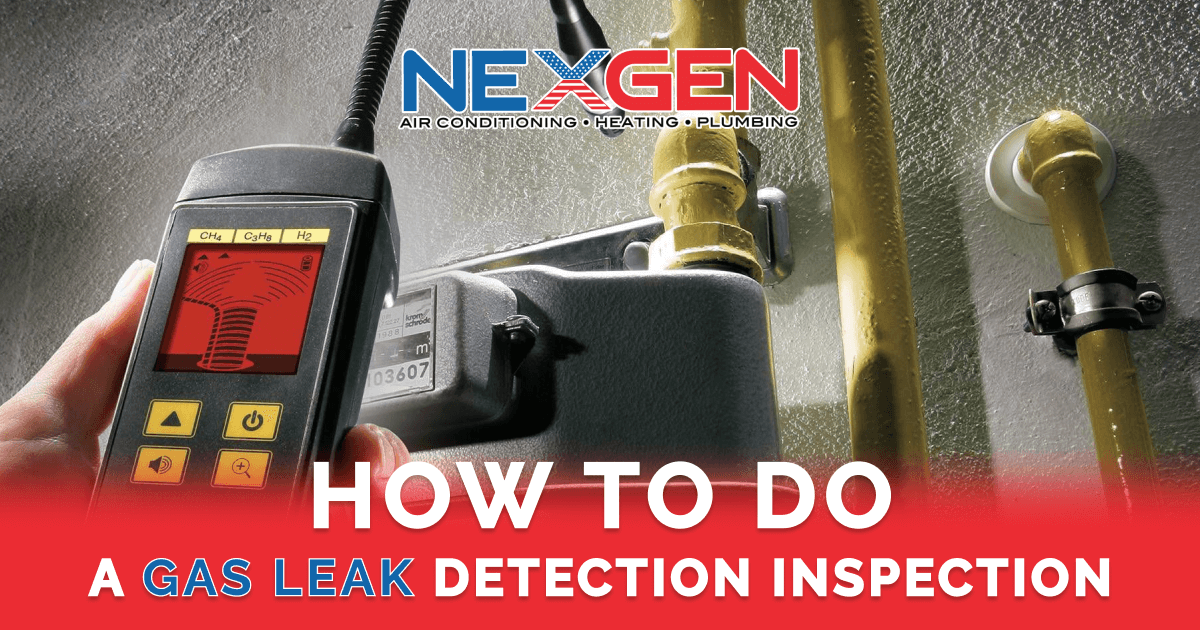
Gas leak detectors are designed to find propane, natural gas, methane, and other combustible gases in the air. There are portable, extension, and plug-in types. Portable units can help find the source of a leak, while fixed devices can be installed in, for example, the kitchen for constant monitoring.
Know What Not to Do
No matter what, don’t go back into the building to open the doors and windows. If gas is present, smoking, operating a vehicle or power tools/equipment, or using lighters, outlets, switches, and even doorbells or phones (including cellular) can put you in danger. Elevators, appliances, garage door openers, lamps, and other electrical devices should not be used. Never try to restart the pilot light.
The only thing you should do is get outside and call 911 or your local gas utility/repair company; do not go back inside until a technician or inspector gives the all-clear.
Know the Symptoms of Exposure
If you’ve been exposed to carbon monoxide, you may experience difficulty breathing, chest pain, headache, eye or throat irritation, nausea, or reduced appetite. Changes in mood, such as depression or irritability, can occur as well. You may also notice ringing in your ears or frequent nosebleeds if carbon monoxide is present.
Call NexGen for Gas Leak Detection and Repair
Our technicians have the training, expertise, and equipment to detect and locate gas leaks. Available 24/7, we can quickly make repairs and stop the leak, often using non-invasive techniques. To request help from our leak detection and repair professionals, call 833-729-9735 now.
6 Reasons to Get Indoor Air Quality Testing This Spring
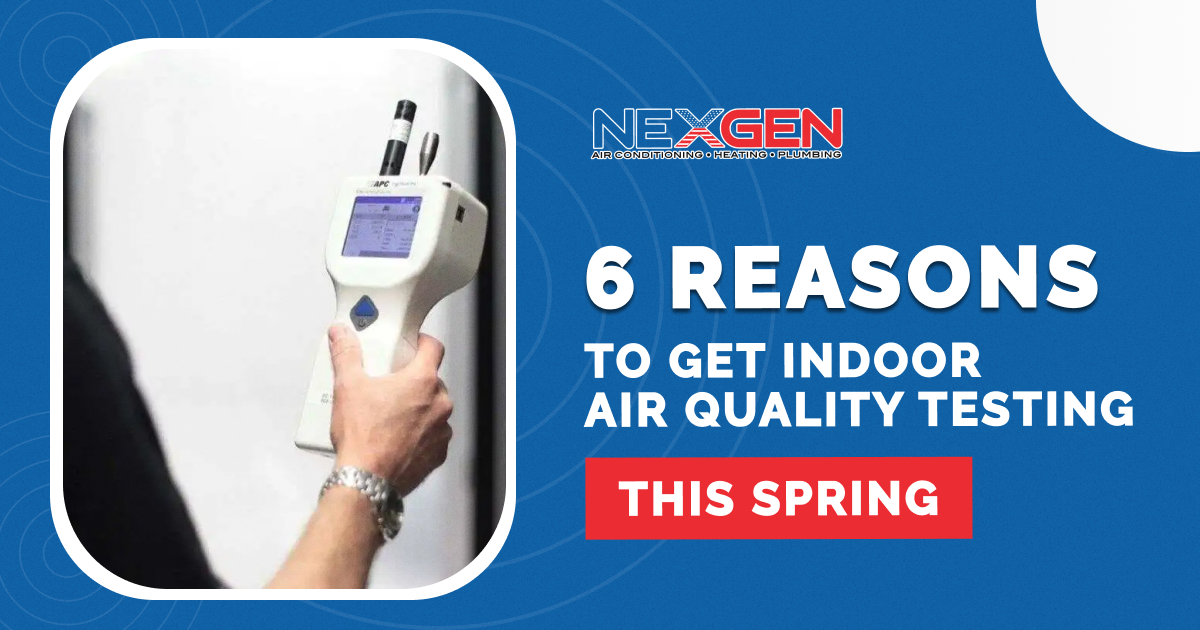
We often see springtime as a relief from the harshness of winter. It is also a time when activities, such as leaving the windows open or getting a deep cleaning done, can affect indoor air quality. Indoor air pollution can trigger allergies, worsen asthma, and cause headaches, nausea, coughing, sneezing, irritation, fatigue, and a host of other symptoms.
With indoor air quality testing, you can learn whether your symptoms are occurring for the following reasons:
1. Pollen Is in the Air
In most parts of the U.S., pollen counts soar in the spring. Trees, shrubs, grass, and flowers release pollen, which triggers a chain reaction in the body that causes allergies. Keeping your air conditioner filters clean or installing windowless ACs can help. Professional testing can determine if pollen, and what type, is affecting your home, so you can implement the best measures to reduce it. The best solutions are those that keep the pollen out of your home; regular vacuuming or installing air purifiers or high-efficiency particulate air (HEPA) filters can help.
2. Biological Pollutants
In addition to pollen, numerous biological pollutants can cause poor air quality in your home. Testing for mold, viruses, and toxins from microorganisms can help determine what steps to take. Mold spores are present indoors and outdoors and can stick to just about anything. When mold grows, it can cause respiratory issues even in healthy people. Testing is a good idea especially if you see visible mold; so you can take the appropriate actions.
Dust mites are another biological pollutant that can be reduced by keeping indoor humidity levels below 50%. You can also put impermeable covers over your mattress and pillows, and washing bedding in hot water. Removing dust with a damp rag and allergens with a vacuum can get rid of them as well.
3. Chemical Pollutants
Household products such as cleaners, disinfectants, paints, stored fuels, wood preservatives, furnishings can emit vapors and gases. Within these gases, volatile organic compounds (VOCs) can be often be found. These VOC’s are extremely toxic and cause a wide range of symptoms as well as organ damage.
Testing for VOCs should be done by an accredited lab to ensure accurate results. You can often reduce VOCs by increasing ventilation, discarding old chemicals, and using products as directed by the manufacturer. Some particularly concerning compounds include benzene, a known carcinogen found in paints, fuel products, and tobacco smoke, as well as perchloroethylene and formaldehyde.
4. Combustion Pollutants
Many people don’t realize the abundance of combustion pollutants in their homes. Environmental tobacco smoke, or secondhand smoke, contains thousands of potentially harmful compounds. It has resulted in thousands of deaths among non-smoking adults and respiratory conditions in children. Parents who smoke unknowingly put their kids at risk.
Carbon monoxide (CO) is also a combustion pollutant. The colorless, odorless gas prevents the blood from absorbing oxygen and, in high concentrations, can be deadly. It can originate from unvented space heaters, fireplaces, woodstoves, and gas stoves as well as damaged or poorly maintained furnaces. While air quality testing can help detect CO, the U.S. Consumer Product Safety Commission (CPSC) recommends use of UL-approved carbon monoxide alarms and regular inspection of fuel-burning appliances.
5. Radon
A radioactive gas, radon occurs naturally in soil and can move up from the ground, through cracks and holes in a foundation, and into your home. Breathing in radioactive particles can cause lung tissue damage and, in some people, lung cancer. The U.S. Environmental Protection Agency recommends testing for radon in any home below the third floor, starting with a short-term test and another after a high result. A long-term test can provide a clearer perspective of radon levels present year-round. If radon is high in your home, you can install a vent pipe and fan to address the problem.
6. Indoor Air Pollution Can Make You Sick
In addition to allergies, asthma, and irritated eyes and throats, there are even more greater health concerns associated with indoor air pollution. High levels of lead can cause convulsions, coma, and death, but long-term exposure to low levels can cause central nervous system and brain damage; it can harm the kidneys and blood cells as well. In children, it can lead to a shorter attention span, behavioral problems, and a lower IQ.
The effects of mold, tobacco smoke, carbon monoxide, and VOCs are well-known. For the health of your family, it is important to consider indoor air quality testing if you haven’t done so already. The everyday cleaning products you use may be putting your health at risk as well. These are just a few important considerations to think about this spring.
Trust Nexgen for Air Quality Testing and Improvements
The leading HVAC company in Southern California, we can help with indoor air quality testing and provide effective improvements to deal with common pollutants. Our HVAC technicians are familiar with the latest solutions. We guarantee quality and competitive pricing as well. To learn more about our indoor air quality services and schedule an appointment, call 833-729-9735 today.
What Hydro Jetting Used For?
Hydro jetting is an innovative way to clean your plumbing system. As you use your plumbing, various elements can gradually clog up pipes, drains, and sewer lines. Using a high-pressure stream of water can force buildup loose and push it through, essentially flushing it away and restoring the original inside diameter of pipe.
How The Process Works
A hose with powerful nozzles is inserted into your plumbing system. The hydro jetter is then turned on and introduces water at pressures of 4,000 psi, 5,000 psi, or more (the pressure can be adjusted depending on what type of drain or pipe we are servicing). This process is safe and effective for most pipes and removes blockages that plunging and drain snaking cannot.
The hydro jetting machines we use feature a motor, large tank of water, and long hose. Interchangeable nozzles let us access your plumbing system from anywhere we need to. In the process, the treatment:
- Pushes against clogs to break them free and flush them through the system.
- Cleans the walls of pipes to minimize the risk of further buildup.
How We Do It
When our trained technicians arrive at your home, they carefully follow these steps to ensure you benefit from our service:
- Locate the plumbing system cleanout, the easiest access point to your piping.
- Insert a video camera to visually inspect drains and pipes for cracks, corrosion, and other damage.
- Insert the hose, directing it downstream, and adjusting to the appropriate water pressure level.
With the aid of gravity, high-pressure water pushes debris through your plumbing system. It is eventually flushed into the sewer line and away from your home, so it will no longer cause slow drains, backups, and other plumbing problems.
What Does Hydro Jetting Remove?
Using this method, it is possible to remove mineral scale, grease, oil, food scraps, soap, hair, and other materials out of plumbing and sewer lines. It is even capable of breaking up tree roots that have intruded into sewer pipe. Silt, sand, and any particles left behind from snaking can be washed away. No chemicals are used, and the experience and professionalism of our licensed plumbers mean the process is carried out such that we will not break or otherwise damage your pipes.
Are There Risks?
Hydro jetting will not cause damage unless a pipe is weak or degraded. This is why we perform camera inspection before getting started. If we find a problem, we can pinpoint its exact location and fix it with minimal disruption. It’s also essential the procedure is done correctly. Our technicians are fully trained and licensed to safely treat your drains and pipes without harm and ensure there’s nothing left to block them.
Why Choose Nexgen
We are equipped to diagnose blockages and clear the full inside radius of affected pipe. The equipment lets us direct high-pressure streams of water wherever required. Since items and debris can get stuck anywhere in your plumbing system, not just near drains, this advanced equipment lets us restore your plumbing no matter where an object or accumulated gunk has gotten stuck.
Whether used in a home or restaurant, hydro jetting is an efficient, mess-free, and affordable process that uses no harmful chemicals. It is therefore safe for pipes and building occupants. All the while, it can remove bacteria and other pathogens. At Nexgen, we use the most advanced equipment and employ the most skilled service technicians who can handle emergency repairs and preventative maintenance.
To learn more about hydro jetting, receive a free estimate, and schedule an appointment, call 833-729-9735 today.
How Long Do Furnaces Last?
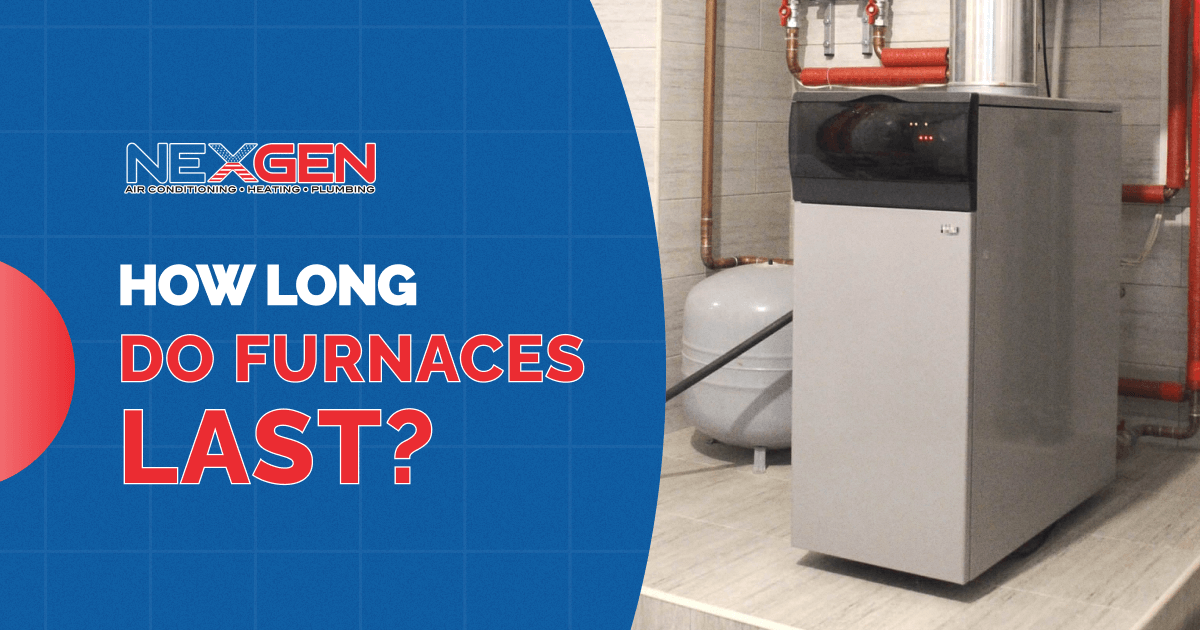
The average furnace, if well-maintained, can last 15 to 20 years. However, this is not an expiration date. A 15-year-old furnace may be running fine, but it’s wise to start shopping around to get familiar with the types of equipment available. Learning about energy-efficient options, how efficiency is calculated (such as the Annual Fuel Utilization Efficiency (AFUE) rating), and pricing/operating costs can help you plan ahead.
Average lifespan also depends on the type of furnace. Gas furnaces last only about 15 years on average. Electric furnaces tend to last longer. But it’s not unheard of for a furnace to last 30 years or more.
How Do I Get More Life Out of My Furnace?
The question, “How long do furnaces last?” is open ended when you consider the choices you can make that might extend longevity. The most important step is to have your furnace regularly maintained. Your furnace should be checked by a professional at least once a year. An inspection should include checking the gas valve, fan, heat exchanger, thermocouple, and other major parts. The pilot and burner should be cleaned and electrical and gas connections tightened. A technician will also lubricate moving parts and test the system to see how it is operating.
Other ways to extend a furnace’s lifespan include:
- Changing the air filter as recommended by the manufacturer.
- Insulating and sealing your home to reduce system strain.
- Cleaning and sealing ductwork.
Setting your thermostat up or down a few degrees can help as well. By reducing the load on your furnace, it may work less hard, so that vital components undergo less strain. You can therefore slow down wear and tear and perhaps extend the amount of time between repair and replacement jobs.
Is It Time to Replace My Furnace?
It can be hard to know how long your furnace will last. But there are signs that it may be on its last leg. Poor installation, a lack of maintenance, and improper sizing can reduce operating life significantly. Nonetheless, ignoring the following signs can mean spending more time and money trying to fix an old furnace or repairing the damage running a faulty one can cause. Here are a few reasons to consider furnace replacement:
- Noise: Popping, rattling, screeching, clicking, booming, or loud humming are red flags that your furnace needs major repairs or replacement.
- Temperature Fluctuations: If the temperature suddenly changes as you move from room to room, the furnace may not be distributing heat properly.
- High Costs: Replace any furnace that costs more than half the price of a new model to repair. If your energy costs are high, you may be dealing with an efficiency problem.
- Soot: Soot on the furnace register, as well as dust around your home, can mean too much carbon dioxide is being produced.
- Dry Air: Abnormally low humidity in your home can damage wood furniture and flooring, kill house plants, and affect your skin and respiratory health.
- Yellow Flames: The burners should produce blue flames. Otherwise, there may be a gas leak, combustion problem, or release of carbon monoxide.
Schedule Heating System Repair or Installation with Nexgen
At Nexgen, we specialize in residential heating systems. Our technicians are fully licensed and insured and will evaluate your system for free. We also offer deals, discounts, and maintenance programs to help you save, while our equipment is fully warrantied. To schedule heat pump or furnace installation, repair, or replacement, book your service appointment online or call 833-729-9735 today.
How Do Air Purifiers Work?

While an HVAC system offers some air filtration, it doesn’t filter out every particle of dust, pollen, or pet dander. Mold spores, smoke, odors, and other pollutants and potential toxins may exist in your indoor air, where they can be many times more concentrated than outdoors. An air purifier can remove these and improve comfort, help alleviate allergies, and reduce the risk of respiratory and other illnesses. In this article, we will answer the question, “How do air purifiers work?” to show you their potential benefits.
Function of an Air Purifier
An air purifier is an appliance that sucks in air via a fan and re-circulates it in a cleaner form. It can have one or multiple filters. These filters can be made of paper, fiberglass, or mesh. Some filters must be replaced as they fill up, while others are reusable and washable (however, they require substantial maintenance, but are effective at removing larger particles).
Filtration is an important aspect of air purifiers, but a purifier is much more than a filter. Some models act as air sanitizers as well. For example, air particles can be neutralized when ultraviolet light (UV) filters are integrated into the unit. UV light can destroy bacteria, mold, and other biological impurities. Without a special filter or sanitizing system, an air purifier will struggle to trap particles much smaller than 5 microns in size (high-efficiency filters can remove particles as small as 2.5 microns).1
*While coronavirus (COVID-19) particles measure about 0.1 microns, they’re usually bound to water droplets, aerosols, and other larger particles, so can be removed by air purifiers.
Air Purifier Limitations
A standard air filter struggles to remove volatile organic compounds (VOCs), radon, and other gases. Off gassing from household cleaning products, paints, and adhesives isn’t captured by most air purifiers either. That’s unless a High Efficiency Particulate Air (HEPA) filter is used. It’s made of fine fiberglass threads and is pleated and sealed in a frame made of plastic or metal.
HEPA filters capture particles of various sizes, including VOCs, ozone, carbon monoxide, nitrogen dioxide, and sulfur dioxide when used in combination with UV light and air scrubbers.
But an air purifier won’t remove or neutralize particles stuck to walls (and other hard surfaces) or sitting on carpeting, furniture, bedding, and other soft surfaces.
When asking, “How do air purifiers work?” and deciding on the best one for your home, it’s also important to consider the following:
- Air Purifier Size: Each model is rated for a specific room size. If you choose a unit for a larger area than you have, it can be run at a lower setting to reduce noise.
- Clean-Air Delivery Rating (CADR): Aim for at least a CADR of 300, but a rating of 350 or higher is very effective at removing smoke, dust, and pollen.
- Association of Home Appliance Manufacturers (AHAM) Verification: The AHAM certifies various types of appliances to ensure their performance, safety, and efficiency.
Types of Air Purifiers Nexgen Offers
Nexgen offers three different types of air purifiers. These include filter-based systems with electrically charged flat filters to capture large particles, extended media filters that remove dust and debris, and ultraviolet filters. In addition, we offer duct-based air purification systems designed to filter impurities from air as it passes through air ducts. Lastly, our stand-alone systems install in a closet or attic and are connected to your HVAC system via air intakes. Our licensed technicians can perform any installation for you, while your budget and air quality needs are addressed as part of our X protects standard.
To learn more or have an X-purification system installed in your home, contact Nexgen HVAC & Plumbing at 833-729-9735 today!
Source:
- https://www.livescience.com/how-do-air-purifiers-work
10 Signs Your Air Conditioner Needs Repair
Knowing when you need AC repair allows you to call a contractor before the damage is more expensive to fix or your system needs to be replaced. You can also avoid a sudden failure on a hot summer day. Nexgen can be reached 24/7 to promptly address any issues you’re having. To help you know when to call for service, here are signs your air conditioner needs repair.

1. Only Warm Air Is Blowing
An air conditioner is designed to provide cool air. When the AC is turned on, there should never be warm air blowing from the vents. If so, check that the thermostat is in cooling mode. Otherwise, warm air blowing can mean something is blocking airflow or there’s damage to the compressor.
2. The AC Is Making Odd Noises
If the unit is making sounds you’ve never heard, it’s time to call for repairs. There may be a blockage or a mechanical problem. Worrisome sounds include grinding, scraping, squealing, or gurgling. Ignoring the noise can lead to more serious and expensive damage.
3. It’s Turning On and Off Too Fast
Air conditioners typically run in cycles. They stay on until the set temperature is reached, and turn off until the temperature needs to be readjusted. Your AC will run more frequently on hot days. If it’s constantly turning on and off, the system may need to be repaired or replaced.
4. Vents Are Blowing Little or No Air
Even if you’re getting cold air, weak air flow is a sign of a duct clog or leak. It can also mean the compressor is failing. If there’s a ductwork issue or a motor is breaking down, the problem can be fixed. In some cases, the issue is so serious replacing the unit is the only solution.
5. You Can’t Get the Thermostat to Work
The thermostat is what controls your air conditioner. It measures temperature continuously to signal the AC to generate the right amount of cold air. Signs of a thermostat problem include the system not turning on at all, running for short amounts of time, or not providing the right temperature.
6. The AC Gives Off Bad Odors
There are also smelly signs your air conditioner needs repair. If there’s a musty odor, mold may be growing inside the AC unit or your ductwork. A burning odor can mean a wire or electrical component has burnt out. Ductwork cleaning, a tune-up, or installation of UV lamps in the system can eliminate AC odors.
7. Your Electric Bill Is Going Up
Your utility bill should remain fairly consistent. If you’re not using your AC more, but are spending more on electricity, there may be a repair issue such as a duct leak, faulty thermostat switch, clog, or other mechanical problem causing it to work harder.
8. The Unit Is Leaking
Refrigerant is constantly circulating throughout the system. Central air conditioners are also designed to drain condensate. If you see coolant pooling up, this can be a dangerous situation, while leaking water can cause serious property and structural damage.
9. Your Home Is More Humid
Even on humid summer days, your AC should keep indoor humidity levels in check. Schedule service if your home starts to feel stickier. If the humidity is above 50%, your home can become quite stuffy while mold can grow more easily. Watch for low-humidity and dryness as well.
10. Circuit Breakers Keep Tripping
If the breaker for your AC keeps tripping, there might be a serious electrical issue. An undiagnosed electrical problem can lead to equipment overheating or wires sparking. A home fire can result if the problem isn’t diagnosed and fixed.
Contact Nexgen for AC Repair
Are there signs your air conditioner needs repair? If so, Nexgen is ready to assist and can provide any repair necessary, starting with a free estimate. Maintenance and tune-up specials are available as well. Call 833-729-9735 to request a visit.
Do I Need an AC Tune Up?
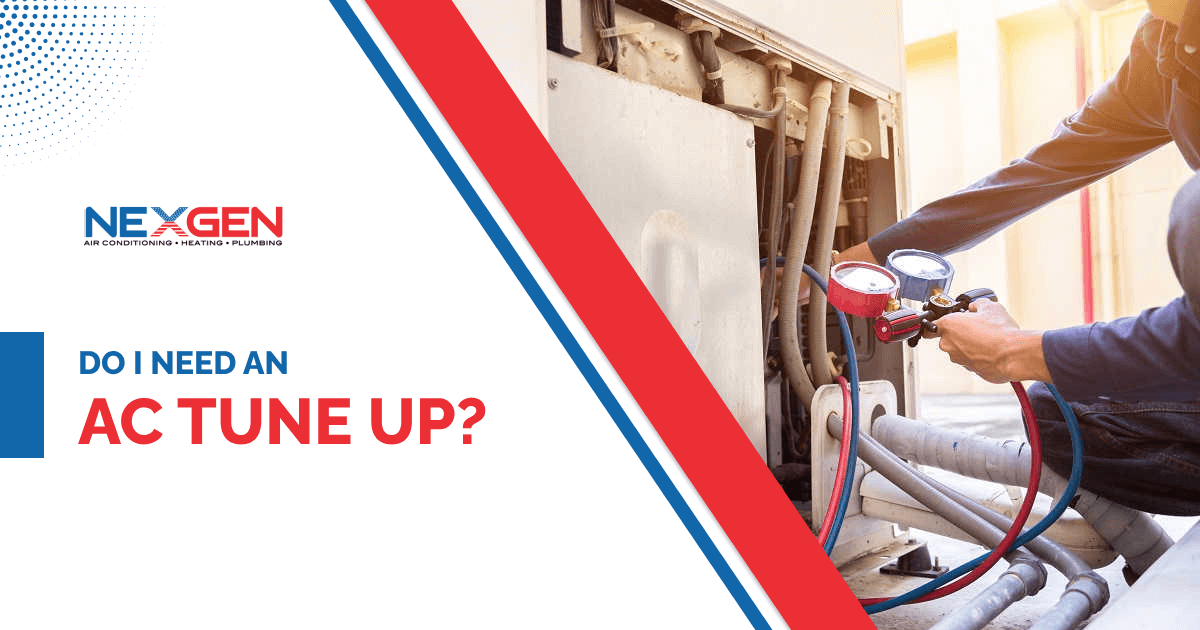
When we think of life’s necessities, an AC tune up doesn’t necessarily come to mind. Your air conditioner may run fine for a while whether someone looks at it or not. But a tune up has many benefits especially given the demand on your HVAC system throughout the year. Annual tune ups are fine for new systems; if you have an older air conditioner, consider having it checked in the spring and fall to ensure it’s in working order.
Reasons to Schedule an AC Tune Up
At Nexgen, we offer comprehensive maintenance programs that cover all the essentials. Our technicians are trained to properly inspect, service, and repair all types of air conditioning systems. We also know tune ups are important because of:
Increased Efficiency
As the weather warms up, you’ll be using your AC every day. This can exert a lot of strain if you haven’t used it for several months. Performing minor adjustments and addressing small issues will mean the system won’t work as hard. It may run less to achieve the same cool temperature, cutting down energy costs.
Lower Repair Costs
Many AC problems start small but get progressively worse. You might not notice the signs. However, an AC technician can find minor problems and fix them on the spot, so they won’t turn into larger problems that require expensive repairs. Roughly 95% of HVAC system breakdowns are preventable with regular maintenance and tune-ups.
Improved Comfort
A poorly maintained air conditioner may provide little or no cool air. Air distribution can be affected as well. With an AC tune up, the system will better regulate the temperature of your home, so your family stays comfortable.
Warranty
Many HVAC warranties require regular maintenance to continue covering your AC system. If you skip professional maintenance, this can void the manufacturer’s warranty. The warranty provider may deny your repair claim and you’ll end up having to pay the full price of repairs or replace the system.
Air Quality Improvements
When tuning up the system, a technician will change the air filter, clean out components, and vacuum out ductwork. This reduces the amount of dust and allergens in the air. You’ll feel better and your HVAC system will run smoother.
Increased Operating Life
When you need big AC repairs, chances are something is causing components to wear out. If you’ve had one major repair, there are likely other issues brewing. Tune ups will keep the system running smoothly, which has proven to translate to a longer equipment lifespan.
Signs You Need an AC Tune Up Now
We strongly recommend scheduling regular tune ups. But contact Nexgen if you notice your air conditioner acting strangely in any of these ways:
- The AC starts blowing warm air when the thermostat is set to cool.
- Weak airflow from vents, due to a clogged filter or leaky air duct.
- Temperatures vary greatly from one room to another.
- Your AC is making shrieking, buzzing, rattling, pulsating, and other odd sounds.
- There’s excess moisture around the system, indicating a drain tube blockage.
- Musty odors are coming from the AC or vents, due to mold in the system.
Schedule an AC Tune Up Today
A leader in home comfort, Nexgen provides high quality air conditioning maintenance for Southern California residents. Tune ups and other maintenance services are covered as part of our X Protection Plan. To learn more about HVAC maintenance and schedule a visit, call 833-729-9735 today.