How to Stop SoCal Air Quality from Affecting Your Home
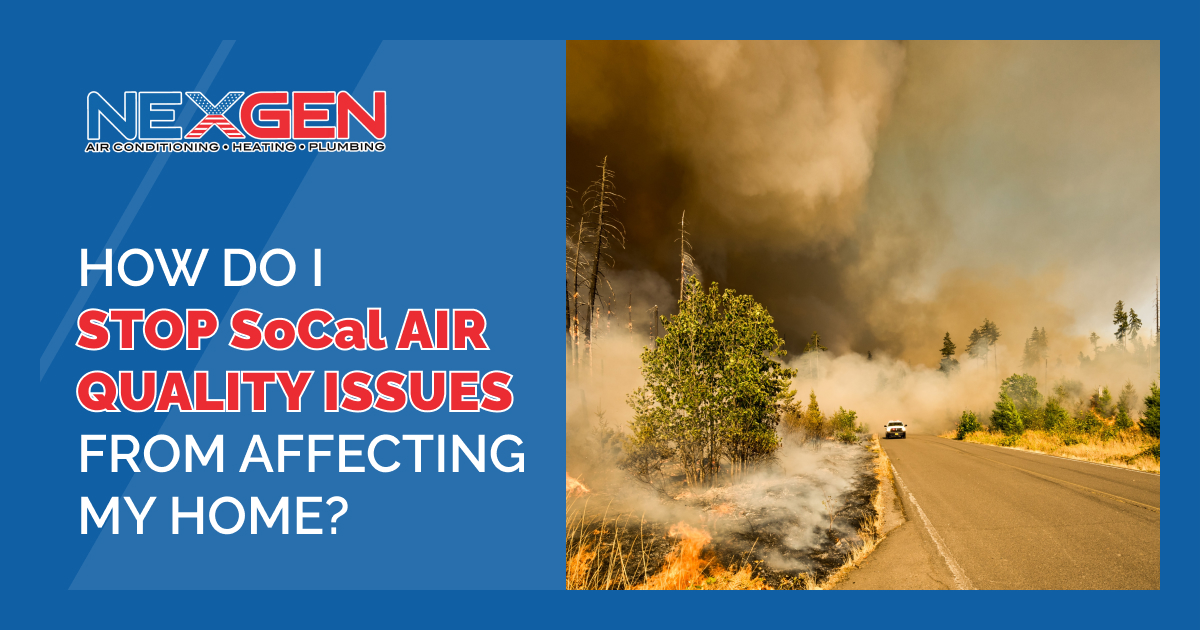 Southern California is renowned for its poor air quality. There are many sources of air pollution here, including motor vehicles, industry, seaports, dust, and smoke from wildfires that can drift hundreds of miles. Even if you’re not near a fire zone, busy road, or industrial area, your home can be affected by chemicals and small particles. But you don’t have to let SoCal air quality put your family at risk.
Why You Must Protect Yourself from Wildfire Smoke
Wildfire smoke appears dense and dark from a distance. It may seem you’re in the clear, but you can breathe it in and not realize it; many of the particles and chemicals aren’t visible to the naked eye. These can cause immediate symptoms such as coughing and difficulty breathing, irritated eyes, headaches, scratchy throat, dizziness, and chest pain.
Children, the elderly, and people with heart and lung conditions are most vulnerable. But smoke is bad for everyone. Exposure stresses the cardiovascular system, so severe exposure can lead to stroke and heart attack. Your home doesn’t have to be in the path of a wildfire for you and your family to be affected.
Protecting Your Home Against Poor SoCal Air Quality
You can reduce the risk of air quality issues polluting your home by:
Installing High-Efficiency Air Filters
Not all HVAC filters remove the particles found in SoCal air. It’s important to check, clean, and change filters often, but consider installing high-efficiency particulate air (HEPA) filters for increased protection. Particulate matter can be smaller than 2.5 microns in diameter and can reach the deepest parts of the lungs. By comparison, a single human hair is 50 to 70 microns in diameter. A HEPA filter will trap the tiniest particles as air circulates through your heating and cooling system.
Similarly, N95 respirator masks can protect against particulates, smoke, and COVID-19. Wear a mask if you must be outside in smoky or smoggy conditions. It should fit over the nose and under the chin; one strap goes above and one strap goes below the ears. Air should not pull in from the sides when you breathe in (if properly fit, the respirator will collapse as you do).
Keeping the Windows Closed
Closing all your windows is generally effective in keeping out air pollution. However, most homes aren’t perfectly sealed envelopes. So in addition to closing windows, use high-quality filters and fans that boost air circulation in your home.
Setting Your AC to “Recirculate”
If your air conditioning system recirculates and filters the air, instead of drawing it in from outside, you can reduce the chances of outdoor pollutants getting in. Close any vents that deliver outdoor air. Turn off the fresh air intake as well. Of course, this only works if the filter is clean, so be sure to replace your HVAC filter often and when it is dirty.
Using an Air Purifier
Purchase an air purifier that’s been tested for removing small particles. It should be non-ozone generating and approved by the California Air Resources Board (CARB). Mechanical air cleaners don’t generate ozone or ions and physically filter out the air using pleated or HEPA-style filters. While electronic filters may generate small concentrations of ozone, they can include technologies such as UV light, ionizers, or electrostatic precipitators.
How to Protect Yourself from Poor Air Quality
In addition to keeping dirty air out of your home, you can protect yourself from SoCal air quality issues with the following tips:
- Do not run a swamp cooler or whole house fan.
- Avoid vacuuming or dusting when air quality is poor.
- Use HEPA-filtered vacuums and wet mops.
- Refrain from using gas stoves or burning candles.
- Keep your central air “On” rather than using the “Auto” setting.
- Stay indoors and avoid overexerting yourself.
Contact NexGen for Indoor Air Quality Solutions
We offer a range of indoor air quality solutions for Southern California homes and businesses. These protect against particulates, volatile compounds, smoke, and more. When SoCal air quality turns for the worst, you can depend on NexGen to install the highest quality air filters, air cleaners, and air purification systems. We also provide high-quality duct cleaning, air duct sealing, and insulation services. Call 833-729-9735 to learn more.
Should You Call a Plumber to Fix a Gas Leak?

Most people associate plumbers with fixing water pipes, drains, sewer lines, and water-using appliances. A licensed plumber is also qualified to perform gas leak repair. Contact a plumbing contractor right away if you suspect a gas leak. Natural gas is flammable and a health hazard. You should call a plumber to fix a gas leak because they’re qualified to:
- Use special tools and equipment to detect gas leaks.
- Repair the damaged section of a gas pipe.
- Make adjustments that resolve or reduce the risk of leaks.
- Run gas lines from one place to another.
- Connect gas lines to appliances or fireplaces.
A Plumber Can Fix Gas Lines?
Calling a plumber might not be your first thought when you smell gas. Not every plumber can do the job. Don’t expect an apprentice or general contractor to be ready to handle the task. Check the plumber’s qualifications; they must have a California C-36 Plumbing Contractor license to work with gas lines. This means they are properly trained to fix a gas leak in your home. Working with a trained plumber will yield the following benefits:
- Safety: A licensed plumbing contractor has the tools and equipment to safely work near and fix a damaged gas line. They can quickly turn off the gas to eliminate the risk of carbon monoxide poisoning.
- Experience: Experience handling emergencies means the plumber can work calmly and methodically, and help keep everyone else calm until the problem is fixed. They’re also able to locate the source of the leak right away.
- Technical Expertise: While water and gas lines use some of the same materials, a certified plumber can determine the right pipes and materials needed. They’re also trained to correctly install gas line components, whether fixing a leak, retrofitting existing systems, or replacing old, weak, or corroded pipes.
- Installation Knowledge: Almost every property has gas appliances, but not everyone knows how to install them. A qualified technician can install a gas water heater, kitchen range, or fireplace while making sure any gas lines installed, moved, or modified are done so correctly.
- Knowledge of Rules and Codes: A licensed technician will be familiar with state and local building codes, so won’t commit any violations. Even if your jurisdiction doesn’t require it, you should still hire a technician who is properly trained in working safely around natural gas.
Signs You Need a Plumber to Fix a Gas Leak
A gas leak can come from a hole or break in the line, a damaged fitting, or a connection at an appliance. A defective appliance can leak natural gas as well. Signs of a leak include:
- Foul sulfur or rotten-egg odors.
- Hissing noises from an appliance, connection, or pipe.
- Dying house plants.
- Symptoms like nausea, dizziness, headache, fatigue, or confusion.
- An increase in gas usage/higher utility bill.
What to Do When There’s a Gas Leak
If you smell sulfur or rotten eggs, immediately turn off the gas meter. Don’t use any appliances, electronics, or devices in your home, or use matches or a lighter. Gas accumulated anywhere in your home can ignite and cause an explosion. Get everyone out of the house, including adults, children, and pets; then turn off the gas at the meter, if you can, and call an emergency plumber (or 911 and the gas company if the odor is particularly strong). Never risk trying to find and fix the problem yourself.
Any gas system issue from the meter into a home is the homeowner’s responsibility to fix. If the problem appears to be along the line before it reaches the meter, the gas company must repair it.
Call NexGen
Our technicians are trained and certified to work on gas lines, connections, and appliances. We also specialize in gas leak detection, using advanced equipment to verify a gas leak, where it is, and how much is leaking. Our team is prepared and equipped to quickly fix any leak and restore your safety. From minor adjustments to gas line replacement to 24/7 emergency service, NexGen has you covered.
Call 833-729-9735 or book an appointment online to request a plumber to fix your gas leak immediately.
How to Block Smoke from Coming Through AC Vents
At NexGen, we understand the importance of good indoor air quality. Smoke is one of the most significant indoor pollutants. There are numerous potential sources, but perhaps none are as prevalent and potentially dangerous as cigarette smoke. Secondhand smoke contains over 7,000 chemicals, hundreds of which are toxic. Even if you or no one in your family uses tobacco, smoke entering your home through vents can be extremely harmful.
Here, we’ll explain how to block smoke from coming through the vents in your home to eliminate exposure and its risks.
Regarding exposure to secondhand smoke, the U.S. Surgeon General issued a report in 2006 that concluded:
- Conventional air filtration systems remove larger particles, but not the smaller particles and gases from cigarette smoke.
- An enclosed, individually exhausted, negative-pressure room won’t prevent smoke from traveling into adjacent spaces.
- Standard HVAC systems by themselves don’t control secondhand smoke exposure and may help distribute smoke particles and gases.
Modifying Your Vents to Block Smoke
The first step is to locate where secondhand smoke is entering from. Air vents are one of the primary entry points. Others include gaps in windows, doors, outlets, insulation, etc. While small gaps can be filled with silicone caulk and larger ones with insulating foam, that doesn’t work with vents. You can’t completely block a vent because that will disrupt airflow, reduce efficiency, and increase the pressure that may damage ducts and cause leaks.
This is an issue because once cigarette smoke enters the system, it will travel through ductwork and come through vents in every room. Fortunately, other options can protect your home against secondhand smoke. These are some steps you can take:
Install a HEPA Filter
A high-efficiency particulate air (HEPA) filter has a fine mesh that makes it more effective at trapping tobacco smoke as well as pollen, pet dander, and dust mites. Therefore, this mechanical air filter protects against the harmful effects of smoke and can provide allergy relief. It can improve overall indoor air quality and protect your HVAC system against particulates as well.
Use a Door Draft Excluder
Smoke and odors may pass through from under any door that opens into a hallway or common area. A door draft excluder easily fits along the bottom of the door. Draft proofing can be accomplished with stuffed plastic bags or by purchasing and fitting a hinged flap or brush-type draft excluder. You can also purchase covers that drop over keyholes and flaps or brushes that cover letterboxes.
Install an Air Purifier
A high-quality air purifier is a worthwhile investment. Your HVAC contractor can recommend and even install an air purification system. The best ones eliminate visible smoke and odors. While it may be difficult to block smoke from vents, the air can still be purified so you don’t have to worry about breathing in tobacco smoke.
Get House Plants
Bamboo palm, peace lily, philodendron, devil’s ivy, aloe vera, azalea, and chrysanthemum are just a few plants that can remove contaminants from the air. These natural air filters will leave your indoor air fresher. Not to mention create a calming environment in your house.
Open Windows
This is not a permanent solution. If the outdoor air isn’t polluted and it’s a pleasant day, you can open windows to allow in a fresh breeze and filter out stagnant, smoke-filled air. This works best when the AC isn’t running. However, consider other solutions if there’s a lot of car traffic outside your home; you don’t want exhaust on top of tobacco smoke indoors.
Let NexGen See How to Block Smoke from Coming Through AC Vents
NexGen provides many solutions to address indoor air quality issues. We can install high-efficiency filtration systems, improve ventilation, and clean ductwork as well as find custom solutions to improve air quality in your home. Our technicians are fully licensed and trained and provide service throughout Southern California. In addition, our products are warrantied for up to 12 years and financing options are available to make much-needed solutions affordable.
To get started, book service online or call us at 833-729-9735.
What Are the Latest California HVAC Regulations?

New California HVAC regulations are targeting refrigerant use and efficiency. This is not the first wave of changes in the industry. In 2013, Title 24 efficiency standards were set by the California Energy Commission; in 2016 the California Air Resources Board (CARB) was authorized to oversee the reduction of hydrofluorocarbon (HFC) emissions. Even more sweeping regulatory changes will take effect in 2023.
The U.S. Department of Energy has strictly regulated minimum efficiency levels for HVAC equipment since 1992. All air conditioning systems are measured using the seasonal energy efficiency ratio (SEER). Meanwhile, the heating seasonal performance factor (HSPF) is used for heat pumps and annual fuel utilization efficiency (AFUE) is used for furnaces.
New Restrictions on Refrigerant
California passed legislation in 2018 that banned high global warming potential (GWP) HFCs, mirroring previous federal bans. California HVAC regulations announced in 2022 require:
- Equipment with over 50 pounds of refrigerant to use coolant with a GWP of less than 150. Per the California Air Resources Board (CARB), this is expected to cut emissions by over 90% in facilities such as supermarkets and industrial buildings.
- Food retailers with 20 or more stores to maintain a weighted average refrigerant GWP of less than 2,500, or reduce GWP potential by at least 25%, by 2026. By 2030, all stores would have to reduce their average GWP by 55%.
- New systems for industrial refrigeration, in existing non-retail facilities, can use refrigerants between 1,500 and 2,200 GWP.
- For new room air conditioners and dehumidifiers, the refrigerant used must have a GWP of below 750, beginning in 2023. Larger stationary ACs have until 2025 to meet this requirement.
- CARB will launch a Refrigerant Recovery, Recycle, and Reuse Program in which AC manufacturers would have to use 10% of recovered R410 refrigerant from retired systems.
Nationwide Guidelines Also Apply
The Department of Energy (DOE) has made changes that will impact the entire nation. In the southwestern region, which includes California, the minimum standard SEER rating for cooling systems will be increased to 15 SEER (for split units using less than 45,000 BTU) and 14.5 SEER (for units that use more than 45,000 BTU). New EER/EER2 requirements will also go into effect. In all regions, furnaces must have at least an 81% AFUE rating and air-source heat pumps must have a minimum heating efficiency of 8.8 HSPF.
According to Angi, the increased efficiency requirements can mean paying $350 to $1,500 more for a new air conditioner, heat pump, or packaged system.2 But higher efficiency can mean saving on heating/cooling bills each month. After all, heating and cooling account for 55% of the energy used in homes, based on numbers by the Office of Energy Efficiency and Renewable Energy.
The 2019 Building Energy Efficiency Standards
These changes included requirements for fan efficiency in forced air systems; for gas furnace air-handling units, fans must operate at 0.45 watts/cubic feet per minute (CFM) or less. For non-gas air-handling units, it is 0.58 watts/CFM. Meanwhile, small duct, high-velocity forced-air systems must have fans running at 0.62 watts/CFM or less (with an airflow requirement of 250 CFM /ton or greater).
Porous inner core flex ducts are required as well. The exception is if there’s a nonporous layer or air barrier between the duct’s inner layer and outer vapor barrier. Mandatory air filtration requirements for systems with 10 feet or more of duct were set as well, with filtration being required on supply and balanced mechanical ventilation systems.
Title 24 Compliance Still Applies
The Energy Commission’s 2013 Title 24 rules still apply. These are minimum efficiency standards intended to reduce energy consumption throughout the state and include requirements such as:
- Duct Testing: Unless ductwork is entirely enclosed within a conditioned space, it’s required to be sealed and insulated. Ducts must be insulated by material with an R-8 or R-11 value, while leakage must be HERS verified by a third-party licensed inspector/rater. Pressure tests are required everywhere in California and ductwork must be examined/repaired to pass an inspection.
*If no ducts are replaced, there must be 15% or less leakage; if ductwork replacement is performed, leakage must not exceed 6%).
- HVAC Sizing: Before installing HVAC equipment, the heating and cooling load of a project must be properly calculated to ensure lasting efficiency. However, state requirements do not set rules as to the actual size of any piece of heating or cooling equipment.
- Smart Thermostats: Title 24 requires smart thermostats with features like programmability and automatic setbacks. This pertains to the installation of central heating/cooling systems during construction. There are no specific requirements for how occupants use their thermostat’s programmable settings.
NexGen Factors the Latest Regulations into New System Design
At NexGen, we supply and install the latest, most efficient HVAC equipment including traditional, electric, rooftop, and ductless systems. Our licensed technicians are fully trained in the most recent California HVAC regulations plus the newest products, tools, and methods. Our expertise and commitment to customer satisfaction make us the leading HVAC company in Southern California. To learn more about our equipment, services, and protection plan, book an appointment online or call 833-729-9735.
How to Stop Cigarette Smoke from Coming Through Vents
Air ducts and vents can distribute secondhand smoke throughout a home and from one apartment to another in a building. Cigarette smoke is associated with many health problems, including lung cancer. It may produce an odor and leave behind yellow stains on walls and brownish residue on curtains and drapes. No matter how much deodorizer your spray or vacuuming and cleaning you do, it won’t reach everywhere. Continue reading to learn how to stop cigarette smoke from coming through vents in the first place.
Clean the Vents
To start, it helps to clean the nicotine residue off vents. You’ll need to remove each vent from its fitting and place it in a well-ventilated area. Choose your cleaning solution; mild dish soap will often do (if using a chemical cleaner, wear gloves and safety goggles). Avoid abrasive tools; instead, use a soft cloth or sponge to wipe down the vent. You can clean the slats with a narrow soft brush.
Install a Charcoal Register Vent Filter
Filters with activated charcoal are designed to fit inside vents. Depending on the product, it can trap dirt, dust, and pollen as well as prevent objects from falling into air ducts. One type of vent filter uses a self-charging electrostatic material to attract pollutants. Smoke and other particles become trapped and only filtered, smoke-free air enters your home.
Seal Vent Gaps with Insulation Padding and Painter’s Tape
Cigarette smoke can also drift in through gaps around air vents, air conditioners, and heaters. This smoke often bypasses any filters. To use insulation padding, tuck it into any gaps and lay it over the surrounding surface; then secure it with painter’s tape. Placing padding and tape isn’t an infrastructure change so won’t violate your lease agreement. But first, talk to your landlord to see if they have a better way to seal gaps.
Have Your Air Ducts Cleaned Professionally
Cigarette smoke is most likely not limited to the vent surface. The chemicals in cigarette smoke can reach remote areas of air ducts. Air duct cleaning helps whether you have a persistent smoke problem, are a smoker, or moving into a home where there were smokers. An HVAC professional is equipped with equipment and cleaning products that can reach where other solutions can’t and effectively break down smoke molecules.
How to Eliminate Cigarette Smoke Odors
Various types of cleaners can work. But you don’t have to use a chemical cleaner. You can wipe the vent down with plain vinegar or a mix of 1 tablespoon of ammonia in 1 cup of water. If this doesn’t work, mix 1 part bleach into 4 parts warm water and soak the vent for a few hours before rinsing it. Let the vent cover dry and reinstall it.
Blocking Smoke from Other Sources
Knowing how to stop cigarette smoke from coming through vents won’t always eliminate a smoke problem. Consider other sources as well, and take action to prevent smoke from continuing to get in. Here are some solutions:
- Caulk or tape over cracks around windows, doors, and lighting fixtures.
- Cover electrical sockets with plugs or seals.
- Place a fan near an open window when you see or smell smoke.
- Apply weatherstripping to windows to block outdoor smoke.
- Use a door sweep or draft guard to block smoke from outside.
Contact NexGen for Indoor Air Quality Solutions
NexGen can address air quality issues with a range of options. If cigarette smoke, mold, volatile organic compounds, carbon monoxide, or other pollutants are found in your home, we will help make air quality improvements. Air purification and filtration systems can be installed or we can help improve ventilation (duct cleaning, installing dehumidifiers, and furnace repair can help as well).
To learn more about our indoor air quality services in Southern California and request service, call 833-729-9735 today.
How Are Your HVAC and Plumbing Systems Connected?
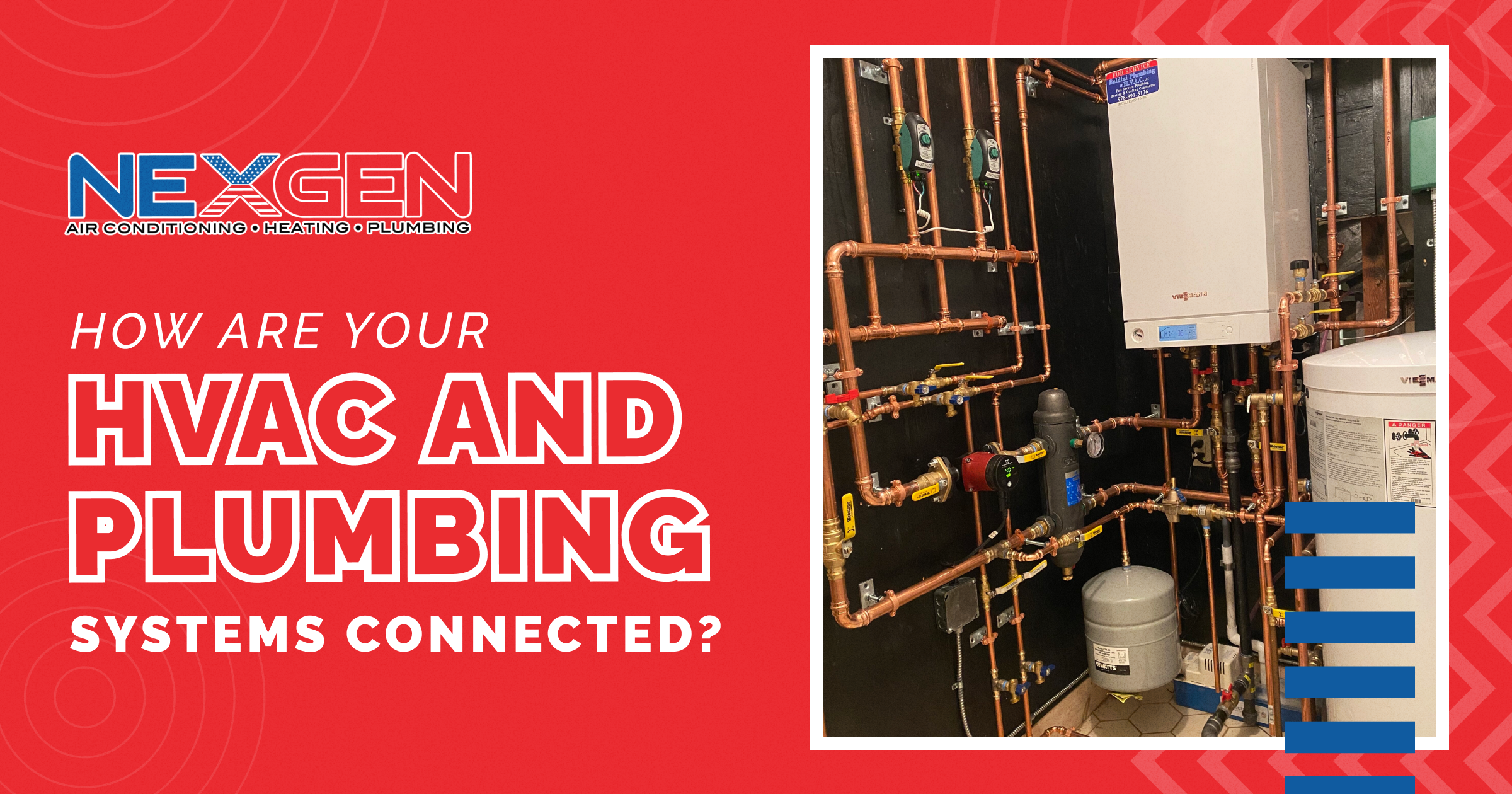
Air conditioning (HVAC), and plumbing (which involves water supply/drainage lines and connected fixtures), are two separate systems. Most people don’t realize there’s any connection between them. However, HVAC and plumbing do interact, meaning the performance of one can affect the other.
Your Central AC System Has a Drainage Line
The drainage line for your HVAC system is the most common interaction point between it and your plumbing. It collects condensate from humidity (via the condensate pan under the indoor air handler). In some systems, the condensate drainage line delivers water directly to the sewer line. But usually, condensation drains via a line through an exterior wall and to the ground. The line may also be plumbed into an upstairs sink or another part of your plumbing system.
The following issues can arise due to HVAC/plumbing drainage issues:
- For systems connected to the sewer main, a sewer line problem can cause condensation to back up, leading to water on the floor or a ceiling. Water can also potentially damage AC components.
- Water damage can occur to flooring, walls, interior ceilings, baseboards, and other elements of your home.
- Mold and/or mildew can start to grow, and then spread in colonies or through the air especially if it gets inside your HVAC system.
A condensate drain can also become clogged. This problem can be identified when you don’t see the drain dripping when the AC is on. If the condensate line and a different part of your plumbing system are both clogged, a backup can occur. For example, if the HVAC condensate drain is tied to a sink, that sink may start draining slowly.
While the condensate drain can be cleaned by pouring a half-cup of vinegar into it, don’t attempt this too often. If the drain continues to clog up, have an HVAC technician look at it. Another issue is when there’s drainage and your air conditioner is not running.
Inadequate Heating Can Impact Your Plumbing
A compressor problem, low refrigerant, or poor maintenance (leading to dirty coils, clogged filters, etc.) can affect HVAC performance. Your heating system plays a role in keeping your plumbing warm as it does the interior of rooms. If it gets cold enough in your home, pipes could potentially freeze during the winter (especially if they’re installed within exterior walls).
However, a more common issue is when the pipes in your AC system freeze. Since plumbing does not provide ventilation, it’s not going to help HVAC components warm up. If it’s too cold, pipes will continue to freeze and potentially crack and fail.
Often made of PVC tubing, condensation lines are prone to the same issues as water supply lines. They can be affected by cracks, broken joints, and ruptures. The effect is more subtle since the contents of an HVAC condensate line aren’t under pressure. Water exits a damaged line slowly and signs of an issue may develop incrementally over time.
HVAC and Plumbing Systems Both Need Maintenance and Professional Care
Different licensing and certifications are required to service either an HVAC or plumbing system. Air conditioning and heating systems need maintenance at least once or twice a year. Their mechanical nature means they’re highly prone to wear. But plumbing is always in high demand as well, and the presence of water means corrosion, clogs, or limescale can develop. A plumbing or HVAC failure can be costly to resolve. And, both are critically important to the function, comfort, and safety of your home.
Contact NexGen for HVAC/Plumbing Service
We specialize in residential and commercial HVAC and plumbing services. Customers throughout Southern California can depend on us for 24/7 emergency service and heating, air conditioning, and plumbing installation, repair, and maintenance. To get started, book an appointment online or call 833-729-9735 today.
Does a Window AC Take Air from Outside?

It’s a common belief that window ACs bring fresh air into your home from the outside. We’re here to tell you—that’s not true. Instead, a window air conditioner normally pulls air into it via a fan, cools and filters it, and then recirculates that air back into the building. For those who ask, “Does a window AC take air from outside?”, we’ll now provide a more detailed explanation of how it works.
How a Refrigerated Air Conditioner Works
An evaporative unit will pull outside air into a building. This air is first drawn through water-soaked pads to cool it. But that’s not what a refrigerated AC, the most common type, does. It blows air across a coil, through which refrigerant flows; the temperature of the air falls as it passes through the system. Heat is absorbed in the process.
A window AC features ventilation grates on the side. These may seem positioned to draw in outside air. However, they only allow air into the condenser coil to help cool the machine so it doesn’t overheat. Meanwhile, hot air is exhausted through the rear vents.
A Window AC Is a Sealed System
Window air conditioners are sealed, so therefore won’t pollute the air they cool. People may find that if there’s smoke pollution outside, it tends to get indoors. It’s not coming through the AC but rather through open windows, cracks in doors, or small openings in walls and even a unit that might need to be repaired or replaced.
If you find the AC filter becomes dirty more quickly, this same process may be in play. The filter captures particles from indoor air drawn into the unit, so it can recirculate clean air. Without a filter, or if the filter is clogged, particles can damage the unit. A clogged filter can also restrict airflow and cause the AC to strain and work harder to provide cool air.
The Same Goes for All Window ACs
Most window AC units are standalone box-shaped machines. These fit onto the window sill and are easy to install. The challenge is to create an effective seal around the unit, so air cannot get in or out through any gaps. Otherwise, the unit will work harder and you’ll have to pay for using more electricity.
Window ACs use only the air from your home to provide cooling. So do portable split system AC units. These have a tower-style AC unit and an exhaust hose that pushes out warm air via a window fitting. Newer models are often quieter, offer better filtration, and include smart controls.
Fresh vs. Filtered Air: When Does a Window AC Take Air from Outside?
The air you normally feel blowing from a window AC is filtered to remove any pollutants and particles. But the unit won’t remove carbon dioxide, carbon monoxide, and other gasses or microscopic particles that make up, for example, smoke. Fresh air differs from the filtered air in that it originates outside your home.
You may be wondering why you’d want to let air in using a system designed to prevent that. That’s what the vent lever on your window AC is for. If the air in your home is stale, smoky, dirty, or smelly, bringing fresh air in can help clear out the pollution. Opening the vent can also provide efficient cooling if the air is cooler outside than inside.
So, yes, a window AC can take air from outside, but only if you want it to.
Contact NexGen
At NexGen, we install all types of air conditioning systems in Los Angeles and Southern California. While our licensed technicians are experienced with high-efficiency central and ductless mini-split units, they can install window units as well. These are low-cost, efficient, and easy-to-install HVAC appliances that provide cooling, filtration, and dehumidification. To schedule service by a licensed, insured technician, call 833-729-9735 today.
Benefits of Sewer Camera Inspection Services
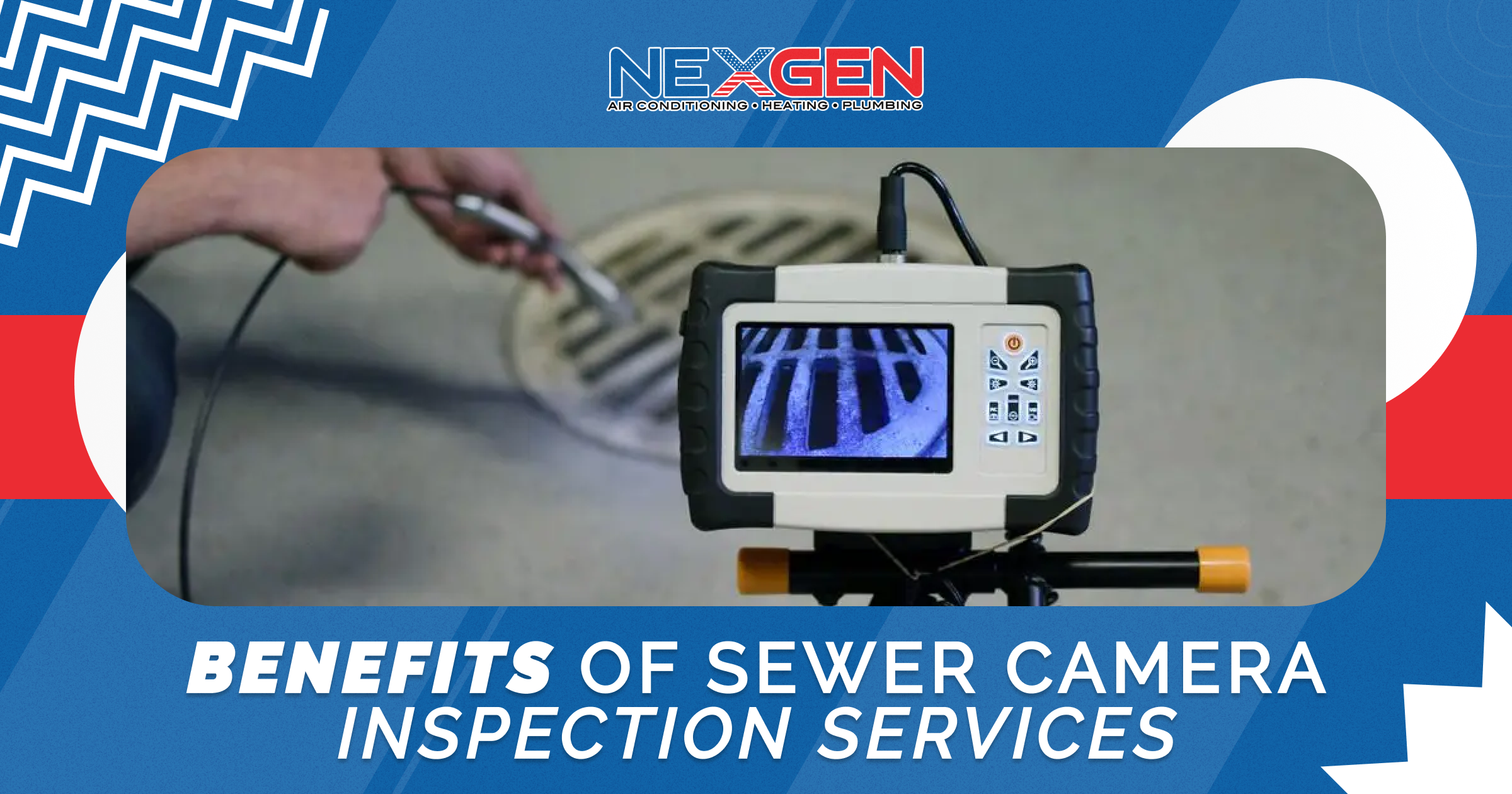
Sewer pipes are buried underground and thus hidden out of sight. Before video camera inspection, the only way to assess their condition was to excavate the ground around them. But now, whether a plumbing issue must be investigated or it’s time for maintenance, you can rely on sewer camera inspection services. A high-resolution camera, attached to a flexible cable, provides a view deep into the sewer system, in real-time.
The benefits of this process include:
No Trenching Is Required
A sewer line can be inspected without invasively digging trenches across yards and landscaping. Equipment is placed in the line via a cleanout or other access point. Once the camera begins transmitting video to a handheld monitor, the technician can immediately start assessing the condition of a pipe. Therefore, sewer camera inspection eliminates a lot of labor and saves a great deal of time.
Numerous Issues Can Be Found Quickly
Issues such as leaks, clogs, and cracked, corroded, or collapsed pipes can be identified wherever in the line they may be. Crushed, bellied, or disconnected pipes can be found as well. And if tree roots have intruded into a sewer line, they’ll be seen right away so a plumbing contractor can get started in removing them. Whatever the situation, your plumber will be able to diagnose it immediately and determine a solution to resolve it.
Property Damage Can Be Avoided
A sewer backup can flood your home with contaminated and even toxic water. Your yard or landscaping can be flooded as well. In addition to being a major health hazard, wastewater can seriously damage floors, walls, ceilings, furnishings, foundations, or anything else that’s in the way. It can introduce bacteria and harmful chemicals as well as cause mold. In extreme cases, water damage can compromise the structural integrity of your home.
It Can Determine If Trenchless Repair Methods Are Possible
A visual look at the issue allows a plumber to decide how to fix it. For example, they can tell whether inserting a pipe liner will restore the sewer line. Perhaps hydro jetting can be used to remove clogs and buildup. Trenchless methods save time and money while eliminating any further concerns over potential impacts on your home plumbing system.
Sewer Camera Inspection Services Are Affordable
The costs of digging, property repair, and extensive labor are removed. Since trenches don’t need to be dug or filled, the process is relatively quick. And because camera inspection spots issues fast, more serious issues and potential sewer line failures can be avoided. That can mean preventing future problems such as slow drains, sewage backups, water damage, and home cleanup and restoration.
A Plumber Can See Exactly What Is Blocking the Sewer Pipe
Sewer pipes can develop many kinds of blockages. Soap scum, cooking grease, trash, food items, and many other compounds can build up on pipe walls over time. Camera inspection helps spot accumulated gunk and grime so a plumber knows when to clean the pipe and avoid a major blockage. They can also determine whether it’s time to repair or replace a sewer pipe.
Contact NexGen to Schedule Sewer Camera Inspection Service
We use state-of-the-art technology to inspect sewer lines. Fiber optic cameras provide high-resolution, real-time views from inside, while the fiber optic cables we use extend for hundreds of feet. Our process is fast, accurate, and effective in helping us determine how to fix the problem, whether there’s a leak, clog, or mineral buildup. We can find its exact location and also accurately map your drainage and sewer lines.
To schedule drain and sewer camera inspection services, book an appointment online or call 833-729-9735 today.
Should I Avoid the Cheapest AC Installation?

It can cost $10,000 or more to install a central air conditioning system in an average home. For most of us, saving money is a priority. But going for the cheapest AC installation can actually cost you more in the long run. In doing so, you risk:
Purchasing Low-Quality Equipment
Some brands are just more expensive than others, but cheap installation often sacrifices quality. The less you spend on an air conditioner, the less reliable and efficient it may be. You also might not get the features and options you need. You may pay higher electric bills and for repairs sooner than you would with a higher-end system. There’s also a risk that too small an AC will be installed, which will struggle to keep your home cool.
Poor Installation Service
HVAC companies that charge significant labor rates are generally committed to getting the job done right. A poor AC installation can mean the unit won’t keep up with your cooling needs, temperatures may vary from room to room, and your home may be too humid. Improperly installed air conditioners also cannot run as efficiently, so you end up paying higher utility bills. Aside from finding a reputable contractor, you want to make sure discounts or savings don’t equate to shortcuts.
Vague Service Proposals
A contractor’s proposal should itemize everything the service includes. Get every quote in writing and after the contractor inspects your home. A lowball price over the phone means nothing, as they won’t fully understand your needs or even do a load calculation first. The company should generously match a competitor’s price, but first, compare previous proposals you received. Allowing them to perform AC installation can mean dealing with discomfort, wasted energy, and poor air quality for years.
Incompatible Equipment
Replacing only the indoor or the outdoor unit can mean spending a lot more later. You won’t see efficiency benefits by combining a more modern unit with an older one. If the components are incompatible, the results can include reduced performance and comfort and strain that leads to major damage. Your best bet is to replace all HVAC components at once to ensure fewer problems and pay for only one installation visit.
Inexperienced Contractors
An AC contractor that charges cheap rates may not have the proper skills or licensing. It’s not cheap to obtain a state license, so a reputable installer must cover some of these costs. Additional training is needed to obtain North American Technician Excellence (NATE) certification and become a factory-authorized dealer. All these require a high level of expertise. It’s also important a contractor is insured; cheap service is an indicator they may not be.
If the quoted price is too good to be true, it probably is. There’s often a reason an HVAC contractor would charge such a low price, such as a history of bad reviews and poor installation service.
Is It Ever Okay to Save on AC Installation?
You can achieve savings and preserve quality by taking advantage of seasonal discounts, manufacturer’s rebates, and tax credits. When you get quotes from different contractors, compare what’s included in each to find the most value. Also, schedule AC installation for the spring and fall, when there’s less demand off-season. Generally, paying a fair price often means having a system that meets your needs and is affordable to operate.
So, the answer is, you should avoid the cheapest AC installation. There are safe ways to reduce the initial cost, but you can find opportunities to save later. These include changing your AC filters often, maintaining a constant temperature, and scheduling regular preventative maintenance when the manufacturer and contractor recommend it.
Contact NexGen for High-Quality AC Installation
The #1 HVAC company in Southern California, NexGen offers high-quality AC equipment including traditional, electric, rooftop, and ductless units. We also supply and install air purification systems and the latest thermostats. Our team of experienced AC installers ensures 100% success with each job, while free estimates, financing, and a membership maintenance plan help make our exceptional service affordable.
To schedule a free estimate and evaluation, call NexGen at 833-729-9735 today.
Is a Landlord Responsible for Changing Air Filters in California?
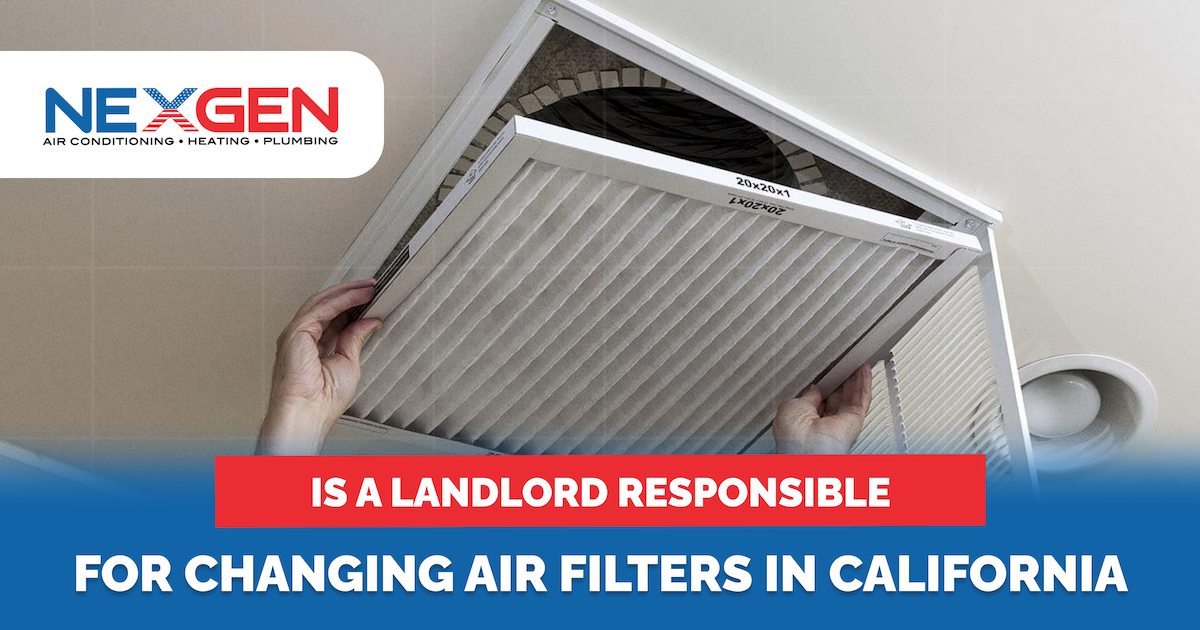
Your apartment lease will outline what the tenant is responsible for and what the landlord is responsible to take care of. If the lease requires the tenant to maintain the air filter, you are responsible for changing it. But maintaining a heating and cooling system is often the landlord’s responsibility. The condition of the air filter is one of many things you should check before moving in. But as for the question, “Is a landlord responsible for changing air filters in California every time?” Well, that depends on the lease agreement.
Housing in California is legally required to have functional, properly maintained ventilation and heating systems. The landlord is responsible for any repairs unless the tenant caused damage. Nevertheless, state law requires a rental unit to be “legally habitable” rather than specifically calling for cooling units.
Should a Landlord Change AC Filters?
A landlord can choose whether to require a tenant to replace air filters. If so, it’s a good idea to provide the tenant with information such as the right type and correct-sized filter. When the landlord takes on the responsibility, they’ll need to keep track of when each filter in each unit needs to be changed.
Will My Landlord Maintain My Air Conditioning System?
You can reasonably expect a landlord to handle maintenance if they provided an operable AC system when you moved in. It’s their responsibility to repair or replace an air conditioner if it stops working through no fault of your own. By law, the landlord is required to cover repairs if you call them and make a written statement about the situation, and allow them 14 days to a month to make the repairs.
If your landlord assumes responsibility for changing air filters, failed to do so, and an AC or heating problem occurred as a result, they’re required to fix it. Otherwise, they would violate the implied warranty of habitability. A nonfunctional air conditioner can make a rental unit uninhabitable, which would violate the law.
When you think a repair or maintenance task falls under the landlord’s responsibility, keep copies of all transactions and receipts. Get everything in writing as well. A “repair and deduct” remedy allows you to deduct money from the rent to pay for repairs that cost more than a month’s rent (filters generally cost much less than that). But a landlord would most likely want to make sure filters are in working order to prevent such a circumstance.
There is also an “abandonment” remedy that permits you to move out of a defective rental unit and a “rent withholding” remedy. If the landlord refuses to fix serious defects, you could withhold rent, deduct an amount, or abandon the unit. However, this applies only after providing proof of such defects and informing the landlord of your intent in writing.
NexGen Provides High-Efficiency ACs and Air Filters
Putting aside the question, “Is a landlord responsible for changing air filters in California?”, you can trust NexGen for high-quality, high-efficiency solutions. We can provide upgraded air filters to improve indoor air quality and air conditioner maintenance to ensure your AC performs well. Whether you need routine service or 24/7 emergency repairs, call 833-729-9735 for prompt service.