How to Keep a House Warm Without the Furnace
 Dealing with heater issues can be frustrating. Especially at a time when energy bills continue to climb. If your furnace can’t keep up this winter or quits, there are other ways to warm up your home. Does that mean you can just forget about it? Not exactly, but while you wait for service, follow our suggestions to keep your house warm without the furnace.
Ways to Warm a Room Without a Heater
Here are some simple ways to warm things up, without investing in a new heating system:
- Seal All Windows and Doors: Every window and door should be kept closed and have intact gaskets and weather sealing. Think of it this way. Even if your furnace was working, the heat produced wouldn’t stay in your home without properly sealed windows and doors. Repairing gaskets, replacing weather sealing, and using caulking or plastic can minimize air leakage and improve comfort.
- Indulge in Cooking: An oven should never be used for heating. But using the oven for cooking naturally heats your home somewhat. This is a good excuse to cook often. If you enjoy cooking, baking helps to dry the air, so is a great idea. Braising, roasting, and heating soups and broths on the stove help too. If possible, try to avoid producing steam, as it can make the air more humid (in winter, this makes it feel colder).
- Rearrange Your Furniture: External walls are typically colder. Therefore, move your furniture against internal walls so you’re less likely to feel the colder air. This might not warm up your home per se, but you’ll certainly not miss your furnace as much.
- Allow More Sun to Reach Your Home: If plants or sheds are blocking sunlight, remove them. Also, move any items sitting against sun-exposed walls on the side of your home. Therefore, you can naturally keep your house warm without the furnace.
- Use Curtains: Curtains can block chilly drafts of air. You can open them to let in natural light. Meanwhile, closing them when the sun’s not out helps prevent heat loss. Simple clear shower curtains can be quite effective at capturing much-needed warmth.
- Seal Off Unused Rooms: Heat loss can be reduced by closing the door to an unoccupied room. This creates an extra barrier between occupants and the cold air outside. Even without your furnace, heat can still circulate and pass from one room to another, but you can try to keep it where you need it.
- Lay a Rug or Carpet: Wood, stone, and other flooring materials often feel cold to the touch. A rug or carpet feels warmer and can prevent heat loss through the floor, thereby keeping your home warmer.
- Light Candles: Candles are cheap to buy and produce heat. Candle heaters are an alternative to a central heater or a fireplace; while they don’t produce as much heat, they can provide a fair amount of warmth. If you use candles, don’t place them near flammable items or leave them lit when you’re not in the room.
- Insulate the Attic and Crawlspace: A great deal of heat can escape through uninsulated attics and crawlspaces. When these are properly insulated, heat loss can be minimized, even if your furnace isn’t working.
How Warm Should My House Be?
Around 64℉ to 72℉ is comfortable for most people. If your thermostat is working properly, it will show how warm or cool your home is, even while you’re waiting for furnace repair. As you take steps to keep your house warm, check the thermostat or an indoor thermometer often. Therefore, you can see if the temperature is close to an ideal target.
Don’t Keep Your House Warm Without a Furnace for Too Long
These tips are meant to help you stay warm while waiting for furnace repair. They can also help your furnace (when it’s running) produce just as much heat and comfort without working as hard. But in times of despair, don’t give up on your furnace entirely. Neglecting to repair or maintain it can put your household in danger and, the longer you wait, the more expensive it will be to fix.
NexGen is #1 in heating repair in Southern California. Our trained technicians arrive stocked with fan blades, gaskets, igniters, flame sensors, and other parts your furnace might need. Available 24/7, our team arrives promptly and fixes issues quickly. Call 833-729-9735 to request immediate furnace repair in your home.
Top 10 Heater Allergy Symptoms

A central heating system will keep your home warm and cozy all winter if it’s working properly. Even so, it can still have issues. Heater allergy symptoms that appear when your HVAC system is running mean dust, pollen, mold, pet dander, and other allergens (and possibly toxic compounds) are in your heating system, ductwork, and indoor air.
However, your symptoms may disappear when the heater is turned off or you leave your home. To help you recognize the signs of an issue, here are the top 10 heater allergy symptoms to look for.
- Aggravated Respiratory Illnesses: If you have asthma, severe allergies, or other respiratory issues, a contaminated heating system can worsen your symptoms. It can trigger asthma attacks that can last longer than usual.
- Sinus Infections: Contaminants from air ducts and indoor spaces enter your nasal passages every time you breathe. They can be drawn up into your sinuses and cause inflammation. Sinusitis can be painful and have a variety of effects unless it is properly treated.
- Sneezing: Sneezing is a way to get rid of irritants. In the case of heater allergy symptoms, it’s due to airborne particulates and is often accompanied by sinus congestion.
- Coughing: Particulates and allergens can make their way into your throat and cause dryness. When combined with the presence of irritants, this can cause a great deal of discomfort.
- Sore Throat: The dryness of the air can trigger a sore throat. The irritants in the air don’t help, and neither do bacteria that can remain suspended and cause infections when breathed in.
- Headaches: Sinus headaches and migraines can be triggered by clogged sinuses. The odor from dust, mold, or fungus can cause a headache as well. It’s also one of the symptoms that your furnace may be releasing carbon monoxide.
- Watery/Itchy Eyes: Dusty air can cause your eyes to feel itchy and become teary.
- Fatigue: Persistent exposure to allergens can often leave you feeling tired, fatigued, or sleepy. You may feel dizzy at times as well.
- Nausea/Vomiting: Tiny particles aren’t the only things your heater can release. Volatile organic compounds, or VOCs, include toxic chemicals that can make you feel sick.
- Skin Rashes: Various types of skin rashes can be caused by VOCs as well. Many VOCs evaporate at room temperature. However, some do so more slowly in colder temperatures, which is why dust may hold more allergens in the winter.
Why Winter Makes You More Vulnerable to Heater Allergy Symptoms
Allergy symptoms don’t only occur because your heater is running. Dust also becomes harder to filter out. When it’s warmer, air tends to hold more moisture, making it easier for particles to stick together and fall to surfaces, where dust forms a coating. In colder, less humid air, dust particles tend to stay apart and remain in the air longer. Since they’re smaller, they can easily slip through air filters.
Meanwhile, breathing in dry air can make you more susceptible to allergies. That’s because mucus catches pollutants and protects your body against them. Dry mucus linings and sinuses don’t catch allergens, bacteria, and viruses as effectively. Heater allergy symptoms are your body’s reactions to this constant exposure. Infections can become more frequent as well.
NexGen Can Help Alleviate Your Heater Allergy Symptoms
NexGen installs and services high-quality HVAC equipment and also provides duct cleaning, air duct sealing, and insulation services to help reduce allergens and improve energy efficiency. We also offer comprehensive maintenance services as part of our X Protection Plan. It includes priority service, HVAC tune-ups, and discounts on indoor air quality products. Therefore, you can depend on our team to help protect your home, your comfort, and your health. To get started, call 833-729-9735 today.
Why Is My Mini-Split Freezing Up in Heat Mode?
Mini-splits work hard throughout the year. They work even harder when the outdoor temperature drops below freezing. If the increase in wear and tear isn’t enough, mini-split units are prone to freezing in winter and being damaged by ice. The occasional icicle on the outdoor unit isn’t a concern. But you may wonder why your mini-split is freezing up in heat mode.
To explain why this happens, let's look at how a heat pump works. It does not generate heat of its own. Instead, it moves heat, transferring it from the outside air to your home. As the refrigerant moves through a closed-loop system, heat is pulled from the air and the temperature around the heat pump drops, sometimes low enough for condensation to form on the coil. In extreme cold, this condensation will freeze.
Your Ductless Mini-Split Has Built-In Protection Against Ice
Colder temperatures are bound to affect your mini-split system, but a defrost mode protects it. It is controlled by an internal thermostat that triggers a defrost cycle when the unit’s temperature drops below a certain threshold. The unit then automatically switches to cooling mode to increase the temperature of the outdoor coil. Once the ice melts and the internal thermostat senses the coil is warmer, the system will automatically switch back to a heating cycle.
But if the unit keeps freezing up or doesn’t defrost properly, the following issues may be the cause:
- Faulty wiring
- Poorly installed fan
- Malfunctioning thermostat
- Refrigerant leak
- Stuck reversing valve
- Outdoor coil damage
An issue with air circulation can make your mini-split more prone to freezing. Unless air moves constantly over the evaporator coil, cold air will remain above it and freeze any condensation that forms. A dirty filter can also restrict airflow enough to cause freezing. Dirt on the coil can lead to frost and ice too. So, anything that blocks air movement is a potential contributor to a mini-split freezing up in heat mode.
Can I Unfreeze a Mini-Split Myself?
If the unit isn’t defrosting effectively, turn it off and disconnect it from its power source. The ice may then melt on its own. Or, if necessary, you can gently remove the ice and wipe the coils with a dry cloth. Completely dry the system before powering and restarting it. Even though it may start working, it’s important to address the cause of the problem, whether by changing the filter, having the coils cleaned, or having the refrigerant level filled.
How Do I Stop My Mini-Split from Freezing Up?
Regular maintenance and calling a technician when you suspect a problem can prevent ice from forming. Routine inspections let contractors find small issues that can lead to freezing, so your ductless mini-split will operate normally. However, there are steps you should take to avoid a frozen unit. You don’t need a professional to:
- Turn on the defrost setting at the condenser controls.
- Check the unit daily for ice and take the appropriate actions.
- Cover the mini-split to prevent contact with the snow.
- Elevate the unit (about two feet) so it doesn’t suck in snow and ice.
- Brush off any snow that falls on the outdoor condenser.
Call NexGen If Your Mini-Split Freezes Up in Heat Mode
If your mini-split keeps freezing up while providing heat, it may need to be repaired. NexGen provides reliable ductless heating and cooling system repair no matter what the issue is. We specialize in servicing high-efficiency equipment so it works more effectively and lasts longer. When your mini-split is freezing up in heat mode, it’s susceptible to damage, so call NexGen at 833-729-9735 to schedule immediate repairs.
What to Do When the Thermostat Clicks But Nothing Happens

Regardless of the season or outdoor temperature, you rely on your thermostat to signal your HVAC system to turn on. It’s an unforgiving experience when the thermostat clicks but nothing happens. You’ve come to expect a prompt response. Instead, you’re left uncomfortable and wondering what to do.
Here are a few tips to help you troubleshoot and possibly fix the cause of the problem:
The Air Filter Is Dirty
If the thermostat clicks but the AC or furnace doesn’t turn on, most often it’s because the filter is clogged. A blocked filter will restrict airflow. The particles it’s designed to trap eventually clog the filter media, and the system will be unable to generate heat or cool air. To avoid this scenario, change the filter every 60 to 90 days and consider investing in a higher-quality one that screens out even smaller particulates.
Adjust the Thermostat
If the thermostat clicks but nothing happens, the setting it's on may be the reason. For example, it must be set above the current room temperature for your furnace to turn on. This can be resolved by turning the thermostat up to the highest setting. If the furnace kicks in, turn down the temperature so your home doesn’t get too hot. Also, make sure the thermostat is in “Heat” or “Auto” mode and that the fan is set to “On” or “Auto”.
If adjusting the thermostat doesn’t help, check whether it has malfunctioned. Look for loose wires or relay connections that you can tighten. Or, turn off the breaker to the unit, wait a couple of minutes, and turn it on again (or reset the breaker if it has tripped). The thermostat should start working; if not, it may need to be replaced.
Check the Furnace’s Power Supply
Find the circuit breaker for the furnace if nothing happens when the thermostat clicks. All furnaces need electricity to run. If a breaker has tripped, flip it on and see if your furnace starts running. If the breaker trips again, contact a professional to look at the system.
Check/Clean the Ignitor
A pilot ignitor coated in debris won’t ignite the furnace, even if the thermostat clicks on and sends the right signal. To access the ignitor, remove the furnace’s front panel. Identify whether the ignitor is dirty or clogged. But unless you have experience working with furnaces, call an HVAC professional who can safely deal with the problem.
Restore the Gas Supply
For a gas furnace to work, the gas valve must be open. The thermostat will click as usual. But if you don’t get heat, one place to look is the gas valve. If it’s closed, turn it carefully to a parallel position with the pipe, and the gas should start flowing.
Inspect the Capacitor
A faulty capacitor can be the reason the thermostat clicks but nothing happens. The capacitor stores an electrical charge, which starts the compressor when a signal from the thermostat is received. If the capacitor has gone bad, you may hear a buzzing sound as the thermostat clicks. This means it's trying to start the system but doesn’t have the charge to do it. Since a capacitor is a high-voltage component, it’s best to call a service professional to fix the problem.
Call NexGen If the Thermostat Clicks But Nothing Happens
We provide heating and air conditioning installation and repair throughout Southern California. Our friendly technicians are prompt and committed to ensuring the success of every job, no matter how big or small it is. NexGen is renowned for its high-quality service and competitive pricing for all types of HVAC, plumbing, and air quality equipment. If necessary, we’ll even provide you with a new or updated programmable or smart thermostat. Feel free to book service online or call 833-729-9735 today!
Have No Heating? What to Do Before Calling a Technician
It’s the coldest time of the year and you have no heating. This is a scenario no one wants to face. If your furnace stops working, like most people you’re probably thinking the worst. But a lack of heat is not always a sign of a full-fledged furnace breakdown. Before you call an emergency HVAC company, start with these troubleshooting steps to see if you can isolate if not resolve the problem on your own
See If the Thermostat Is On
Check the thermostat display. If it’s not on as usual and your furnace isn’t running, the thermostat’s batteries may have drained or the device isn’t getting power. Change the batteries (if applicable) or go to the electric panel and check for a tripped circuit breaker. Resetting it should get your heater going again.
If the thermostat is on, verify it’s in heat mode. There will be no heating if the system is set to cool, so adjust as necessary. Check the fan settings as well. If the fan is set to “on” mode instead of “auto”, it will run even when the heater’s off and may blow cold air. Also, make sure the thermostat is set higher than the room temperature, which signals the furnace to start when the air is cooler; adjust accordingly to see if the heater cycles on.
Check If the Heating Equipment Is Switched On
Every furnace or air handler has a switch located on the unit or a nearby wall. The system will work only when the switch is in the “on” position. It’s easier than you think to accidentally hit an on/off switch. So, this is a good place to look if a heater isn’t running.
Install a New Air Filter
A clogged filter can cause a furnace to overheat, in which case it will shut down. Locate the filter and check it for dirt and dust. Change the filter if it’s dirty. This is also a common reason for no heating even when the blower is running. To avoid future issues, replace a flat filter once a month and thicker pleated filters every three months; or, more frequently if you have pets or kids.
Look for Blocked Vents
If a vent is blocked or closed, this can also cause a furnace to overheat and shut off. Check the return air grills throughout your home to make sure furniture, curtains, rugs, and objects aren’t blocking them. Vent louvers must be open as well. If you find any closed ones, moved them to an open position and see if your furnace kicks in. Then check outside vents for leaves or debris and clear them to open the intake or exhaust.
Check the Fuel Connections and Supplies
Locate the gas valve to see whether it was turned off by accident. Turn the handle on the gas meter until it is parallel to open the line. If you have an older furnace, check the pilot light to see if it is on; if not, shut the gas for 10 to 15 minutes and follow the owner’s manual for relighting the flame. Call for help if you smell gas.
If you have an oil or liquid propane heater, check the fuel storage tank. You may have no heating because the unit’s fuel source has drained. Refilling the fuel tank should resolve the problem. Also, check the tank’s valves and open them if necessary; this will make sure fuel will flow to your heating equipment.
Inspect the Chimney Exhaust Flue for Debris
This step requires a little bit of work but can save you an emergency call. Turn off the furnace and then set the thermostat as low as it goes. Then remove the duct and check the flue for debris, birds, or other animals. A clogged flue can prevent the system from exhausting so it could stop working. Once the exhaust is clear, reassemble the parts in the order you removed them.
Look for Drainage Issues
Furnaces can drain gallons of condensation per day. If the drain lines clog up with sediment or mold, a heater will stop working. To resolve the issue, remove the drain hose and clean it with a mix of bleach and water. Let it sit for a few minutes and then flush out the hose before reinstalling it.
Check for Ice
Ice causes big problems for pipes. If you use a hot water boiler, see if the condensate pipe is frozen. Ice buildup tends to occur at the bends in the pipe. You can melt ice by pouring hot water (not boiling) down the pipe or wrapping the pipe in a heat blanket. Once the ice is gone, reset the boiler.
Heavy ice on a heat pump can block heat transfer and damage the system. While a heat pump has a defrost cycle, ice accumulation is a different story. It needs to be resolved by turning off the power and pouring warm water over the affected area. Gently chip at the ice if you can and clear any snow, vegetation, or outdoor items from the unit. Also, inspect the gutters for leaks that can cause water to drip on the unit and freeze (and clear or repair a gutter as needed).
Do You Still Have No Heating? Call NexGen
If none of these steps have gotten your heater working again, it’s time to call a professional. NexGen employs qualified heating repair technicians who are prompt, trustworthy, and experienced at fixing any problem. Our trucks are fully stocked with parts and equipment so repairs can be completed quickly. We’re available 24/7 for emergencies. If you have no heating, and can’t figure out why, call NexGen at 833-729-9735.
How Much Does A Drain Camera Service Cost?

A drain or sewer camera inspection can save you a great deal of money. It helps find localized issues, that if not fixed, can lead to thousands of dollars in repairs. The cost of drain camera service is nowhere near as costly.
According to Forbes, the average cost of a sewer camera inspection in 2022 was $280. On the low end, it could cost as little as $70. While the average price range was between $125 and $500, some inspections cost up to $900 depending on rates, the scope of services provided, and the state or city.
The Variable Cost of Drain Camera Service
The cost of service can vary considerably. A drain camera inspection, according to Angi, averages $685 nationally but can cost as high as $1,175. If repairs are needed the cost will be higher. For example, the cost of materials and labor will increase the price if a toy was accidentally flushed by a child, a drainage or sewer pipe is leaking, or tree roots have gotten in. Plumbers can charge between $45 and $150 per hour so this is something to consider.
Location Matters
As we’ve said, location will impact the cost of a pipe camera inspection. In Orlando, FL, the average was about $315 while in New York City it was $510. Meanwhile, customers in Los Angeles may pay $1,600 and those in Seattle paid an average of $1,535. However, in Pittsburgh, PA, the average price of a camera inspection was a whopping $2,315.
Do I Need a Professional?
A drain camera inspection requires dedicated equipment. Technically, most people can perform an inspection. But this means having to purchase the equipment yourself, which can cost up to $15,000, plus the cost of a video monitor, output, and lighting equipment (rentals are available but cost around $200 per day). There are more affordable camera inspection systems. However, video resolution, reach length, and options for retrieval devices will be limited.
Other Drain Camera Service Cost Factors
When a plumbing company sets its prices for inspecting drains and sewers, here are some other considerations in deciding what to charge:
- Accessibility: Access points, including sewer cleanouts, make it easier for a plumber to insert the video equipment into a pipe. Limited accessibility can complicate matters. The company will have to increase your bill for the additional time and labor, as it may be necessary to remove a toilet or other fixture (then re-install it) to access the sewer line.
- Sewer Length: The farther the camera has to go, the more time the inspection will take. That means paying more for the service. But that’s not your fault. You probably have no idea how long your drain or sewer lines are.
- Bundled Services: Some plumbing companies bundle video inspection with cleaning and maintenance services. They may even include object retrieval or minor repairs in the price. While the service may cost more overall, the cost per task will be less than if you paid for each individually. A plumber may also include drain camera service as part of a new home inspection.
- Type of Equipment Used: It’s typically less costly to use snake cameras (around $40 to $160), but they generally don’t reach that far. Rigid boroscopes offer sharp images and are best for straight piping, but can cost up to $1,700. A CCTV sewer camera can cost up to $10,000 or more, so a plumber will have to consider that.
Call NexGen for High-Quality Drain Camera Service
At NexGen, we use the most state-of-the-art drain and sewer inspection equipment. Fiber optic cameras on long, flexible cables provide crisp views of the interior of pipes so we can quickly identify any problems deep in a drain or sewer line. This avoids digging and lets us make quick repairs at reasonable prices. To schedule a drain and sewer camera inspection in your Southern California home, book a date/time online or call NexGen at 805-301-6788 today.
Are There Combination Heating and Air Conditioning Units for Apartments?
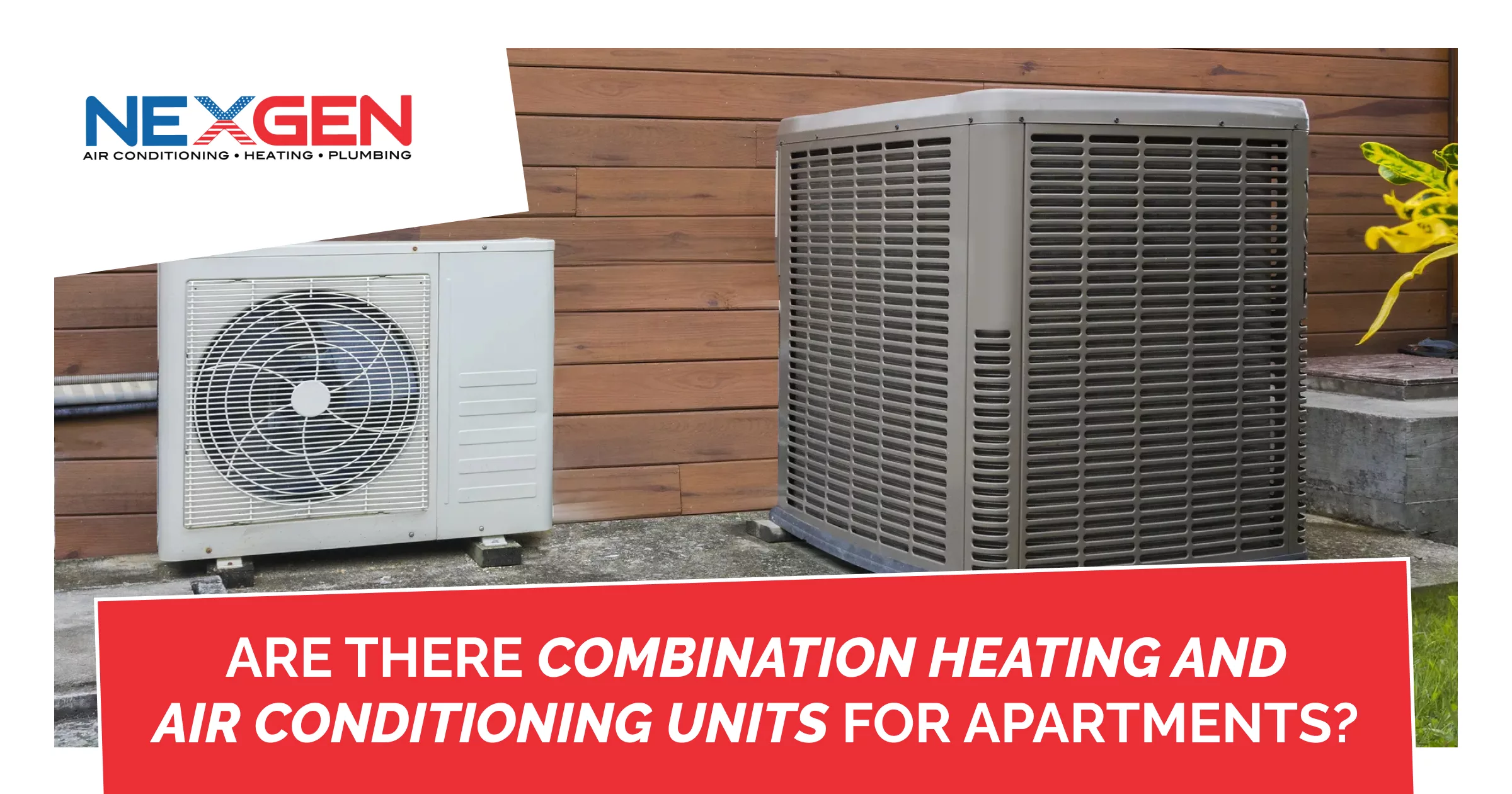
Apartment dwellers often face heating and cooling challenges. Tight space and design constraints can create issues with air movement. A lack of windows doesn’t help either. Limited airflow not only reduces comfort but can also increase humidity, mold growth, and paint deterioration. However, these issues can be avoided by installing combination heating and air conditioning units for apartments.
What Combined Heating and AC Options Are There?
A building can be served by decentralized heating systems, each of which serves a specific area, or a central system. Central units control temperature, humidity, and airflow from a single source. They may have a split design with an outdoor cabinet containing the compressor and condenser, while the evaporator is contained in an indoor unit. Air handlers and furnaces are typically separate components as well.
Common Combination Heating and Air Conditioning Units for Apartments
These aren’t the only heating and cooling systems that can be used in apartments. The following alternatives can save space and provide efficient comfort:
Packaged Central AC
A packaged central unit contains the condenser, compressor, and evaporator in a single cabinet. The unit is typically installed outside (on the ground or the roof). A packaged system often contains electric heating coils or a natural gas furnace along with an air conditioner (a separate indoor furnace is not required). Air circulation is managed by air supply and return ducts that pass through the roof or an exterior wall.
Ductless Mini-Split System
A mini-split is a cooling and heating system that allows the temperature to be adjusted at a certain level for one room, and another level in a different room. An apartment often isn’t large enough for a central unit. While the condenser is installed outside the building, compact mini-split air handlers can provide heating or cooling in individual rooms or small apartments. Separate AC and heater components aren’t required.
Packaged Terminal Air Conditioners (PTACs)
Often installed below windows in hotels, PTACs are self-contained, ductless units. They can heat or cool small areas like hotel rooms, small one-bedroom apartments, and residential add-ons. A PTAC can provide electric heat or be a reverse-cycle heat pump. Either way, it’s a reliable solution and many units have advanced digital controls to make them simple to use.
Combination Heating/AC Considerations
Several HVAC options are available for small spaces. That means there are choices to make, not only on the type of system but also based on specific factors. Every building is different so it’s important to consider the following:
- Size: The unit will work efficiently only if it’s sized right for the apartment’s square footage. The layout of the building matters as well. Excessive capacity will cause the system to use more energy and be more costly to run. A lower-capacity system won’t provide enough heating or cooling; it will struggle to keep up and wear out more quickly.
- Installation Compatibility: To install central air conditioning, a building must have ductwork. Upgrading an old structure with ducts can be difficult and expensive. Combination ductless HVAC units avoid these issues.
- Zoning: Combination systems can be zoned to provide heating and cooling to separate apartments (preferred in multi-tenant residences) or divide larger apartments into areas where the temperature can be set to different occupants’ preferences.
And, as with any HVAC system, look for a warranty. It can save a lot of money especially if something breaks while the unit is still covered. The length of the warranty and what it covers depends on the unit and brand. Read the terms of the contract to know what parts are covered and if labor is included before you sign it.
Purchase Combination HVAC Units from NexGen
Proudly serving Southern California, NexGen offers ductless heating and cooling systems that are compact, versatile, and efficient. These include wall-mount heat pumps with impressive heating and cooling ranges. Our licensed technicians provide HVAC installation, repair, and maintenance services. By signing up for our X Protection Plan, you can receive discounts and priority service, while specials and financing options are available. To learn more about our offerings and combination heating and air conditioning units for apartments, call (833) 729-9735 today.
What Is an ARUF Air Handler?
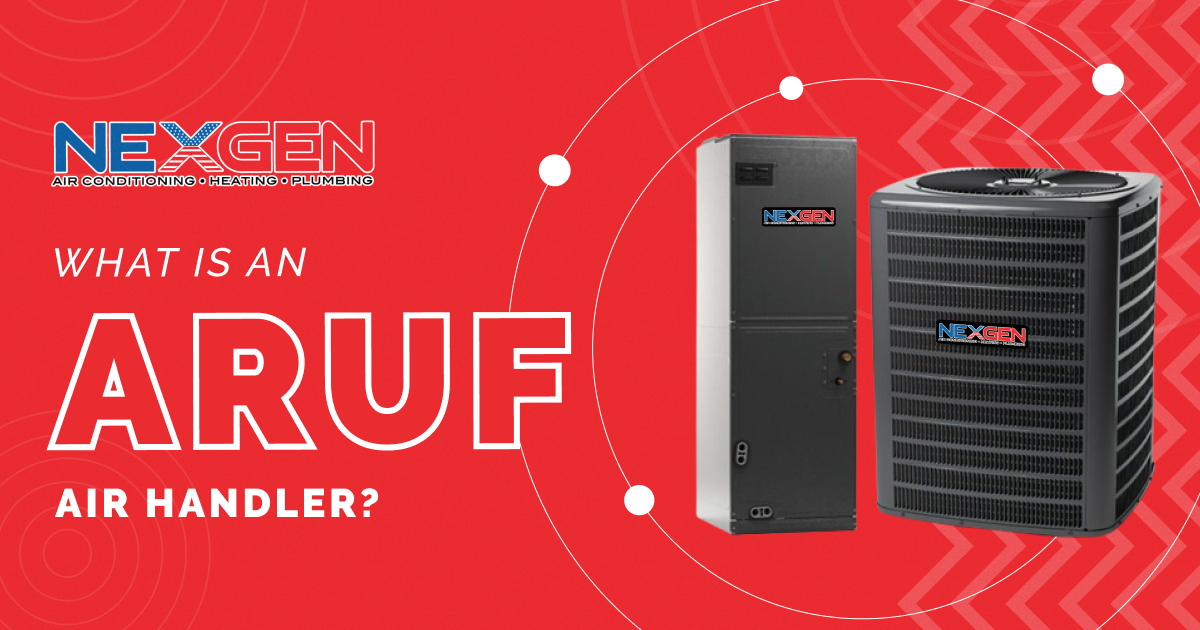
An ARUF air handler is one you’re likely to encounter when searching for an efficient, budget-friendly HVAC solution. At NexGen, the ARUF-Series Electric Air Handlers are extremely energy efficient thanks to an all-aluminum evaporator coil and multi-speed PSC blower motor. We’ll provide a more in-depth description of what this long-lasting indoor air conditioning unit does and why it’s preferred over similar solutions.
What Does ARUF Mean?
ARUF is a name designation for a series of air handlers. We also offer ASPT, AWUT, MBR, ACNF, and other series that offer various benefits. Most feature an all-aluminum coil that allows for highly efficient cooling and durability thanks to grooved tubing. There’s even a coil mounting track so the unit can be easily repositioned.
The air handler is certified by the Air-Conditioning, Heating, and Refrigeration Institute (AHRI) and ETL listed. It has also been tested by the American Society of Heating, Refrigeration, and Air-Conditioning Engineers (ASHRAE). When tested per ASHRAE Standard 193, it was found to have a cabinet air leakage of less than 2% at 1.0 inch H2O.
Other Benefits of an ARUF Air Handler
- Compact Size: The depth of the electric unit is 21 inches, so accessing it via an attic, for example, is much easier than larger units. This simplifies routine maintenance and professional service.
- Advanced Drain System: The unit’s thermoplastic pan is DecaBDE-free; this flame retardant was found to be a risk to the environment and human health. In addition, secondary drain connections are included.
- Improved Refrigerant Flow: The air handler has factory-mounted expansion valves; therefore, refrigerant flow is more precise and efficiency is improved.
- Improved Airflow: Multi-speed blower motors provide improvements in airflow while operating more efficiently; ARUF units maintain a SEER rating of up to 16.
- Compatibility: While being R-22 compatible, our ARUF air handler also works with R-410 chlorine-free refrigerant in heat pump applications. It is designed to meet the latest regulatory requirements.
A Full-Featured Cabinet with a Flexible Design
Available in 1½- to 5-ton sizes, the ARUF air handler is built into a cabinet that can be configured horizontally or vertically. A rigid SmartFrame™ provides improved lateral stability and allows for sturdy mounting of internal components. The blower casing is covered by foil-faced insulation that reduces operating noise and condensation. Screw-less sides and a rear panel also reduce condensation, especially when the unit is installed in a humid location. Better yet, no tools are needed to access the filter, making the unit easier to maintain.
The ARUF’s cabinet is as convenient as it is versatile. It’s available with 3 kW to 25 kW electric heater kits, which are field installed. A 10-Year Parts Lifetime Warranty is included, while members of our X Protection Family receive a lifetime replacement warranty.
Contact NexGen to Learn More
We will gladly answer your questions about the ARUF air handler and how it compares with our other industry-leading electric heating and cooling products. Traditional, rooftop and ductless systems are also available in Southern California as well as thermostats, air cleaners, and air purification systems. To learn more about our air-hander units and other HVAC options, or schedule a free estimate, call 833-729-9735 or book an appointment online.
How to Turn Off the Fresh Air Intake on an Air Conditioner
At NexGen, we lead the way in air conditioning and heating as well as indoor air quality services in Southern California. But with all the air quality testing and air purification system installations we handle, how you use your ACs intake is still important. Fresh air intakes help improve system performance and efficiency. But many people don’t know they can be opened and closed. Here, we’ll explain how to turn off the fresh air intake on an air conditioner.
Locate Your Fresh Air Intake
The air intake is typically an open duct that leads to a vent on a wall outside your home or the attic. There’s a small filter inside the vent so it can deliver clean air. This also lessens the demand on other HVAC filters. Depending on your home, it may have multiple fresh air intakes. The indoor side of an intake usually looks like a grilled vent. It’s often near furnaces or other gas appliances.
Closing A Fresh Air Damper
A damper is a device that allows, blocks, and/or adjusts the flow of air. It typically contains a frame and a blade that moves in and out of the frame using a spring-loaded mechanism. Some dampers can be adjusted in increments to manage the amount of air entering a building. There are different types of dampers, including:
- Control Dampers: Feature blades that fully open or close to regulate airflow and pressure in an AC or boiler system.
- Blade Dampers: Regulate airflow inside an air conditioning system to reduce noise and vibration.
- Balancing Dampers: Located inside ductwork, these regulate the amount of hot and cold air that flows into a room.
To close the damper in your air intake, and block the supply of outside air, follow the system’s owner’s manual. It may require:
- Sliding the dampers manually into a closed position.
- Turning off a fan switch if the intake is fan-operated.
- Using the HVAC control panel to automatically close the damper.
- Turning the lever or knob on an outdoor or indoor unit that says “fresh” or “air intake”.
If manually operating the damper, slide the damper cover over the opening. Do not use a rag, curtain, or article of clothing to block it. You could end up causing damage.
Should I Turn Off My Fresh Air Intake?
Fresh air can prevent the unit from overheating. It also improves circulation which helps your AC remove heat and humidity. Closing the damper forces the air conditioner to redirect air, which can have a variety of effects. But it may be the best option if there is a wildfire or other type of fire nearby, as this prevents smoke, particles, and toxins from getting into your home. Close all windows, doors, and other openings as well.
In addition to blocking harmful substances, turning off the fresh air intake at the right time can:
- Reduce wear and tear on components.
- Save on the cost of repairs.
- Increase system longevity.
But in general, opening both the dampers and vents will help your HVAC system reach the desired temperature more quickly and consume less energy, especially in colder outdoor temperatures.
Contact NexGen to Learn More
NexGen provides heating and air conditioning installation, repair, and maintenance throughout Southern California. We offer duct cleaning and other air quality services as well. If you have additional questions on how to turn off the fresh air intake on an air conditioner or wish to schedule service, book an appointment online or call 833-729-9735 now.
Do Mini Splits Purify the Air in Your Home?
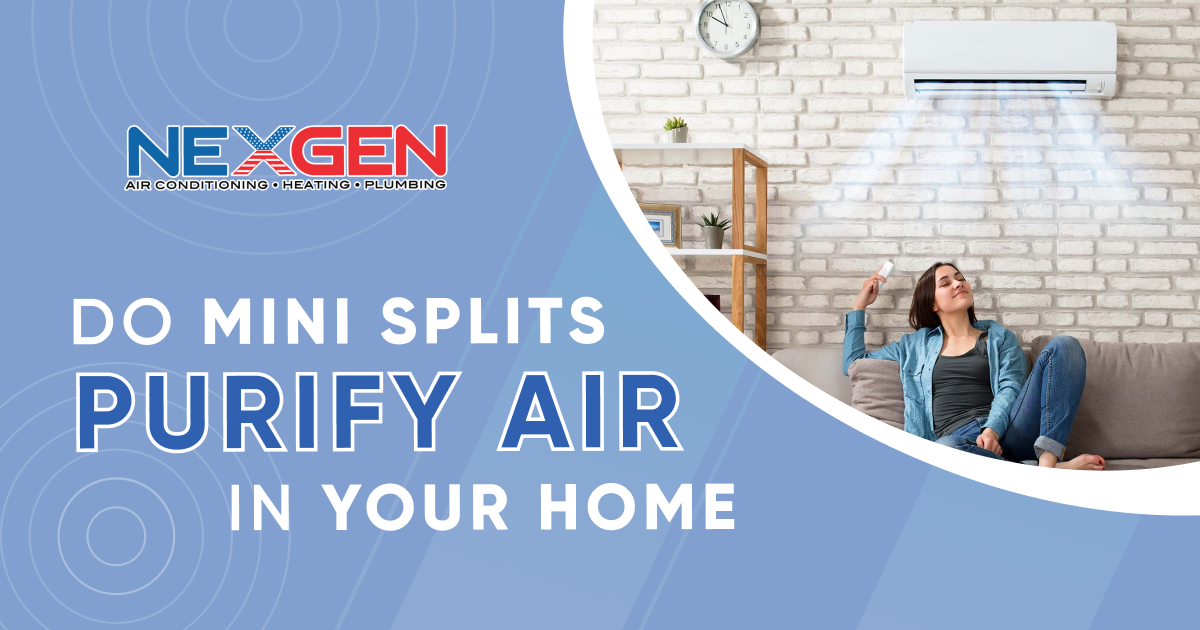
Unlike a central air conditioner, a mini-split system does not have ductwork, which can contribute to indoor air quality (IAQ) concerns. It consists of an outdoor unit and indoor air handlers. A refrigerant passes through the system to absorb heat so the system can provide heating or cooling. So, how do mini splits purify the air if they don’t use ductwork to circulate it around your home?
Why Install a Mini-Split System
Mini-splits can be installed in structures where it’s not possible to install ductwork. Other advantages include setting each room to a different temperature, establishing zoning for occupants with additional heating or cooling needs, and shutting off indoor units in unoccupied rooms to save energy.
Improved IAQ is also a significant benefit many people don’t know about. Ductless mini-splits are quite effective at keeping indoor air safe and clean. They can help decrease allergies, discomfort, and the risk of asthma and other illnesses.
How Mini-Splits Help Improve Indoor Air Quality
Ducted systems are notorious for efficiency issues and intrusion of contaminants like dust, dirt, bacteria, mold, chemicals, organic matter, and other materials that can decrease indoor air quality. A ductless mini-split avoids these problems with the following:
- No Ductwork: It’s less likely for a ductless system to collect pollutants and then recirculate them. Since there are no ducts, leakage of conditioned air, broken ducts and cracks or gaps where particles can enter are not a concern. This reduces the risk of breathing in contaminants.
- High-Quality Filters: A built-in filter allows each indoor air handler to remove dust, dirt, pet dander, debris, mold spores, allergens, and even bacteria. Alternative filters may be available, including anti-allergy enzyme filters, antimicrobial filters, and active carbon filters that trap microscopic airborne particles. NexGen provides a wide range of air quality solutions depending on your needs and concerns.
- Dehumidifiers: Mini-splits also dehumidify the air, whether running in heating or cooling mode. Some have a dry mode independent of cooling. Removing moisture from the air helps prevent mold and mildew growth, especially in dark, damp areas like bathrooms and basements. This can prevent musky smells and some allergy symptoms.
- Improved Efficiency: Mini-split filters remove more contaminants and allow for more efficient airflow. Multi-speed motors automatically adjust to demand. Traditional ACs turn off or run at full blast, but mini-splits can operate at different levels and have high SEER and HSPF ratings. Conditioned air is distributed directly, so both efficiency and air quality improvements are realized.
- Flexible Installation: Installed on a wall, ceiling, or above the floor, air handlers can be placed to optimize airflow and accessibility. They’re easier to clean and maintain as well. This makes it less likely you’ll neglect maintenance that includes cleaning filters and checking the unit for dirt, thereby resulting in cleaner air. The filter should be removed and wiped clean every four to six weeks.
- UV Lamps: An ultraviolet lamp can be integrated into mini-split systems to destroy most microorganisms, including bacteria, viruses, and mold. It can also help reduce maintenance requirements and allow your system to run more efficiently.
Install Mini-Splits That Purify the Air In Your Home
NexGen specializes in the installation, repair, and maintenance of ductless heating and cooling systems in Southern California. We provide a range of air quality services as well. Our goal is to ensure the comfort, efficiency, and safety of our client's homes. To learn more, book your service online or call 833-729-9735 today.
- Cover electrical sockets with plugs or seals.
- Place a fan near an open window when you see or smell smoke.
- Apply weatherstripping to windows to block outdoor smoke.
- Use a door sweep or draft guard to block smoke from outside.
Contact NexGen for Indoor Air Quality Solutions
NexGen can address air quality issues with a range of options. If cigarette smoke, mold, volatile organic compounds, carbon monoxide, or other pollutants are found in your home, we will help make air quality improvements. Air purification and filtration systems can be installed or we can help improve ventilation (duct cleaning, installing dehumidifiers, and furnace repair can help as well).
To learn more about our indoor air quality services in Southern California and request service, call 833-729-9735 today.