What To Do If There's No Power to the HVAC Control Board
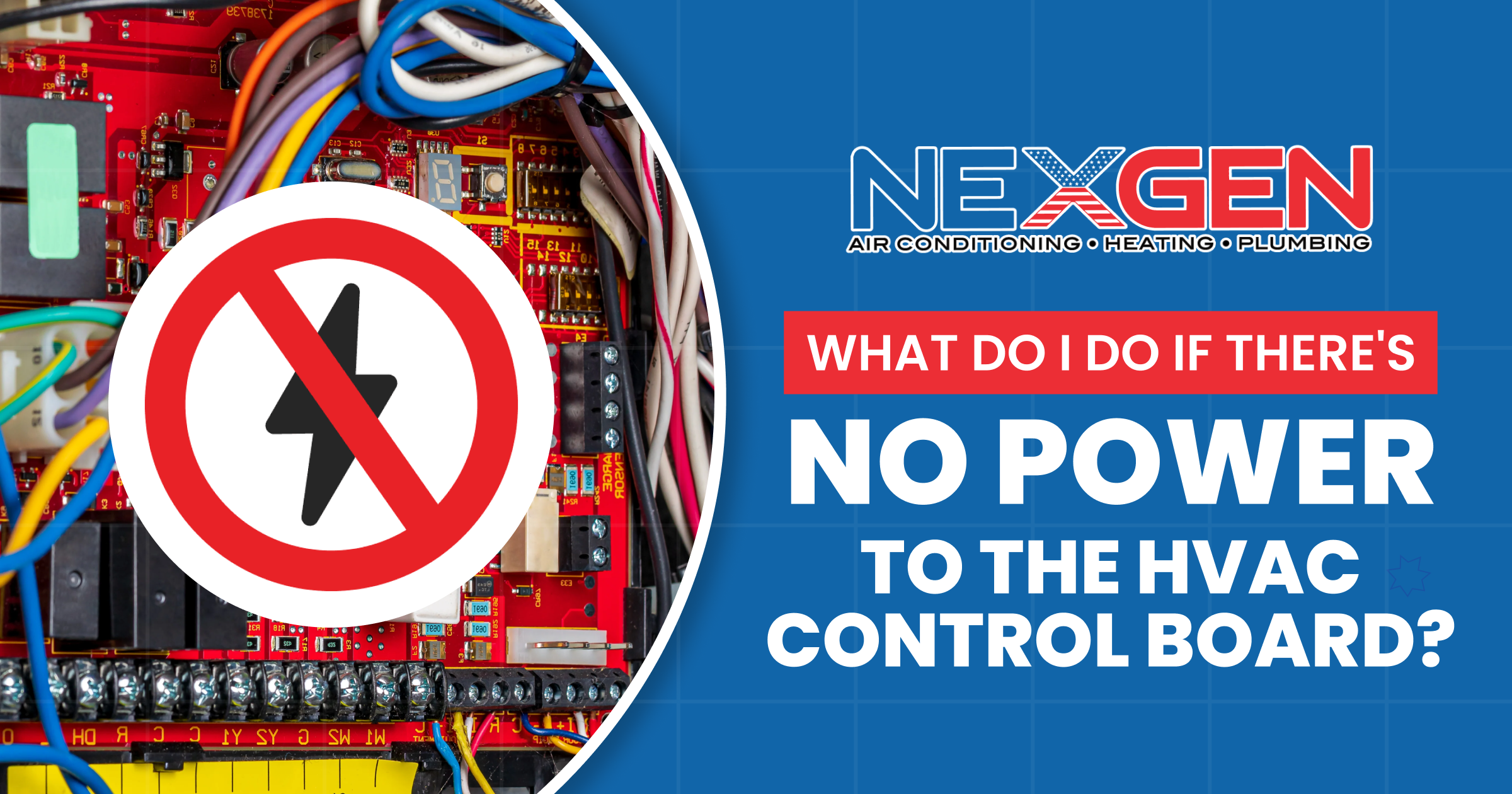
The AC unit, air handler, and furnace are familiar parts of your HVAC system. However, the control board isn’t something you often interact with. If it’s not working, it can’t command any part of your heating or cooling system to operate correctly. We’ll explain what it is, how it works, and what to do if there’s no power to the HVAC control board.
What’s an HVAC Control Board?
The control board is essentially the system’s command center. Input from the thermostat is received by the board, which then relays the appropriate commands to your furnace or air conditioner. A furnace circuit board regulates the ignition, gas valves, flame sensor, blower motor, and other components. A defrost control board works similarly, except it monitors for the buildup of ice and triggers the defrost function when it’s needed.
How to Check the Control Board
First, you’ll need your furnace’s manual, which should show the location and setup of the control board. Before starting, you’ll also need a screwdriver, electrical tape, and a voltage meter. Proceed with the following steps if there’s no power to the HVAC control board:
- Remove the Access Panel: Open the panel, using electrical tape to hold it open. Locate the control board, which is often at the bottom near the blower.
- Check for Damage: If there’s physical damage such as faulty wires or burn marks on the board, it’ll have to be replaced.
- Use Your Senses: Do you hear buzzing sounds? Are there burning or other strange odors? If so, call a professional right away.
- Check the Diagnostics: Look at the diagnostic light on the control board. If it’s not on, the board isn’t powered; if the light is blinking, count the blinks and refer to the manual to determine the problem.
- Test the Power: Check for a door switch on your furnace or HVAC unit; tape it down to prevent any electrical accidents. Using a voltage meter, test the common wire from the transformer to the board. The meter should read 120 volts AC. If not, the board should be replaced.
- Check the Terminals: One last step before replacing the control board is to test the thermostat terminals. After turning the system off, reconnect wires to test each terminal, turning the unit on and off in between tests. With the R and G terminals connected, the blower should activate; connecting the R and W terminals should trigger the heater while connecting the R and Y terminals should turn on the AC. These responses are assuming the control board is powered and functioning.
How Do I Know There’s a Control Board Problem?
If the control board isn’t working, there may be issues with temperature regulation. The symptoms are often similar to those associated with other problems, such as blower fan, power, or filter issues. If your HVAC has warning lights or diagnostic codes, you might see a notification of an unpowered or failing control board. However, the system may not work at all if the control board isn’t powered.
Why Does an HVAC Control Board Fail?
The control board should last the life of your HVAC system. But high temperatures, numerous heating and cooling cycles, or wiring issues can wear it out. A single faulty transistor or relay on the board can result in a malfunction. Sometimes a faulty transformer or fuse is the cause; a technician can provide replacement components to fix the problem. If the board is damaged, usually the only option is to replace it, which requires a professional to handle wiring and installation work.
Call NexGen If There’s No Power to the HVAC Control Board
Customers throughout Southern California rely on NexGen for all types of heating and AC repair. If you have temperature control, airflow, or power problem or need an HVAC control board replaced, our licensed technicians will get your system running again in no time. They are fully licensed and insured. You can reach us 24/7 by calling (833) 729-9735.
Benefits of an Indoor Air Quality System
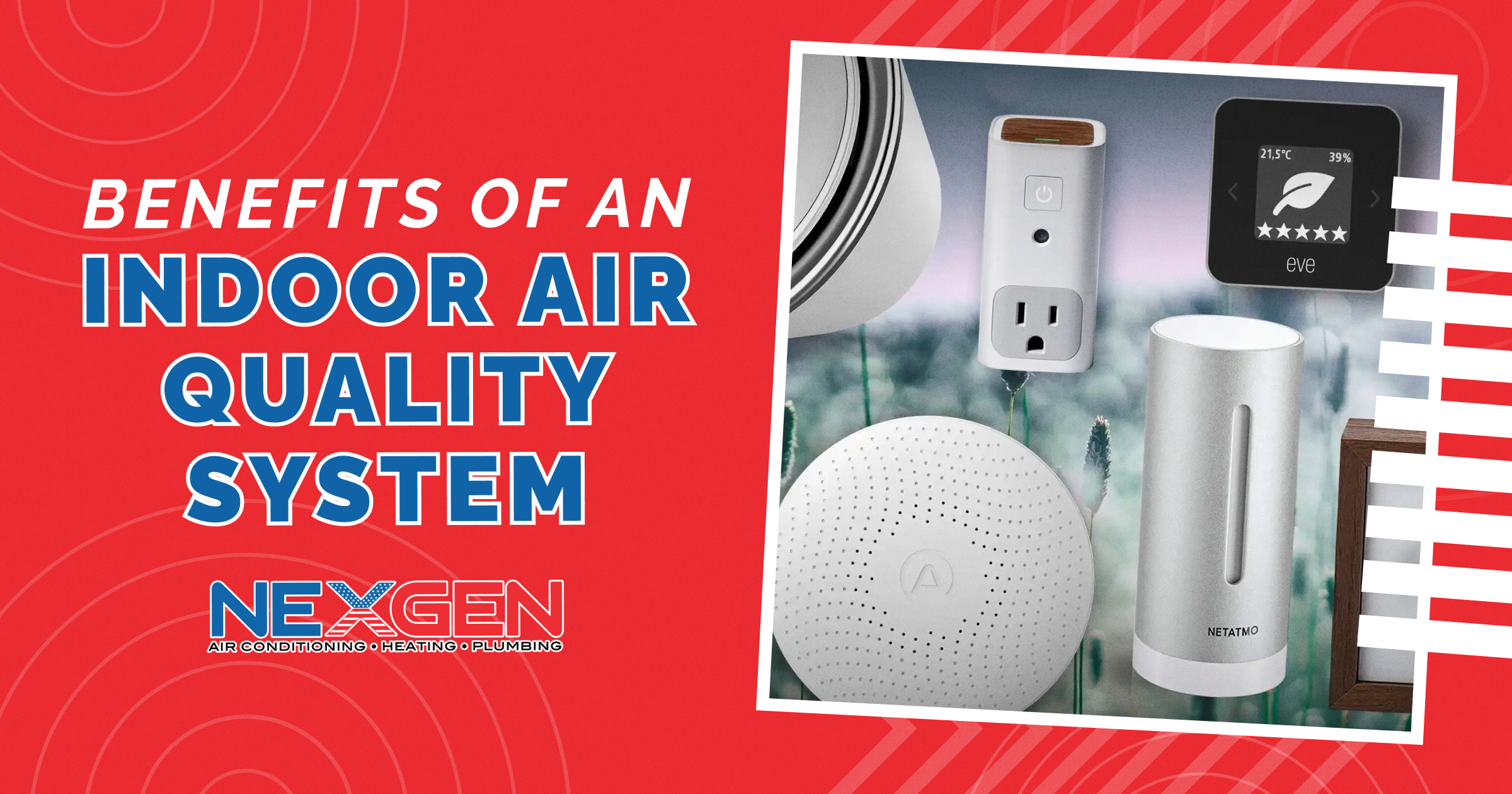
According to the American Lung Association, you breathe in about 2,000 gallons of air per day.¹ Considering all the pollutants that may be present, that means there’s ample opportunity to inhale dust, pollen, smoke particles, chemicals, and volatile organic compounds. Bacteria and viruses abound in indoor air as well. It may be hard to keep all these out, but investing in an efficient indoor air quality system can improve your comfort and well-being.
Why Install an Indoor Air Quality System
Indoor air quality (IAQ) improvements have become a government priority, so they should be on your list as well. The American Rescue Plan, enacted in 2021, included many COVID-19 initiatives and set aside federal funds for indoor air quality improvements in public facilities, schools, and small businesses. But improvements to air filtration and ventilation aren’t only protective pandemic measures. They benefit everyone on a daily basis.
Common IAQ solutions include
- High-Efficiency Particulate Air (HEPA) Filters
- Portable Air Cleaners
- Ultraviolet Light Fixtures
Here are a few reasons to consider installing such equipment:
Breathing Becomes Easier
You can breathe voluntarily, but for the most part, you do so automatically. The average adult takes 12 to 18 breaths per minute without thinking about it.² Breathing in polluted air is hard on your body even if you’re not aware of it. Contaminated indoor air forces you to take shallower breaths, which can strain your heart and lungs. Simple exercises and walking up a flight of stairs can become physically tiring.
Reduced Allergies and Hay Fever
Ventilating your home and vacuuming regularly aren’t enough to eliminate allergens and other contaminants. Tiny particles that float in the air can cause sneezing, itchy throat, irritated eyes, and congestion. For people with asthma and other respiratory conditions, the effects can be even worse. A high-quality air filtration system can benefit everyone when it’s properly installed and maintained, especially during allergy season.
Improved Humidity Control
A good indoor air quality system can balance the humidity in your home. If the air in your home is too humid, it can feel muggy and stuffy. Mold growth is more likely in humid conditions. But not enough moisture in the air can cause dry skin, static shocks, and other issues. The ideal indoor humidity level is around 45%, so there’s a balance between comfort and dry enough conditions to avoid air quality problems.
Fewer Odors
At NexGen, our indoor air quality solutions can help remove odors. Some odors, such as musty smells from mold or sulfur odors from a gas leak, can be hazardous to your health. Others can put you in a bad mood, increase stress, and make it hard to study or be productive. Traditional filters don’t completely remove odors. However, UV and other specialized filtration systems break down organic materials that cause odors so their sources are eliminated.
Improved Energy Efficiency
With cleaner air, your AC filter will take longer to fill up. Airflow and temperature control are improved. Therefore, improved indoor air quality helps your HVAC system work less hard. You may see noticeable decreases in your utility bill because the unit uses less electricity to keep your home comfortable.
Better Quality Sleep
Cleaner air allows for steadier breathing while asleep. Airborne pollutants can not only lead to sleep apnea and other sleep-related breathing problems. They can prevent you from getting the rest needed to replenish your body after a long day. You’ll feel refreshed instead of tired and irritable, which can improve your overall health and well-being.
NexGen Can Help Select an Indoor Air Quality System
NexGen provides air conditioning, heating, plumbing, and indoor air quality services in Southern California. We offer the highest quality solutions on the market to remove particulates, mold, and volatile compounds from the air in your home. Our licensed professionals will help you choose products that suit your needs. Financing options are available to help you afford much-needed products and services. For help with your next indoor air quality system, call (833) 729-9735 today.
Source:
1. https://www.lung.org/blog/how-your-lungs-work
2. https://my.clevelandclinic.org/health/articles/10881-vital-signs
Pros and Cons of a Standing AC Unit
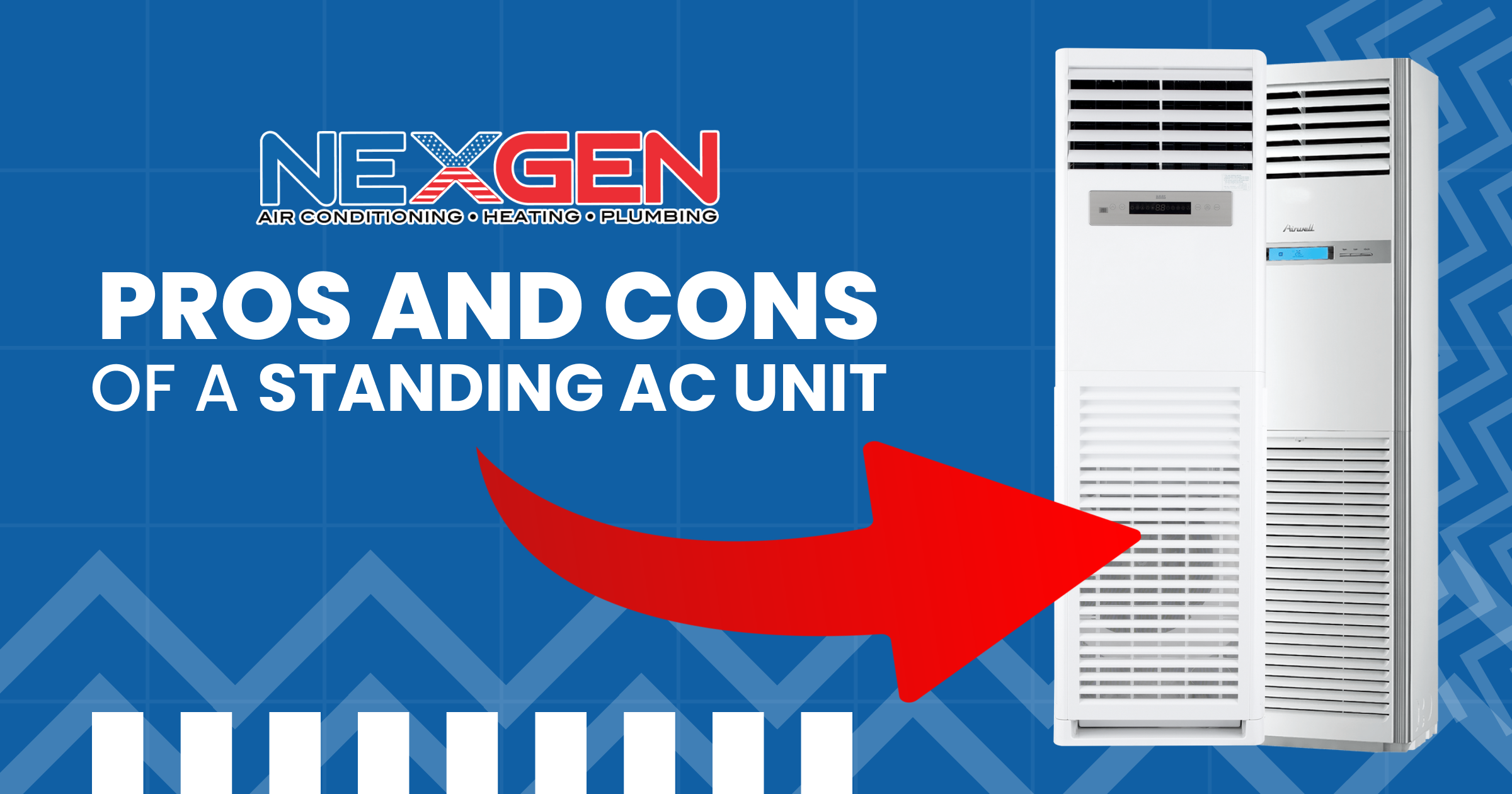
Without a large central AC system, parts of your home may be too hot in summer. Nonetheless, adequate cooling for every room is still possible. A standing AC unit is a convenient option. We will explain the pros and cons of a portable air conditioner, which works similarly to a central air conditioner.
How Does a Portable Air Conditioner Work?
A standing air conditioner can be useful whether you don’t have central AC or it does not serve a particular room. The unit operates on a smaller scale. It draws air from outside through a window, cycles it through a compressor, blows cool air inside, and exhausts hot air outside. All the unit’s working components are contained in a single housing, including coiled tubes that circulate refrigerant. A pipe or air duct allows for an exchange between outdoor and indoor air.
Pros of a Standing AC Unit
The benefits of using a portable AC include:
- Mobility: The unit can be moved from room to room as needed. For example, you can place it in your living room or home office during the day and move it to the bedroom later. Some standing AC units have casters on the bottom, so can be wheeled to a new location. You can even pack one in a car and use it when traveling.
- Easy to Install: The AC unit is ready to use as soon as you bring it home. Its instructions should explain how to connect and assemble the window hose. Vent hoses are usually 5 feet long or less, so units must be installed close to windows. A window bracket, vent hose adapters, and one or two hoses are typically included.
- Suited for Small Spaces: If the particular space you want to cool is small, an oversized AC won’t provide many benefits. Standalone portable ACs are best for 100- to 300-square-foot rooms where spot-cooling is most effective.
- Preserves Access to Windows: The intake/exhaust hose requires a small space. But access to most of the window is preserved. A standing AC unit also does not block natural light, reducing the need for artificial lighting.
- Convenience: Apartment buildings and homeowners associations don’t always allow window air conditioners. A standing unit can be used instead. Many standing models also provide heat. Connecting a portable unit to a programmable thermostat adds even more convenience. Battery-powered units are an alternative when there’s limited access to electrical power.
- Low Cost: Portable air conditioners cost less than central AC units, especially considering the cost of equipment and labor. A portable unit’s compact size and small capacity means it’s also affordable to operate. It can help manage your utility bills.
- Can Also Control Humidity: High humidity in your home can cause wood furnishings to rot, walls to be damaged, and mold and bacteria to spread. A standing AC unit often has a built-in dehumidification function that may work even when cooling isn’t needed.
Cons of a Standing AC Unit
Despite their many benefits, stand-alone AC units have disadvantages worth considering. These can include:
- Not Always Efficient: Compared to window ACs, portable devices require more British Thermal Units (BTUs) to cool the same square footage. Waste heat may be blown indoors, so the unit must handle that too, requiring more electricity.
- Noise Level: All the parts are working within the portable unit while you’re eating or trying to watch TV. You can lower the fan speed or place the unit in a distant corner to reduce the noise.
- Moving It May Be a Hassle: Connecting and setting up the vent line can take time. While the unit’s mobility is a pro, having to redo the installation and get it right may not feel like a great investment in time.
- Difficult to Repair: If a standing AC unit breaks, its design makes it difficult to repair. All the components are tightly sealed in a compact device. Damaged or malfunctioning portable ACs are usually replaced.
Contact NexGen Today
NexGen provides a wide range of high-quality HVAC equipment. We’ll help you determine the best system for your Southern California home or business. Traditional, electric, rooftop, and ductless systems are available and we specialize in the latest air purification equipment and thermostats. Our licensed contractors can help install, repair, and maintain your heating and cooling system. For assistance from licensed, insured technicians, book your visit online or call (833) 729-9735.
Are Air Conditioning Repairs Worth It?

If your aging air conditioner is acting up, a technician may weigh whether to repair or replace it. Air conditioning repairs can have many benefits. They can restore cooling performance, improve efficiency, and extend the lifespan of your AC. But to decide if more repairs are worth it, consider the following:
Cost of the Repair
Different formulas help determine if an AC repair is worth it. Some experts say to move forward with repairs if the estimate is less than 50% of the cost of replacement. If the estimate is close, don’t be afraid to get a second opinion. Another method is to multiply the age of the unit by the repair cost; replace the AC if the total exceeds $5,000. Multiple repairs in one year can strain your budget. However, if the system only needs occasional repair, it’s worth it.
Age of the System
The age of your AC unit is a major factor in deciding whether to repair or replace it. According to the U.S. Department of Energy, a central air conditioner has a lifespan of 15 to 20 years.¹ In harsher climates, it may last only 10 to 12 years. But AC longevity is affected by many factors, including quality of installation and how well it’s been maintained. If it’s over 10 years old and needs major repairs, consider whether replacement is more affordable.
Have You Kept Up with Maintenance?
Annual maintenance and tune-ups can prevent many AC problems. Just by changing the filter every 1 to 3 months, keeping plants and debris away from the outdoor unit, and scheduling minor repairs when necessary, your system can last longer. But if you’ve neglected maintenance, multiple problems may be too expensive to fix.
Efficiency
An air conditioner’s energy efficiency has a significant impact on operating costs. In the Southern U.S., all new ACs must be rated at least 15 SEER (as of January 2023), so having a unit with a 14 to 25 SEER rating aligns with current standards. That means your 12 SEER unit that’s 15 years old costs you more money than necessary (also, consider that operating efficiency declines with age). That means upgrading to a newer, more efficient unit will reduce energy costs.
The AC Still Runs on R-22 Freon
With the phase-out of R-22, Freon and the systems that run on it are becoming scarcer. Recharging an R-22 system is becoming prohibitively expensive. So is finding replacement parts for one. Therefore, you’re likely better off replacing the system with one that uses R-410A refrigerant, a more environmentally friendly option that can’t be used in older units.
Components Are Matched/Mismatched
If an outdoor or indoor unit was once replaced separately, the system may have kept working. But an equipment mismatch can shorten its lifespan. At the very least, it will reduce efficiency. Replacing your HVAC with a matched system will improve efficiency and have a wide range of other benefits for years to come.
Your Home’s Comfort Level
Think about how comfortable you were before needing an air conditioning repair. Has your home not been cool enough? Have you noticed hot and cool spots at home? Are there humidity issues or are your energy bills getting more expensive? If you’ve answered yes to any of these questions, it’s time to consider replacing the system or updating it to one that supports variable speed technology or zoning.
Energy Efficiency Incentives
Even if you could afford another AC repair, what if rebates, tax credits, or other financial incentives can save you more? Manufacturers, utility companies, and local government agencies across the U.S. offer financial incentives for installing high-efficiency equipment. The amount you can save on an air conditioner varies from company to company and region to region. You may save a few hundred or thousands of dollars by replacing your AC.
Are Air Conditioner Repairs Worth It to You?
Whether you base your decision on cost calculations or how your AC is performing, the decision to repair or replace it comes down to your unique situation (unless the system has completely failed). We believe in providing the knowledge to make informed decisions. Air conditioner repairs are worth it for a younger, well-maintained system. But they get more costly as a unit ages along with the overall cost of ownership.
NexGen Will Repair or Replace Your AC
Our experienced technicians provide air conditioning repair services in Southern California. They’re able to fix common issues and ensure your system is more efficient and reliable. But we know sometimes AC repair is not enough. If you’ve had numerous air conditioner repairs and your AC is nearing 20 years old, let’s talk about replacing it. We’re ready to evaluate your system and answer your questions. To get started, call (833) 729-9735 today.
Source:
1. https://nexgenairandplumbing.com/air-conditioning-repairs-and-replacements/
What Does an AC Tune-Up Cost?
An AC tune-up includes the maintenance needed to improve comfort, reliability, and efficiency. Tune-ups can also help avoid expensive repairs. However, they don’t come cheap. Homeowners often wonder how much the service will cost them. The price depends on the scope of the service and where you live. Let’s look at the possible cost of an AC tune-up.
The Average Cost of an AC Tune-Up
According to Forbes, a tune-up can cost anywhere from $30 to $300. On average, it costs around $120 to tune up your air conditioner.¹ That’s a small price compared to repairs that can cost thousands of dollars. A tune-up can even help your AC last longer, delaying the need to pay for a replacement unit.
Factors that Affect the AC Tune-Up Cost
Not every tune-up is the same just as not every air conditioner is the same. The cost of tuning up an AC depends on the following:
- AC Unit Size: The larger the AC unit, the more it will cost to service. You might pay as little as $50 to have a window or small unit tuned up. A large system may cost $350 to $750 to service.¹
- Type of Service: A tune-up can involve just a few adjustments or more significant repairs. A simple tune-up can cost under $200. Replacing a filter will cost under $50, but recharging AC freon can cost $600 or more depending on the issue and your system. It can cost up to $300 just to check for a leak.¹
- Air Conditioner Age: Older ACs are more likely to need big repairs. It’s also more difficult to find replacement parts for them. Scarcity drives up prices. Simpler fixes can be costlier, too, especially if your AC is over 15 years old.
- Local Climate: The more you run your air conditioner, the more wear and tear will occur. If you live in a warm climate like Florida, Texas, or Arizona, your AC may need a heavier tune-up than one in a home farther north.
- How You Care For It: Running the unit for longer than necessary or turning the temperature up or down more than needed can strain your HVAC system. Blocking air vents can decrease efficiency. A lack of proper care may lead to a more extensive tune-up and higher service costs.
Also, note that inspections of your ductwork and ventilation system will cost extra. According to Angi, this can run between $80 and $450.²
Can I Perform an AC Tune-Up Myself?
You won’t save on performing an AC tune-up yourself. Aside from changing the filter and doing simple cleanings, attempting to replace a fan motor, repair a refrigerant leak, or complete any other type of major repair can result in more damage and void the warranty.
When Should I Get an AC Tune-Up?
An annual tune-up should be completed in the spring. It will ensure your AC works all summer and can save on energy bills. Schedule additional maintenance throughout the year if your air conditioner is older or has known issues.
How Long Does It Take?
A standard tune-up takes about an hour if the system doesn’t need any significant repairs.
What’s Included in an AC Tune-Up?
Most HVAC contractors include tune-ups in their maintenance packages. They often include air filter replacements and inspections of fan motors, capacitors, and ducts. A technician will also check the thermostat and electrical controls. Checking refrigerant levels helps determine if there is a leak. If necessary, the drainage system is inspected and flushed.
Contact NexGen for AC Maintenance
NexGen provides high-quality air conditioning maintenance in Southern California. When it’s time for your annual AC tune-up, you can count on our licensed technicians to ensure your unit is reliable and efficient. Tune-ups help prevent breakdowns, but we’re available 24/7 to help in emergencies. To ensure your AC maintenance needs are met, schedule a tune-up today by calling (833) 729-9735.
Sources:
- https://www.forbes.com/home-improvement/hvac/ac-tune-up-cost/
- https://www.angi.com/articles/ac-service-cost.htm
What Do AC Installation Services Include?
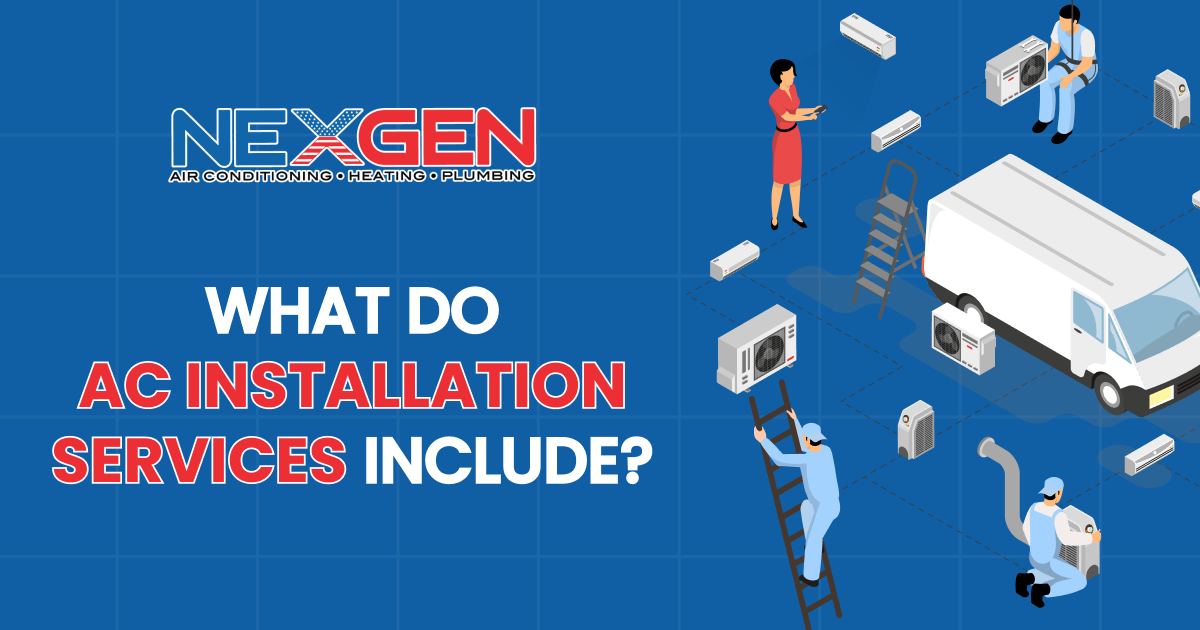
According to Angi, installing a new AC unit can cost up to $8,000(based on 2023 data). But installation doesn’t only include connecting and setting up a unit. There are several steps and tasks homeowners often aren’t aware of. This article will explain the process a trained HVAC technician will follow when providing AC installation service.
Home Evaluation and System Planning
An AC installer will first inspect your home to identify your needs. Are you replacing an existing unit or relocating your HVAC system? Many newer air conditioners are larger in dimensional size, so the current location of your AC may be unsuitable. Manufacturer guidelines, state laws, and local regulations may dictate equipment placement, clearance, and distance from utility meters.
Plus, the installer will consider your climate and the typical levels of heat and humidity. They’ll also perform an energy audit to look for poor insulation, drafty windows, and other factors that can reduce efficiency. Recommendations on improvements often target ways to maximize an AC’s energy efficiency over time.
A Load Calculation
The size (capacity) of an HVAC system must be just right. A technician will determine the square footage of your home and consider other factors to identify the cooling power you need. Many people oversize their air conditioners, lowering efficiency and increasing wear and tear. While sizing an AC unit requires extra time, it can pay off in improved comfort, moisture removal, energy efficiency, and fewer repairs.
A Discussion of High-Efficiency Options
A reputable contractor will explain options that can provide more efficient cooling. If your AC is well-maintained, it can last 15 to 20 years. During that time, you can save significantly if the system is efficient. Air conditioner efficiencies are rated using the following:
- Seasonal Energy Efficiency Ratio (SEER): Measures how much energy an AC unit uses over a year. The higher the SEER number, the more energy efficient the unit is.
- Energy Efficiency Ratio (EER): A room air conditioner’s ratio of cooling capacity in British Thermal Units (BTUs) per hour to its output in watts.
- Heating Seasonal Performance Factor (HSPF): Used to measure heat pump efficiency, HSPF is the ratio of heat output over the season to the electricity the system uses.
Inspect the Ductwork
During an AC installation service call is a good time to evaluate ductwork for issues that decrease efficiency. Some considerations include whether the duct system is compatible with or large enough for the new unit. An inspector will also determine if your ductwork needs to be sealed or repaired. If there’s significant dirt and dust buildup, air ducts will be cleaned as well.
The Team Arrives and Prepares for the Installation
The installation crew should call or text their expected arrival time. You’ll speak to the lead installer about the project, the equipment to be installed, and other details. Good communication avoids misunderstandings and costly mistakes. In preparation for your new system, the installers will turn off the electricity and gas supply to your existing HVAC equipment and add protection to floors and furniture. All the tools and equipment they’ll use will be set up.
Your Existing AC Is Removed
The refrigerant will be safely recovered and discarded with special machinery. A technician who removes AC refrigerant must be EPA certified to do so. Next, electrical wiring is disconnected from the unit, and then the disconnect box and electric power conduit are replaced. The old condenser unit and indoor evaporator coil, air handler, and copper refrigerant line are carefully removed to make way for new equipment. If necessary, modifications to the plenum will be made.
The Area Is Prepared
The pad the outdoor unit sits on is replaced and leveled. The ground below it may need to be leveled too, either by laying a gravel base or pouring a concrete pad. Composite pads are often used as concrete is prone to cracking and shifting and not as resistant to machine vibrations. Thorough preparation is necessary because, after installation, air conditioners can’t be moved or lifted without causing serious damage.
The New AC System Is Installed
The installation procedure depends on the exact type of air conditioner. The general process during AC installation service is as follows:
- The indoor evaporator coil or indoor unit is mounted
- The drain pan is set above the furnace
- The copper refrigerant line set (suction line and liquid line) is installed
- The condenser is unpacked, set on the pad, and wired to the electrical disconnect
- The line set is fitted to the air conditioner’s service valve and welded in place
- The liquid line filter drier is installed near the expansion valve
- High- and low-voltage wiring is connected to the electrical panel
- The condensate drain line is set up
If installing a mini-split system, ductwork installation or modification will be skipped. The installation crew will drill one hole in an exterior wall to connect a conduit between the outdoor and indoor units.
Contact NexGen to Schedule High-Quality AC Installation Services
NexGen is a leading AC installation services provider in Southern California. We take every possible measure to install an air conditioner correctly. Our employees are licensed, trained, and background checked, as well as honest and reliable. If it’s time to replace your AC, we’ll ensure your new unit operates efficiently with no safety or health hazards.
NexGen will also help determine the right type and size of unit for your home. All components, including thermostats, will be set up for you and our team will manage insulation and other requirements. To schedule AC installation and learn about our maintenance plans and warranties, contact us online or call 833-729-9735.
How Do I Know My Home Needs an Insulation Service?
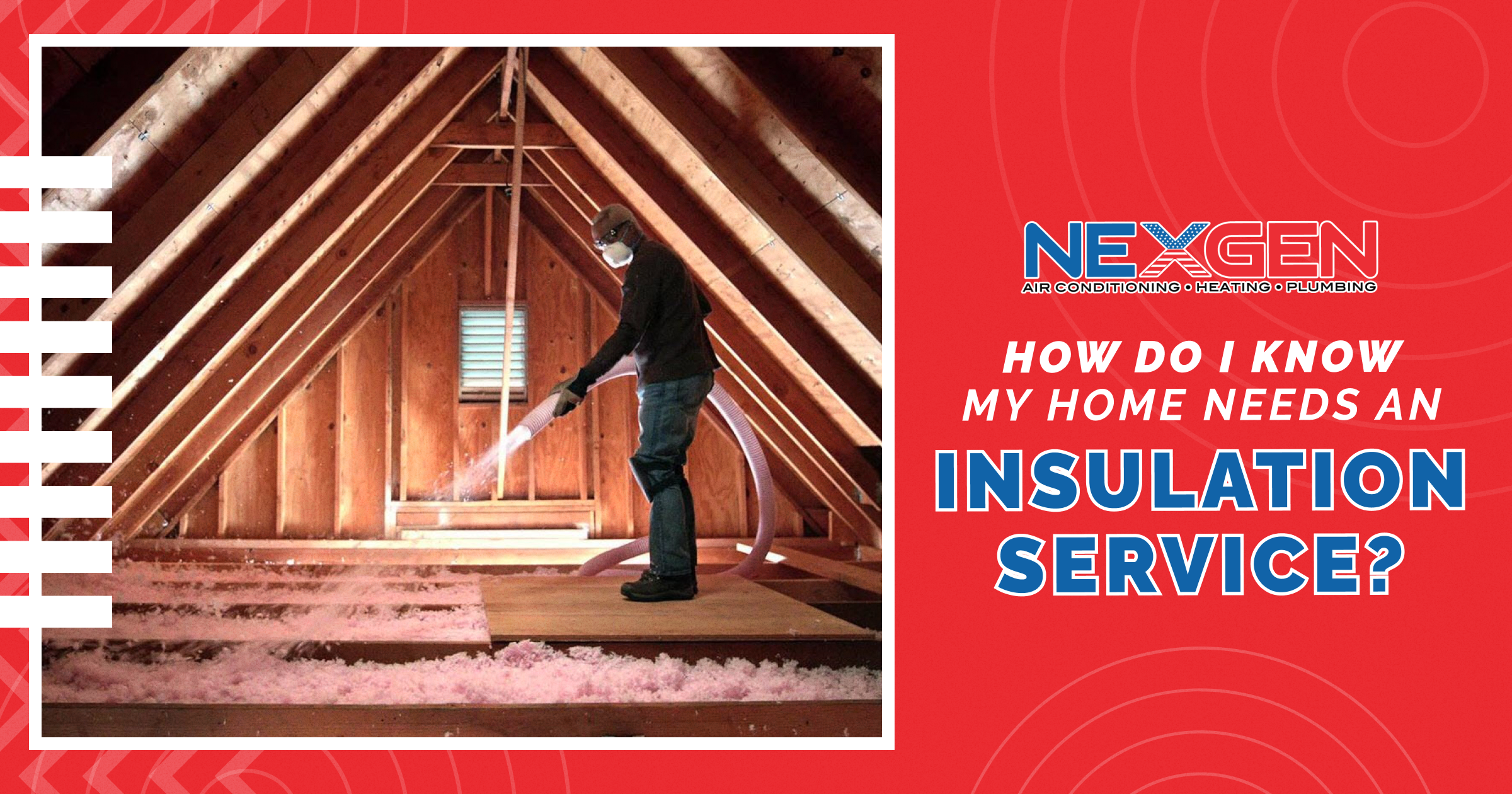
Poor insulation or a lack thereof can make your home inefficient. Many older homes aren’t well-insulated and even newer properties can benefit from improvements. An insulation service professional can determine whether you need better insulation, but there are signs it’s time to give one a call.
Signs Your Home Is Under-Insulated
High Electric Bills
Turning off lights can save some energy but usually doesn’t make a big difference. If you see a significant increase in your monthly electric bill, poor insulation may be the reason. The attic or crawl space may be the source of the problem. Heat or cold temperatures can affect your home if these areas aren’t properly sealed and insulated.
Your HVAC System Is Working Harder
If your heater runs continuously all winter or your air conditioner runs non-stop all summer, your insulation may need to be updated. Contact a professional if you’re using your heater or AC more than in the past or feel drafts near windows, doors, and other locations.
Issues with Temperature Control
Poor insulation or air leakage can make your living room chillier or the bedroom stuffier than other parts of your home. The temperature should not fluctuate as you go from room to room. If it does, your home may be losing heat at the top and cold air may be filtering in through lower sections.
You Find Moisture and Water Damage
When your home isn’t properly insulated, moisture and humidity levels can increase. Existing insulation may be water damaged. You may notice stains on walls and ceilings, damp floors, or moldy smells. These indicate you need an insulation service to have damaged materials replaced.
Pipes Burst
Pipes in exterior walls or that run outside your home, in the attic, or through the basement should be insulated. If not, they can freeze in winter and burst, causing major water damage. Call a professional to insulate your pipes if they’re exposed. It can save a lot of money later.
Water Leaks
Poor or deteriorated insulation can let water in from outside. If water is leaking into the attic, new insulation may be needed. Replacing or improving your insulation can stop water infiltration and prevent mold.
Roof Damage and Leaks
Icicles and ice dams are signs of poor insulation. If your attic isn’t properly insulated, warm air can escape and heat the snow above, forming ice that can damage shingles and siding. Over time, the damage can accumulate and cause your roof to leak.
Increased Allergy Symptoms
If your allergy symptoms get worse at home, you likely have dusty or moldy insulation. New insulation blocks out air that has pollen and other allergens. It may help alleviate symptoms such as sneezing, runny nose, stuffiness, coughing, or headache.
Pest Infestations
Insects, rodents, and other pests use any crack or crevice to seek shelter. Mice, rats, fleas, bedbugs, and other unwanted guests can burrow through insulation and some insects even feed off it. If your home is infested, your insulation may be the reason. Higher-quality insulation prevents them from getting in and finding harborage in warm, soft materials.
You Hear Lots of Outside Noise
If the sounds of traffic, chatty neighbors, and barking dogs disrupt life at home, it may be time to update your insulation. High-quality materials will block noise. Therefore, it won’t distract from indoor activities or disrupt your sleep.
Visible Insulation Issues
Insulation that’s falling from its source must be replaced. It may appear thin, worn out, or wet. When inspecting insulation, wear gloves, safety goggles, and a face mask, and note the type, its thickness, and whether it’s blocking ventilation. Turn off the circuit breaker and remove outlet covers as well; using a flashlight, determine if any insulation is present.
If your inspection turns up any concerns, contact a professional to schedule an insulation service.
NexGen Provides Insulation Services in Southern California
NexGen is the region's leading HVAC and insulation services contractor. Our qualified technicians can address the causes of energy loss, drafty walls, fluctuating temperatures, roof problems, and high energy bills. They can insulate any part of your home. Whether your attic, exterior walls, crawlspace, floors, basement, foundation, or air ducts need to be insulated, you can count on us for professional installation and an industry-best warranty of up to 12 years. We offer various financing options as well to meet your individual needs.
Our home insulation contractors are ready to help. To request a consultation, free estimate, and professional insulation service, call 833-729-9735 today.
Ways to Protect Your HVAC & Plumbing Systems from Heavy Rain

California has endured years of drought, but the past few months have brought one rainstorm after another. Repeated deluges have ended water restrictions for many in Southern California. But the atmospheric rivers that keep pummeling the state can do a number on home HVAC and plumbing systems. We’ll look at a few ways to protect your home from the effects of so much rain.
Ways to Protect Your HVAC System from Heavy Rain
Water can cause serious damage to your HVAC system. Air conditioners are designed to drain condensation, but their components are extremely sensitive to water exposure. The wind is also a problem as it can blow debris onto and into the condenser unit. Fortunately, there are easy ways to protect the system:
Cover the HVAC Unit
If you haven’t covered the AC unit with plywood for winter, place a plywood sheet over the top. It is effective at shielding the unit from snow and ice. If your area doesn’t see much snow, you can cover the unit with a tarp to shield it from rain and strong winds. Strap the tarp on so it doesn’t blow away. Fitting a metal or plywood cage around the air conditioner is also an option. It protects against flying debris.
Secure the Area Surrounding the Unit
Before a storm, trim trees, branches, and shrubs so they can’t fall on the AC unit. You can also plant shrubs nearby to block the wind. Exposed wires should be covered to prevent water exposure and damage from falling objects. The unit should also be anchored to a concrete pad next to a concrete or stone wall, and any loose objects nearby (toys, firewood, outdoor furniture, etc.) should be moved inside.
Install Hail Guards
Thick metal mesh hail guards should be installed before a storm hits. They don’t interfere with the unit’s heating or cooling abilities. And you avoid the unit being riddled with dents, bent fins, or damage to the coils that can prevent it from keeping your home comfortable.
Ways to Protect Your Plumbing System from Heavy Rain
Ironically, your plumbing system, which is designed to carry water, can be heavily damaged by it. Rainstorms pose an especially high risk for drains, as sediment and debris can easily clog them. Underground plumbing is also susceptible to damage by heavy wet soil and standing water. Here are some steps you can take to protect your plumbing:
Improve and Maintain Outdoor Drainage
Excessive rainwater can flood your driveway, yard, or deck and even compromise your home’s foundation. Install drains at low points on your property. And check them often for debris to clear away. Use a wet-dry vacuum to pull out debris if necessary, or install a drain guard to prevent dirt, leaves, rocks, and other items from causing blockages. Also, make sure gutters and downspouts are clear and properly installed.
Know the Signs of a Drain Problem
If your toilet starts gurgling during heavy rain, a drain is likely clogged or backing up. Your toilet may back up if rainwater has gotten into a septic tank. Clogged drains can affect municipal sewer lines as well. When this happens, dirty water can accumulate in drains and cause pipes to crack or burst. If your water looks dirty, tastes coppery, or smells like mildew or something worse, call a plumber right away.
Maintain Your Sump Pump
Sump pumps remove water from basements or the lowest part of your home. If you have a sump pump, it should turn on automatically when water reaches a certain level. At least once a year, pour some water into the sump pump basin to make sure it’s working. If it doesn’t turn on, call a plumber to inspect and repair it before the rain arrives. It will save you from a messy cleanup later on.
Call NexGen for HVAC/Plumbing Service
Whether you need AC repair or a plumber in an emergency, you can count on NexGen for prompt, effective solutions. Recent storms in California have affected many homeowners. Be on the alert for air conditioning or plumbing issues and reach out to us as soon as anything seems awry. We’ll provide repairs, drain cleaning, and inspections and address any mold or indoor air quality issues caused by recent rains. To get started, book your appointment online or call (833) 729-9735.
How Do Portable Air Conditioners Work?
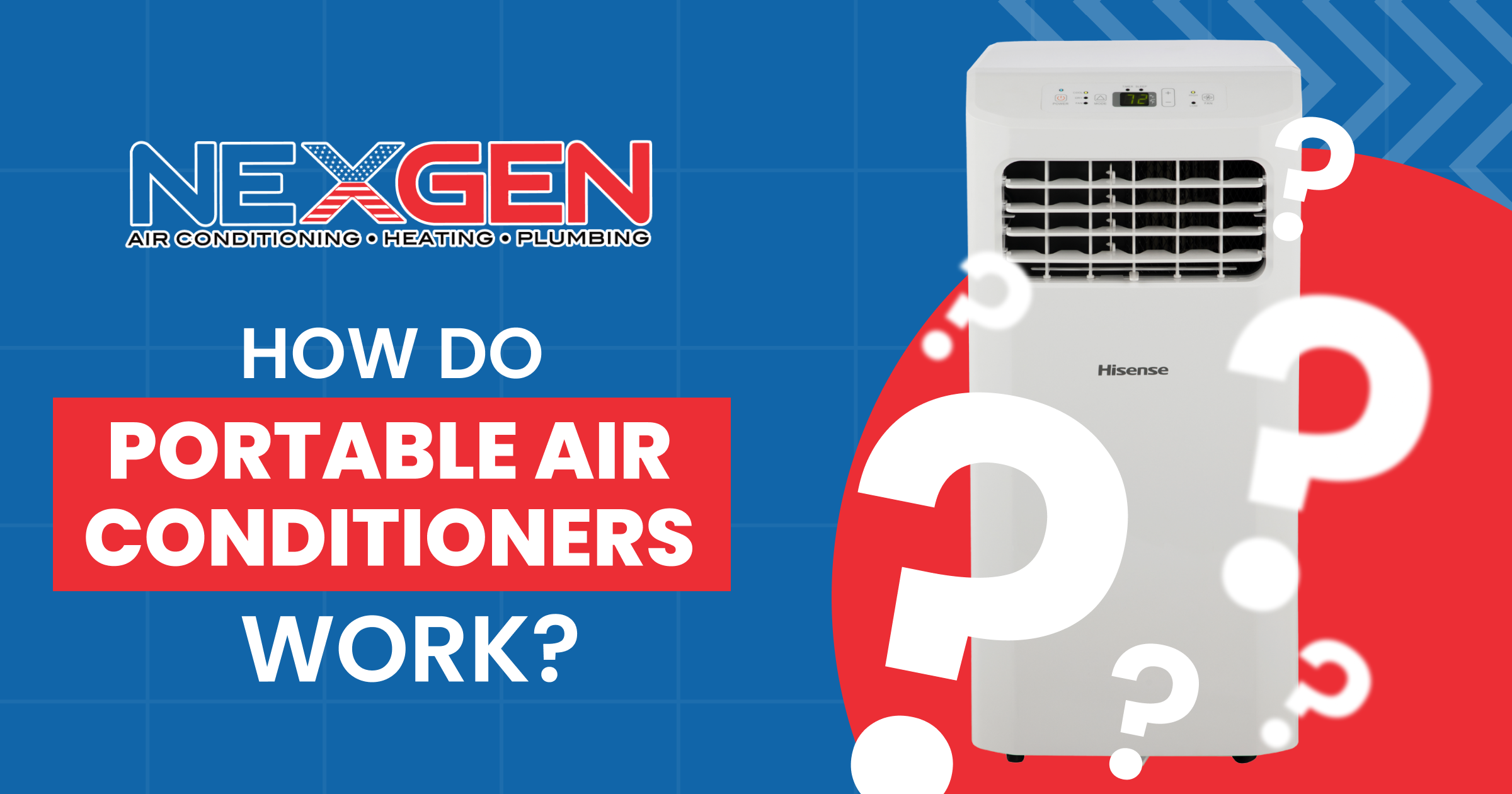
If you’re looking to cool a room or small space, a portable air conditioner can do the job. It effectively cools the air, circulates it, and removes excess humidity. We’ll now answer the question, “How do portable air conditioners work?” in more detail to help you decide on whether to install one.
How a Portable Air Conditioner Works
A portable AC is typically a single freestanding unit with wheels or casters at the bottom. It has a fan that pulls in hot, humid air from the room. Inside the unit, heat is transferred to refrigerant running through the condenser coils. At the same time, water vapor condenses on the coils, removing humidity. The refrigerant turns into a high-pressure gas that eventually releases the heat that’s absorbed from the air.
Moisture that is collected by the system is removed by emptying an internal water reservoir. But many portable air conditioners have an exhaust hose that vents moisture and heat outside. Depending on the model, it may require a separate window venting kit, or it may direct exhaust through an existing air duct.
Portable Air Conditioner Features
Some portable ACs use a single hose that removes warm air and moisture. Others have a dual-hose configuration; one hose pulls in fresh air from outside (to cool the compressor and condenser coils) and the second hose pulls excess warm air and moisture from the unit and releases it outside. A dual-hose unit can often cool a room more quickly without creating negative pressure.
Depending on the model, a portable air conditioner can be remotely controlled, operate in fan mode only, or cool a room to a set temperature. Units with a timer can start or stop depending on the time of day. Other products can dehumidify the air without being set to cool, while others move side to side to help distribute cool air.
Installing a Portable Air Conditioner
The installation requirements will vary depending on the model you purchase. Most units are easy to set up. Just remember to consider the following requirements:
- Free space to place and set up the portable air conditioner.
- A space at a window or other opening to attach the exhaust hose.
- A 120-volt power outlet (unless the unit is rated at 14,000 BTUs or more).
How to Use a Portable Air Conditioner
Portable AC units are designed to be vented out a window. This is how portable air conditioners work. Hot air must be vented somewhere; if that’s not a window, a hose can be directed up a chimney or through a hole in the wall. However, it’s not recommended to change the length of the hose, as it’s designed specifically for that machine (doing so can overheat the unit or void the warranty). If you must run the hose through a sliding glass door, purchase an extension kit suited for the model and use styrofoam or plywood to fill the void around the hose.
The drainage method depends on the unit. If you have a self-evaporative, portable AC, moisture will evaporate out of the exhaust hose. Some systems have a gravity drain that eliminates water that’s pulled down and out of the unit by gravity. A condensate pump can be used to collect water so you can dispose of it. If your portable unit has a collection tank, it will collect moisture inside. To empty it, turn off the AC, remove the collection bucket, and empty it before placing it back in the unit.
Portable AC Maintenance Tips
Maintaining a portable AC is simple and can help it work better and last longer. First, unplug the unit to eliminate any shock or fire hazards. Then follow these tips to care for your portable cooling system:
- Clean the filter every two weeks, using warm water and a mild dishwashing detergent, and let it air dry before placing it back inside.
- Wipe the exterior of the AC with a damp, lint-free cloth and mild dishwashing soap.
- Wipe off the air vent grille to eliminate trapped particles and avoid blocked airflow.
- Empty the water collection system weekly to prevent overflow and mold growth (if the unit doesn’t self-evaporate).
- When storing the unit, do so in a cool, dry location; keep it covered or stored in the packaging it came with.
Are You Ready to See How a Portable Air Conditioner Works?
A portable air conditioner can be a convenient and effective way to stay cool, depending on your needs. It’ll cool a room and vent heat and moisture out a window when properly installed and maintained. However, it’s just one of many options for cooling a home or office. NexGen provides professional air conditioning services in Southern California and high-quality central, window, and packaged units as well as ductless mini-split equipment and heat pumps.
Our licensed technicians help install, repair and maintain all system components. They can also provide advice on the right type and size of the system for you. Our team will fully explain all your options. If you have additional questions or want to schedule service, call NexGen at 833-729-9735 today.
What to Do If No Power Is Coming to the Thermostat
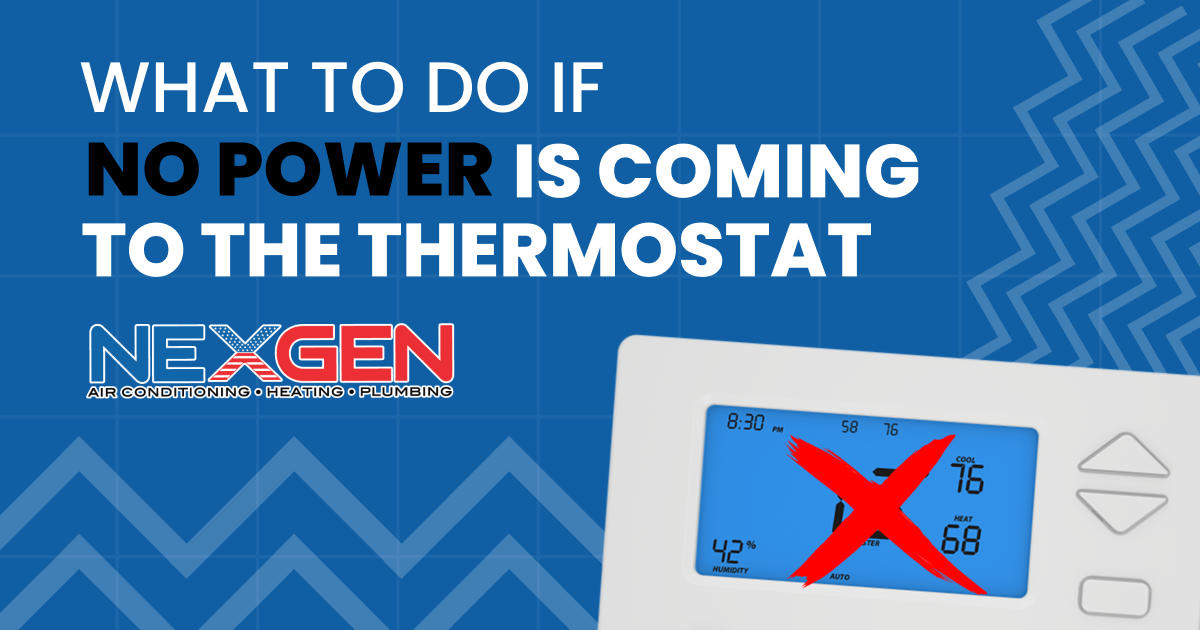
An air conditioner provides cool air. A furnace or heat pump keeps you warm and cozy. But it’s the thermostat that’s responsible for ensuring your comfort. Your home will quickly become unpleasant if it’s not working. One of the most common reasons for this is the unit isn’t receiving power. Below, we’ll explain what to do if there’s no power coming to your thermostat (many of these issues are easy to fix).
Check Whether the Thermostat Is On
If someone accidentally turned the thermostat off, your HVAC system won’t receive any signals to run. It’s not infeasible to brush against something and push a switch. If your thermostat has a touchscreen, it’s even easier to make a mistake. Take steps to turn the unit on and see if it lights up and your heating or cooling system kicks in.
Change the Battery
If you have a battery-operated thermostat and haven’t changed the batteries in a while, there’s no immediate cause for panic if it stops working. The controls and the display won’t have power if the battery is drained. Changing the batteries is simple. Remove the cover and refer to the user manual and symbols in the battery casing to properly insert the batteries.
Clean the Thermostat
Another simple reason no power is coming to the thermostat is it’s dirty. Dirt, dust, and virtually any other buildup can prevent it from working. Wipe down the outside of the unit regularly. To clean the inside, remove the outer cover and either wipe down the interior with a rag or use a can of compressed air. Reinstall the cover and see if the thermostat has power.
Check the Power Supply
You’ll have to look further if the problem still isn’t resolved. There should be something on the display, even if the thermostat is off. If the screen is blank, then the device isn’t receiving power. In this case, you’ll want to check for the following:
- Tripped Circuit Breaker: The main issue here is not with the thermostat itself but with the electrical panel. Go to the breaker panel and locate the circuit breaker for your thermostat. If it’s off, try to reset the breaker switch. This will often fix the problem unless the circuit is overloaded, which will cause the breaker to trip again. You may then need to unplug some devices or have an electrician inspect the wiring, make repairs, or upgrade your electrical panel.
- Tripped Safety Switch: The AC safety switch may trip due to excess moisture or a mechanical or electrical issue. This is the next place to look if resetting the circuit breaker doesn’t work or if the breaker is fine. When the safety switch turns off, the transformer will stop supplying the power that the thermostat needs. Call an HVAC contractor to inspect the safety mechanism.
- Faulty Wiring or Equipment: Bad wiring can prevent power from reaching your thermostat. It can also increase the risk of a short circuit or fire. Check whether the thermostat’s wiring is frayed, broken, or installed incorrectly (the wires/terminals are usually color-coded). It’s also possible the transformer has gone bad. Thermostats have a finite lifespan as well; if your device has stopped working, consider investing in a programmable or smart thermostat that can be controlled remotely and help you save energy.
You can determine if the wiring is defective by turning the fan from the “Auto” setting to the “On” setting. The blower should start, which means your thermostat is getting power. Or, if the AC is on, turn the temperature down; if the furnace is on, turn the temperature up. The level must be higher/lower than the current room temperature. If the thermostat is receiving power, your HVAC system should start up.
There are also more complex tests that involve checking the wire connections, disconnecting them, or using a multimeter. Unless you’re familiar with wiring in general, it’s best to consult a professional.
Call NexGen If No Power Is Coming to Your Thermostat
At NexGen, we can help select and install some of the most advanced thermostats on the market. Our team can troubleshoot and repair them as well. If your thermostat isn’t getting power, follow our suggestions above and contact us if you can’t get it working. We provide professional HVAC services throughout Southern California. To request assistance, call us at 833-729-9735.