Best Air Conditioners for the Palm Desert Summer Heat
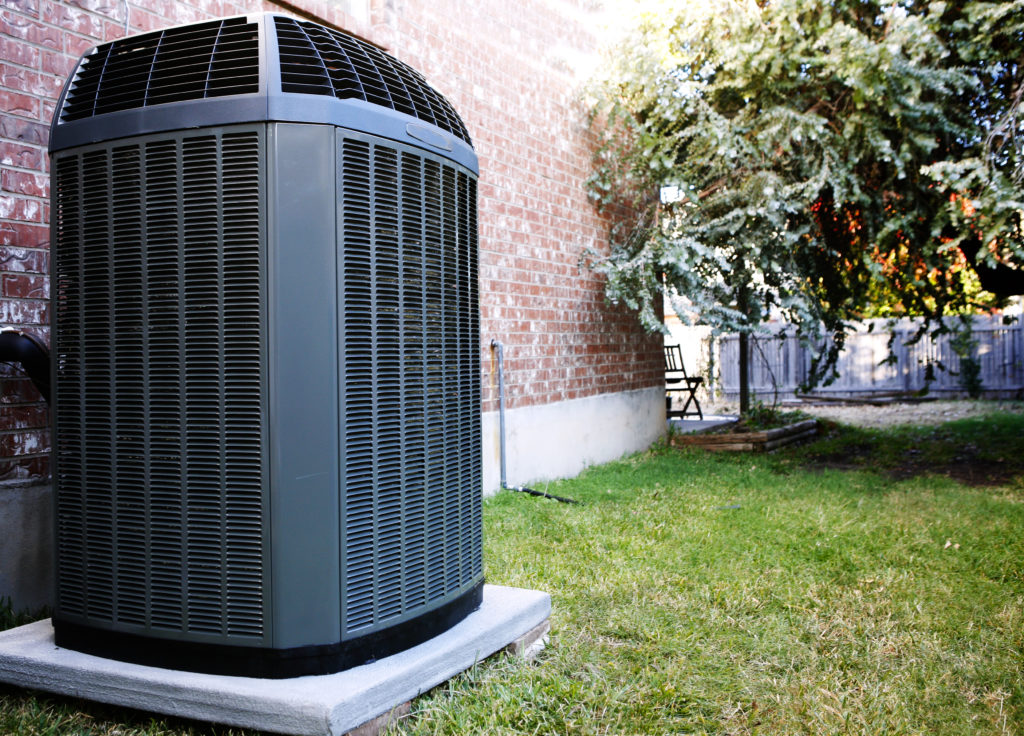
If you live in Palm Desert, or anywhere close by, then you know how a painfully hot day feels. You also know that a good air conditioner is absolutely essential. If you’re looking to get a new air conditioner or want to make sure that you have a decent one, you’ve come to the right place.
New Air Conditioners
If you’re in the market for a new air conditioner, there are a few things to consider: the size, the energy efficiency, and the manufacturer.
Air Conditioner Size
Surprisingly, bigger isn’t always better what it comes to air conditioners. If an HVAC system is too large for your home, it won’t cool your home as efficiently. Plus, overly powerful air conditioners will run for a shorter amount of time, meaning that they won’t have time to properly reduce the humidity in your home. This leads to more sweat, and in the worst cases, to mold in your home. Instead, consult an air conditioning contractor to find an air conditioner size that is exactly right for you. We want you to end up purchasing just enough cooling power, instead of wasting money on size when you don’t need it.
Air Conditioner Efficiency
Get the most bang for your buck with an energy-efficient air conditioner. The U.S. government’s EnergyStar program is the general authority on energy-efficient air conditioning units, so take a look at their recommendations. Greater energy efficiency means a better machine that uses less power for the same cooling effects, saving you money in the long run. A more efficient product means a potentially higher threshold before it hits maximum power, giving you more cooling power over time.
Air Conditioner Manufacturer
There are several trustworthy air conditioning manufacturers out there. Check online reviews, Consumer Reports, and various warranties. Here at NexGen, we partner with Daikin. Daikin has proven to be a customer favorite, and we’ve found them to carry consistently reliable and efficient products. We make sure to only carry air conditioning units that have passed required testing, including tests that make sure units are able to perform in temperatures above 115°F.
Your Current Air Conditioner
If you already have an air conditioner, there are a few ways to help it be the best air conditioner it can be:
If your current air conditioner isn’t performing well, it might not yet be time for a replacement. Before you decide to upgrade, get it checked out for maintenance or service issues. Replacing the air filter, especially when it’s been constantly running in extreme heat, could help your system work like new again. Repairing any loose parts, faulty wiring, or corroded pieces could also be a cost-effective way to get great cooling power. However, if your unit is legitimately older and in need of major repairs, we can also help you with air conditioning replacement.
Air Conditioner is Not Obstructed
One of the number one issues between you and a cool home could simply be objects in the way of your air conditioner. Keep at least a three-foot diameter around your outdoor air conditioning unit. This means that fences, shrubs, landscaping, etc. all stay clear of your unit. You’ll be surprised about how much better your air conditioner works when it has enough room!
Outdoor Air Conditioning Unit is Cool
Finally, keeping your outdoor unit in good condition can make all the difference. Keep it out of direct sunlight, away from the sprinklers, and free from debris. When the unit isn’t under too much heat or outdoor stress, it can do its job and keep your home cool.
Call NexGen Today
Our expertise and commitment to customer satisfaction make us the leading HVAC company in Southern California. To learn more about our equipment, services, and protection plan,
book an appointment online or call
888-277-0415.
10 Steps to Save Energy & Money on Your Air Conditioning in Los Angeles

There will be times this summer in L.A. where air conditioning is a must. However, this can lead to all sorts of fights over the thermostat--or lots of unnecessary money down the drain. Here are some ways to make sure you’re getting the most out of your air conditioning unit.
1. Use blinds or shutters.
If you have window coverings, use them strategically. Keeping blinds and shutters closed when the sun directly hits your windows can make a world of difference. In Los Angeles, depending on which direction your windows are facing, this will be most of the day. This means using less air conditioner power to keep your home cool, and therefore less money and energy spent on cooling.
2. Use a ceiling fan.
The National Resources Defense Council (NRDC) notes that using a ceiling fan can help a room feel up to ten degrees cooler. When you partner this with air conditioning, you can use less energy for the same effects.
3. Get a smart thermostat
If you don’t have a smart home thermostat yet, they’re game changers, especially in places like L.A. where it’s warm most days. These thermostats allow you to control your HVAC system remotely, meaning that you can turn off the air conditioner while you’re away. Do you sometimes forget to turn it off before you leave? Do you not want to walk into a hot home after work? Then a smart thermostat can help you.
4. Get your air conditioner serviced
Your air conditioner can’t do its job if it needs cleaning, repair, or upgrading. Contact us today at NexGen, and we’ll take a look at your HVAC system, and help you get it up and running to its full capacity. When your system is more efficient, you can cool your home with less energy and therefore less money.
5. Avoid using certain appliances
Ovens, certain lights, and stovetops all can add heat to your home. Take advantage of the summer and take the grilling outside, or use the microwave. Try to keep as many lights off as possible--every little bit helps.
6. Check your home insulation
No matter how efficient your air conditioner is, all of that cool air can escape through cracks in your home. Have your insulation checked for gaps, holes, or cracks. Whether you use polyurethane foam, natural insulation, or kingspan insulation, it’s only as effective as it is solid. Seal any cracks with caulking or repair, and rest assured that you’re getting the most out of your system!
7. Use an energy-efficient air conditioning unit
Consult EnergyStar to find HVAC systems or air conditioners that are proven to be efficient. They need less energy to work well, which means that you save money.
8. Place your home thermostat correctly
If your thermostat is near the kitchen or a hot window, your air conditioner may be turning on unnecessarily. Consult an HVAC contractor about where to place your thermostat so that it gets an accurate reading, and cools your home just enough.
9. Never start low
You never want to put your thermostat super low when you first start it. It can be tempting to walk into a hot house and turn it as low as it’ll go, but it won’t do you any good in the long run. Instead, start by going five degrees cooler than the current temperature. This will use only as much energy as you need--and if you’re still warm, you can always go lower!
10. Check your HVAC ducts
Finally, be sure to check your ducts. If they haven’t been looked at in a while, they may have leaks or obstructions that are preventing you from getting the most out of your air conditioner. Schedule a duct inspection and cleaning, or keep an eye out yourself.
If you follow these tips, you’ll be saving money and energy this summer while still staying cool. Over here at NexGen Heating and Air, we’re always happy to help.
Call NexGen Today
Our expertise and commitment to customer satisfaction make us the leading HVAC company in Southern California. To learn more about our equipment, services, and protection plan,
book an appointment online or call
888-277-0415.
How to Pick the Best Mini-Split Air Conditioning System
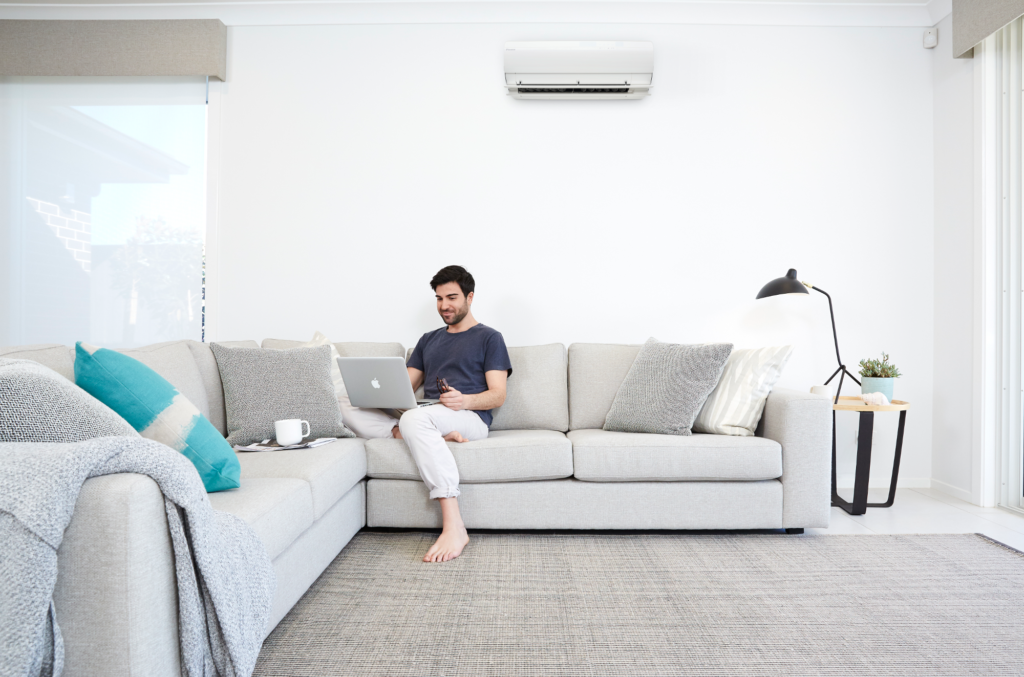
Have you ever wished that you could make a room a little cooler without turning on your entire HVAC system? Or that you could turn off the air conditioner for just one room, to save some energy? Now, we have that technology. A mini-split air conditioner, or ductless air conditioner and heater, is a room-by-room system that can save energy and money.
Advantages Of A Mini-Split Air Conditioning System
There are a few things to consider when buying a mini-split air conditioning system. However, before asking those questions, here are a few of the advantages of any mini-split over another type of system:
No ductwork
There are several reasons that a homeowner might want to avoid ductwork. For older homes, ductwork can be difficult or costly. For homes that enjoy consistent good weather, it is often unnecessary. And for homes with allergies or pets, dust and hair can build up in ducts. Mini-split systems avoid the large upfront cost of tearing through walls and installing ducts.
Change the temperature room by room
One of the biggest advantages of a mini-split system is temperature control. Each person in the family often has different temperature desires, and now each person can control their own room. If only every argument could be solved so easily! This also means that you can turn off rooms that don’t need to be cooled, saving money and energy.
Extra quiet
Because ductless mini-splits are smaller and don’t pump air through ductwork, they’re much quieter than traditional central air conditioners. They can even be as low as 19 decibels loud, which is quieter than the average whisper.
More efficient
HGTV notes that you can lose 25% or more of your air conditioning energy by pumping air through ducts. A ductless mini-split system avoids this problem, and makes sure that you’re getting the most out of your cooling energy by pumping it all directly where it needs to go.
How To Choose Which Mini-Split Air Conditioning System
If you choose a mini-split air conditioner, there are several options. Here are some questions to ask to make sure you get the best system for you and your home:
How many rooms do I need cooled?
Ductless mini-splits are a room-by-room cooling option. Before purchasing, consider how many mini-splits you may need. How many rooms will you consistently need to cool? Are there rooms that stay cool on their own, or don’t need to be cool (like a garage?) Remember that two separate rooms will count as one if they don’t have a door or wall separating them.
How will the system fit into my home design?
Some consumers are hesitant to buy a ductless system because it’s more conspicuous than ducts. Browse models to see which might fit best into your home design, and consider where you might put it in your home. Many people share that they often forget their unit is there after a few days--except for that nice cool air!
Which brands are the most reliable?
Consult review sites, especially reliable networks like Consumer Reports or the Better Business Bureau, to find reliable brands and contractors. Ask experts in the field about which systems last the longest, and which ones customers seem to be most happy with. If you’re looking to save energy, see which systems meet Energy Star standards.
At NextGen, we’re proud to be certified and licensed contractors, and we would love to start helping you and your home stay cool. Contact us today!
Call NexGen Today
Our expertise and commitment to customer satisfaction make us the leading HVAC company in Southern California. To learn more about our equipment, services, and protection plan,
book an appointment online or call
888-277-0415.
10 Signs It’s Time to Replace Your Electrical Panel
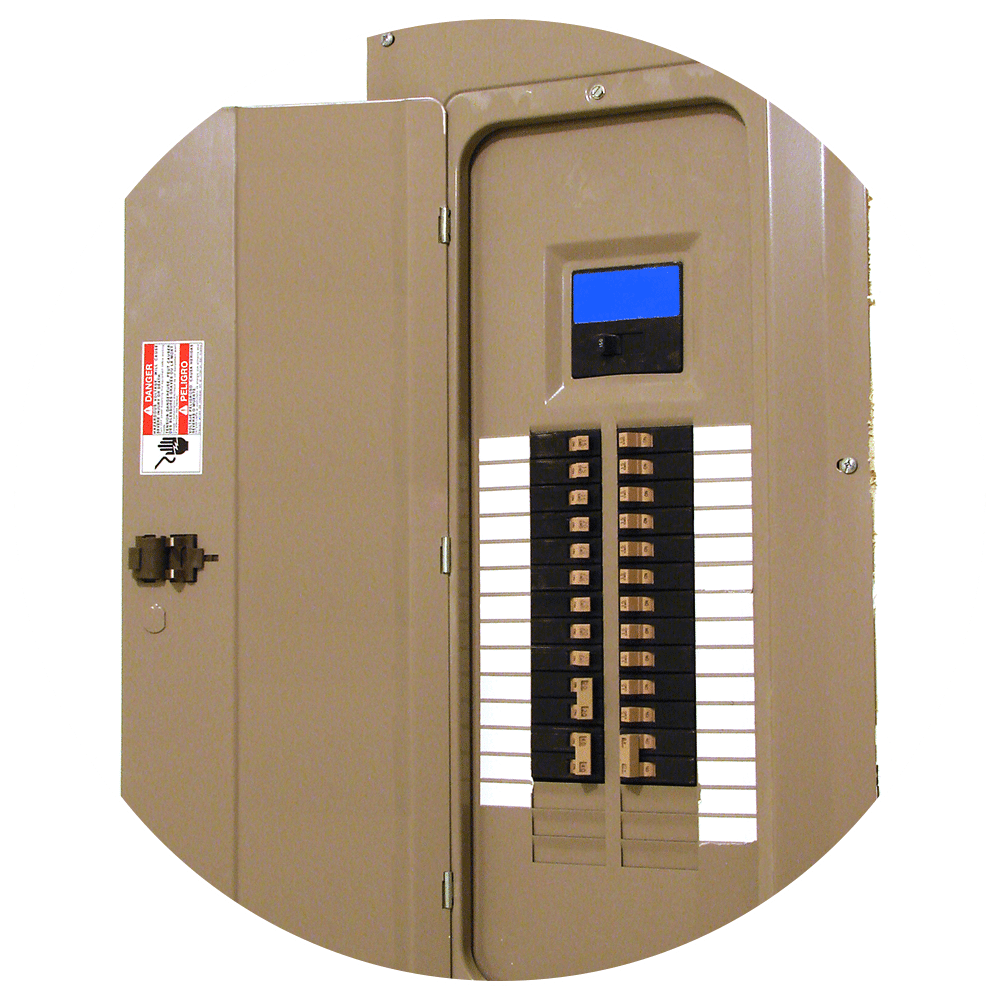
Your electrical panel is an essential part of your home. It regulates your electricity to make sure that you get the power you need, without the risk of overheating and causing a fire. At the very least, an old or malfunctioning electrical panel can be inconvenient. At the worst, it can be a safety hazard. Here are some signs that it might be time to update your electrical panel.
1. Your home is built before 1960.
While most modern homes need at least 200 amps of power for all of their electricity needs, older homes may have as little as 30 amps available. Older homes may also have worn-out wires and parts, and outdated fuse boxes. This may mean you can’t use the electricity you need--or worse, that your worn-out panel puts you at risk for an electrical fire.
2. Your electrical panel is more than 25 years old.
Electrical panels usually last 25-40 years. Parts naturally wear out or become less effective over time. If you can’t remember having your breaker looked at, or if you’ve been in the same house since the 90s, it’s time to take a look at it.
3. Your breakers trip often.
Do some of your breakers trip when you plug in certain appliances? Does part of your power occasionally go out? Do outlets not work if you plug in one too many things? These are all signs that your panel doesn’t have enough capacity, and definitely needs an update.
4. Your electrical panel smells burnt or like melted plastic.
This is a dangerous sign that it’s time to update your panel for the sake of safety. Any burning signs or smells are a sure sign that something’s wrong, and that you might be in danger of a fire.
5. You’ve recently added a new appliance.
If you’ve recently added something new, especially something high-powered like an air conditioner or hot tub, you might need more power to accommodate it. Make sure your electrical panel is up to date to ensure that you get the most out of your new item!
6. Your lights dim when you plug in something new.
If your lights dim when you use the microwave or vacuum, then your electrical panel isn’t strong enough for your home. Consider updating to higher amps and newer equipment to make sure you have all the power that you need.
7. You have a fuse box instead of an electrical panel.
Fuse boxes, common in pre-1960 homes, are an older method of controlling your home’s electricity. Instead of tripping a breaker, fuse boxes “blow a fuse” when the panel overheats. This means having to go out and replace blown fuses instead of simply turning the breaker back on. If you have a fuse box, it’s definitely time to upgrade.
8. Your panel feels warm or hot to the touch.
One of the main purposes of an electrical panel is to prevent overheating, which can cause a fire. If your panel is often hot or warm, it may not be doing its job correctly and could be putting you at risk.
9. You need more outlets than you have.
Do you find yourself wishing for more outlets? Do you use a lot of power strips to fit everything? This could be a sign that your electrical system wasn’t designed for what you need, which likely means the electrical panel isn’t enough.
10. Your electrical panel hisses or buzzes.
Strange sounds are never a good sign. Hisses or buzzes could mean a bad wire, or that something isn’t connected properly.
There’s no reason to risk losing power or not having the electricity that your home needs. There’s especially no reason to risk something as dangerous as an electrical fire. Call us at NexGen today, and we’ll take a look at your system. We’ll work with you in deciding if an update is a good option for you and your home, and to get you the power that you need.
Call NexGen Today
Our expertise and commitment to customer satisfaction make us the leading HVAC company in Southern California. To learn more about our equipment, services, and protection plan,
book an appointment online or call
888-277-0415.
10 Ways to Improve Your Indoor Air Quality

Did you know that some air pollutants are 2-5 times more common indoors than outdoors? This means that when you sleep or spend time at home, you could be breathing in harmful pollutants. Thankfully, there are all sorts of ways to make sure your air quality is healthy. Try some of these tips today to start breathing better.
1. Avoid smoking indoors.
One of the most common and most harmful substances for your air is cigarette smoke, which releases hazardous air pollutants like formaldehyde and ammonia into the air. If you can stop smoking altogether, with the help of medication or a support group, that’s your best bet. Otherwise, try to smoke only outdoors, at least ten feet from your windows.
2. Keep floors and surfaces clean.
Dust mites, mold, pet dander, and other natural air pollutants can cause respiratory problems and aggravate allergies. Be sure to clean your home regularly--even the hard-to-reach corners, where dust and hair build!
3. Clean your air filters.
Your HVAC filters, especially for your heater or furnace, can’t do their job unless they’re replaced properly. Follow the manufacturer’s instructions, which usually recommend replacement every 90 days, or more frequently with pets or allergies.
4. Use a HEPA filter.
Not sure if you have decent air filters? Install a HEPA filter, which is an air quality system that removes at least 99.7% of particles in the air. For people with allergies or poor ventilation, a HEPA filter is a lifesaver.
5. Get some plants.
Get some plants. Indoor plants can work wonders for indoor air quality. They’re natural air filters, and also produce the oxygen we breathe. Plus, they look great in any home!
6. Test your indoor pollutant levels.
Many homes have high levels of radon, formaldehyde, or other pollutants--even if they’ve done everything right. These chemicals can enter a cracked foundation of a home through soil or into the air through the building materials. Contact us today to quickly and easily test your home’s pollutant levels.
7. Avoid using products with high VOC levels.
VOCs are “volatile organic compounds,” which can cause respiratory problems and other health issues. Though they also occur naturally, in high concentrations they can be extremely harmful. VOCs are found in many aerosols, pesticides, paints, and more. Limit your VOC usage whenever possible to keep your air cleaner.
8. Use a humidifier.
The ideal humidity of a home is 30-50% humidity. This is humid enough to keep your body and houseplants happy, but dry enough to avoid mold. If you don’t live in a place with good humidity, it may be worth it to get a humidifier to keep your air quality strong.
9. Vacuum regularly.
Try to keep dust, particles, pet dander, and more in a vacuum instead of in your lungs. Also be sure to dump the waste regularly, and keep the vacuum filter clean. Along with automatic air filters through your HVAC system, this can be a huge help.
10. Open the windows!
Open the windows! Finally, a little fresh air can do a world of good! If weather permits, open a few windows in your home to improve ventilation and circulation. And if it gets too warm, we also provide great air conditioners.
Contact us over at NexGen today to install air filters, get your pollutants tested, or for other air quality services. We would love to help you and your family start breathing a little easier.
Call NexGen Today
Our expertise and commitment to customer satisfaction make us the leading HVAC company in Southern California. To learn more about our equipment, services, and protection plan,
book an appointment online or call
888-277-0415.
Why is My Furnace Leaking Water?
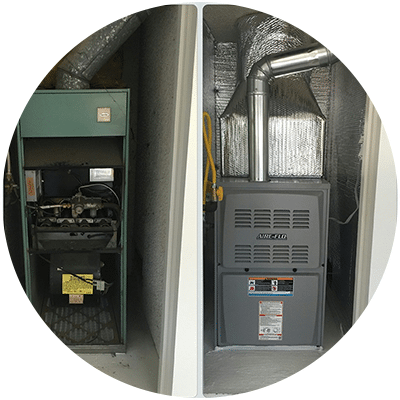
This goes without saying, but you should never see water leaking from your furnace. Ever. This is a solid indicator that something is either dripping, leaking, or not draining properly. Luckily, most of the time this is just a minor problem that can easily be serviced.
Causes of Condensation
While cooling, the evaporator coil and the suction line can create condensation. This is why it is important that these components are properly sealed and insulated. If the insulation on the suction line is missing, it can start leaking. Make sure your coils and suction lines are tight and insulated.
The evaporator produces a lot of condensation during the summer, which eventually makes its way down the coil and into the pan for drainage. Depending on your unit and home setup, the drain funnels outside of the house or into the ground. It can also drain into a condenser pump that will eventually take condensation out to a drainage pipe. If any of the components in this drainage process are dirty, then water can begin to drip onto the floor. This makes yearly cleaning maintenance of your coils extremely important.
No matter where your furnace is installed or what type of furnace you have, it will produce condensation. Furnaces have to drain water in order to work properly, and you or your service technician have to perform yearly maintenance to ensure there's no dirt or blockages in your coils or drainage system.
Be vigilant about your furnace leaking water onto the floor and go through the troubleshooting process of checking your coils and suction line. If there's any water leaking onto the floor, it's usually a simple fix, but if not, please call your local furnace repair technician.
Call NexGen Today
Our expertise and commitment to customer satisfaction make us the leading HVAC company in Southern California. To learn more about our equipment, services, and protection plan,
book an appointment online or call
888-277-0415.
4 Summer AC Maintenance Tips to Keep Your AC Running Smoothly
It’s almost summer and we all know what that means for Los Angeles residents. It’s time to do a checkup on your AC unit. What this also means for Los Angeles residents as well as the majority of Southern Californians is that utility bills will start going up! If you’re reading along, don’t worry, our 4 AC maintenance tips will help you to get your air conditioning unit ready for summer. We’ll cover efficiency, air filters, maintenance, and other factors.
4 Tips to Make Sure Your Air Conditioner is in Top Shape This Summer
1. Professional AC Services
Did you know your AC unit can lose a percentage of its efficiency every year that it goes without professional HVAC servicing? Your 21 SEER unit could be functioning at the efficiency of a 16 SEER unit in just a few years. That’s right! Follow your AC unit’s recommended maintenance schedule and make sure you call a licensed HVAC service technician whenever the need arises. Regular maintenance, though the most expensive HVAC tip on this list, is the most effective way to keep your HVAC unit running in top shape for years to come. Service techs can ensure your coils are clean, refrigerants aren’t leaking, voltages are running properly, and fans are blowing.
2. Check and Replace Filters
This one’s a no-brainer. Filters will eventually get clogged up with dust and debris which can be detrimental to your air conditioning unit. If the airflow is clogged enough it can cause your AC unit to ice over, which is an expensive fix. Failing to replace your air filters is a one-way ticket to a malfunctioning AC unit.
3. Schedule your Thermostat
Take the time to schedule your thermostats to run at the right temperatures based on the heat of the day. If you’re away from home for most of the day, let’s say for work, have the AC turned off and set to start cooling your home an hour or two before you get home. That way, you’re saving energy but still priming your home for some level of comfort for when you get home. Most traditional thermostats have a very annoying user interface for setting a cooling schedule for your home. If you want a slight upgrade, we’d highly recommend a smart Wi-Fi-connected thermostat so that you can set your summer cooling schedule from anywhere, right on your smartphone.
4. Find Some Shade
If you have a split system AC unit where the condenser is outside, usually somewhere in your side yard, we highly recommend covering the condenser with as much shade as possible. Your AC unit’s condenser coil is where all the heat from your home is dissipated into the outside air. Making sure you keep your condenser cool will help it work much more efficiently.
By following these 4 summertime AC maintenance tips, you can make sure your electric bills are low and your AC unit is working properly. We hope these 5 HVAC tips were helpful and that you’re ready for this coming Los Angeles summer.
Call NexGen Today
Our expertise and commitment to customer satisfaction make us the leading HVAC company in Southern California. To learn more about our equipment, services, and protection plan,
book an appointment online or call
888-277-0415.
What is a Good SEER Rating? SEER Rating Meaning and Importance
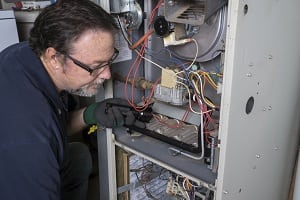
A SEER rating is the maximum rating of efficiency for your HVAC unit. This means that though the SEER rating displays a certain number, it’s not always working at that number - the SEER rating number only displays the maximum level of efficiency it can operate at.
SEER ratings are super simple if you just think about them the way you think about MPG in a car. Your car displays a certain MPG, but if you're revving the engine and speeding down the interstate, you're probably not going to get the listed MPG. Apply this concept to your AC unit, and you can see how constantly changing your home's temperature can result in a decrease in efficiency and a suboptimal SEER rating.
Are High SEER Ratings Worth it?
If you've heard the common sales pitch "this SEER rating will pay for itself in 10 years", or something like that, then we hope you haven't fallen for this. Remember, the SEER rating is a measurement of maximum efficiency. It's the limit of your HVAC unit. This means that if you are putting some heavy usage on your AC unit, then you're definitely not getting that high SEER rating number that is labeled on your unit.
In all honesty, we'd prefer to be the HVAC contractor that achieves success by customer trust and long-term repeat customers, not sales pitches on expensive high SEER equipment - that's why we're telling you all of this. In fact, we'd prefer it this way, otherwise, our customer service line would be flooded with irate customers. We don't want that, you don't want that - let's move on.
Upgrading Your Condenser to a higher SEER Rating Does NOT Make Your Entire System that SEER Rating
Many of our customers wonder how they can save money while at the same time upgrading their SEER value. The biggest misconception out there is that you'll improve your SEER rating by purchasing a higher SEER condenser. Well, you can't! You can't just upgrade one HVAC component at a time and expect a higher SEER rating. Not to mention that many components are not compatible with each other causing a whole other batch of headaches to deal with. Stick to this rule of thumb - if you really want that higher SEER rating, have an entirely new HVAC system installed, please.
We hope this sheds some light on SEER ratings and that you have all the information you need to make an informed decision about your new HVAC installation, repair, or maintenance. Thank you again for reading and please call or contact one of our NexGen technicians for any questions you may have about SEER value or any HVAC-related concerns.
Call NexGen Today
Our expertise and commitment to customer satisfaction make us the leading HVAC company in Southern California. To learn more about our equipment, services, and protection plan,
book an appointment online or call
888-277-0415.
Should I Get a Smart Thermostat? We Say Yes!
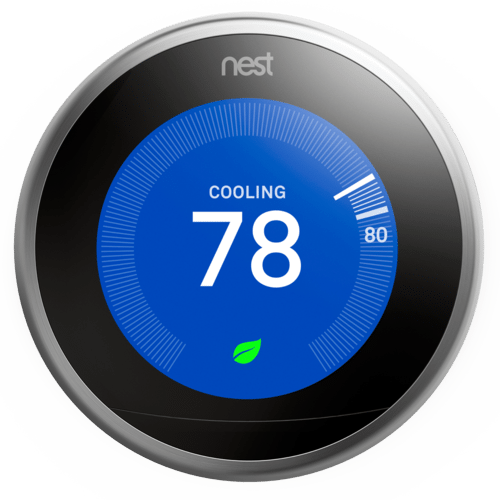
What are smart thermostats for?
A smart thermostat, also known as a wi-fi connected thermostat or IoT thermostat, functions no differently than a traditional programmable thermostat but it's ability to be controlled by your smartphone sets it apart as a superior product. The level of control you'll have with a smart thermostat is well worth the investment.
Can you really save money with a smart thermostat?
Wondering how much money you can save with a smart thermostat? One of our best selling IoT thermostats, the Nest Thermostat, saved the average customer about 10-12% on their electric bills. An average savings of $150 per year means the a smart thermostat can pay for itself in just under two years.
How do you save money by switching to a smart thermostat?
There's no magic here. A smart thermostat monitors, adapts, and adjusts its settings in real-time to best optimize your home's comfort and electrical usage. This maximizes the efficiency of your HVAC system. You'll save money when your smart thermostat slightly adjusts you heating and cooling throughout the day.
How much does it cost to install a smart thermostat?
Smart thermostats are not that expensive to install. Depending on the complexity of your HVAC system, there may be some variability in your installation price, but for the most part it should be a fairly straightforward procedure. A basic installation may cost $99-$250, while a more advanced installation can range from $200-$300.
Can installing a smart thermostat be a DIY job?
For most systems the a Smart thermostat is easy to install on your own. If you have a more complicated HVAC system or if you'd just like some help, you can have a licensed contractor install your thermostat.
Is a programmable thermostat worth it?
Programmable thermostats were created to help you save on heating and cooling costs, which explains why many homeowners invest in them. The efficiency of a smart thermostat comes down to whomever is in control of the thermostat, and whether they are using it correctly or pushing the temperatures to extremes.
Call NexGen Today
Our expertise and commitment to customer satisfaction make us the leading HVAC company in Southern California. To learn more about our equipment, services, and protection plan,
book an appointment online or call
888-277-0415.
Why is My Air Conditioner Not Working?
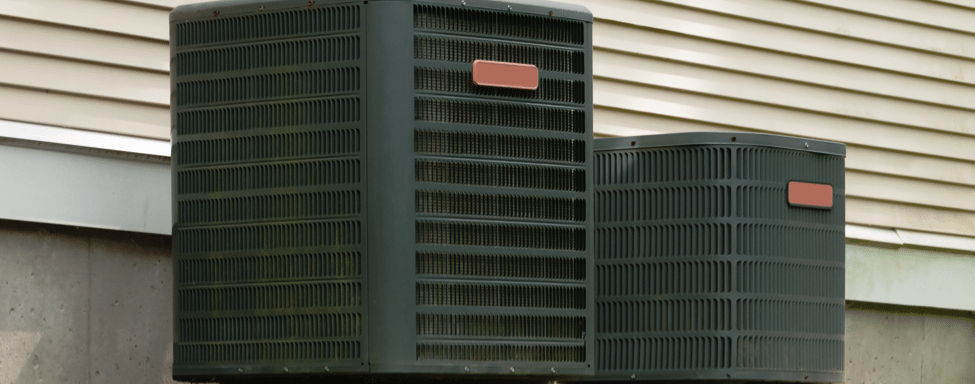
Why is cold air blowing when the heat is on?
Try changing your air filters then check to see if your HVAC system starts blowing warm air. If the issue continues, please call a technician as the system may overheat leading to expensive repairs or replacement. If your furnace is a gas furnace, check to see if your pilot light is out.
How to fix a heat pump blowing cold air
Heat pumps operate by moving hot air from outside air into your home. For those who live in colder temperatures, it may become difficult for your heat pump to heat your home as the air outside is cold. During the coldest months, your heat pump has to work extra hard in order to heat a room. Sometimes, your heat pump will actually be blowing warm air into your home, but it may just be a case of it not being warm enough to your liking. If your heat pump truly isn't working properly, check your refrigerant and air filters - that's where most heat pump issues are found.
Why my air conditioner is not cooling?
Similar to a heat pump, an AC also vents air - but this time it's funneling hot air from inside your home to the outside. Your AC is usually split into two parts: The inside part is the evaporator, which absorbs the hot air, and the outside part is the condenser, which expels the hot air. Condensers get very dirty over time and regular cleanings are necessary to ensure your home is properly cooled. If you're having cooling issues with your HVAC system, check to see if your condenser is indeed clean.
Why is it colder in one room than in the other?
If some rooms are warmer or colder than others, this is usually just a matter of balancing. All this means is that you should adjust the airflow into each room. You can do this by adjusting your vents to balance out the airflow around your home. If a room is heating or cooling much quicker than other rooms, the airflow can be reduced to that room to even things out. This will also send more air to other areas.
Call NexGen Today
Our expertise and commitment to customer satisfaction make us the leading HVAC company in Southern California. To learn more about our equipment, services, and protection plan,
book an appointment online or call
888-277-0415.