How Does a Split AC Work In a Larger House?

NexGen is known for high-quality air conditioning services in Southern California. Our licensed and insured technicians can install any type of system, including a ductless mini-split AC. Mini-split systems are often recommended for smaller homes, older properties, and those where it’s more difficult to install ductwork. Highly versatile and flexible, they can also accommodate a larger home. If you’re wondering, “How does a split AC work for a larger house?”, we’ll look at what you need to consider when setting one up.
How Does a Mini-Split AC Work?
Split ACs, whether single- or multi-zone, have one outdoor compressor/condenser unit. Depending on the system’s type and configuration, the outdoor unit can be connected by refrigerant tubing, a power cable, a condensate drain, and suction tubing to one or more indoor air handlers. Each air handler can be controlled individually, so you can set the temperature as you like for one room or area.
How Many Mini-Splits Do I Need?
You can connect up to eight air handler units to a single condenser unit. But whether this is necessary depends on your home. The system can be expanded with additional units if you decide to build a home addition or convert a basement or attic to a living space.
Whether you need a mini-split for every room depends on your needs. For example, you might like a cooler bedroom while other occupants like it warmer in their bedrooms. Or, you might want the living room warmer and the home office cooler.
As you can see, installing a mini-split AC system requires a lot of planning. But you don’t necessarily need an air handler in every room. This can be expensive in a large home. A single “zone” can include multiple rooms or even an entire floor. It just needs proper airflow to provide sufficient cooling or heating.
Mini-Split AC Size vs. Square Footage
Installing a system that’s the right size is key to how a split AC works in a larger home. A mini-split system’s size is determined by its capacity in British Thermal Units (BTUs). A BTU is a measure of how much energy it uses to remove heat. Here are some examples of room sizes and the capacity required for them:
- 150 to 200 Ft2: 6,000 BTUs
- 300 to 350 Ft2: 8,000 BTUs
- 400 to 500 Ft2: 12,000 BTUs
- 600 to 700 Ft2: 18,000 BTUs
- 1,200 to 1,500 Ft2: 36,000 BTUs¹
Consider Distances
The indoor units and condenser are connected by a conduit, which requires a 3-inch hole in an exterior wall. If you spread a mini-split AC system over multiple rooms and floors, the distance between the farthest head units and the outdoor unit affects how far the refrigerant must travel. The longer this distance, the less efficient the system can be due to friction, the energy required to pump the coolant, and heat transfer between the lines and ambient air (insulating the lines can minimize heat loss).
Depending on the make and model, refrigerant lines can extend 66 to 98 feet from the outdoor unit. This works for most houses. But if you require head units installed at longer distances, or exceed the number of units a condenser can handle, another outdoor unit can be added.
Call NexGen Today
“How does a split AC work in a larger house?” is a question we can easily answer. The experienced technicians at NexGen will explain the process and evaluate the needs of your home. Configuring different zones allows you to set the temperature perfectly for each room. To learn more about ductless heating and cooling systems, schedule a consultation, and learn about options and financing, call 833-729-9735 today.
Source:
What Types of Tools Are Needed for AC Installation?

At NexGen, we strongly advise against DIY installation, no matter what type of AC system you’ve purchased. Most air conditioning systems have numerous components. All these must be properly installed for the unit to work safely, reliably, and efficiently. Nonetheless, many clients ask us about the AC installation process, including the types of tools we use.
There are many items in a professional AC installer’s toolkit. Here’s a look at a few tools our technicians use:
- Screwdrivers/Nut Drivers: Chances are, you have a screwdriver or two sitting around in your home. At the very least, you’ll need a multi-purpose screwdriver (with flathead and Phillips bits). Cabinet Bit, Keystone Bit, Slotted Screw, or Allen Recess screwdrivers may also be needed. It’s wise to have a magnetic nut driver set as well; hex-head nut drivers may be required for some parts.
- Hacksaws: Saws help cut copper tubes and other metals. The type of metal determines the size of the blade required. Blades are rated by their size in inches and number of teeth; the thicker the metal, the more of each you’ll need. The pros use high-quality tungsten or molybdenum steel blades.
- Hand Seamers/Snips: With a hand seamer, an AC installer can bend or flatten sheet metal. Snips help cut it to the required size. Similarly, an awl is used for scoring sheet metal to help make a straight cut or punch holes in it, while a crimper helps conform metal parts to a section of piping. A high-quality tool has insulated grips.
- Wrenches: A wrench helps fasten copper or brass nuts to bolts in your HVAC system. Various-sized tools are often needed. A Box wrench has a strong, tight grip. Open-end wrenches slide onto a nut or bolt more easily. Socket-type wrenches are commonly found in homes and are suited for some HVAC fasteners. A set of pipe wrenches is also useful.
- Vises: These work tools hold parts with a jaw made of copper, aluminum, or another soft metal. The material a vise is made of avoids damaging parts being worked on during AC installation.
- Power Drills: HVAC technicians often use a cordless, battery-powered drill for versatility (they often keep a spare charged battery in their toolbox). A 24-volt drill with numerous types of bits is best. A twist drill may be used to install plastic or metal components.
- Taps: Made of hard alloy steel, a tap is used to cut threaded holes in metal parts. An HVAC tech may use a taper tap to start a cut, a plug type to cut blind holes, and a bottoming tap to cut full threads to the base of holes.
- Files: Various metal surfaces and parts may need to be cleaned and smoothed out. Single- or double-cut files can be used for this. They can range in length from 4 to 12 inches.
- Multimeter: Every AC system has a specific voltage requirement. It should be listed in the user manual, on the packaging, or on the unit. A multimeter helps verify the electrical current at the site you’re connecting the AC to matches the system’s requirements. If not, the unit won’t work properly or can cause serious electrical damage.
- Pressure Gauges: AC service techs often carry refrigeration gauges, manifold gauges, and similar tools to measure pressure and check for leaks. An experienced technician may carry multiple sets of gauges.
- Staple Gun: A staple gun allows an installer to assemble ductwork during AC installation. It also helps secure joists.
- Nitrogen Regulator: A nitrogen regulator reduces the pressure of gases or liquids so they are safer to work with. Without it, a high-pressure gas or liquid is released all at once.
- Psychrometer: A device that can measure air flow, evaluate an air mixture, and measure relative humidity.
- Safety Tools: HVAC technicians wear gloves, goggles, and masks to protect themselves from dust and debris. Ear protection is often worn when operating power tools. Heavy steel-toe work boots prevent slipping (especially when working on ladders) and offer protection if an object falls on a worker’s foot.
Hire NexGen for Your Next AC Installation
As you can see, an AC installer carries an arsenal of tools. It would be quite expensive to buy all these for a one-off install. Plus, you risk operational issues due to installation mistakes or causing damage that’s costly to fix. At NexGen, our crews are fully trained, licensed, and equipped to install any type of air conditioner. To schedule AC installation in Southern California, receive a friendly estimate, or learn about financing, call (805) 301-6788 today.
Do I Need a Water Filtration System Repair?
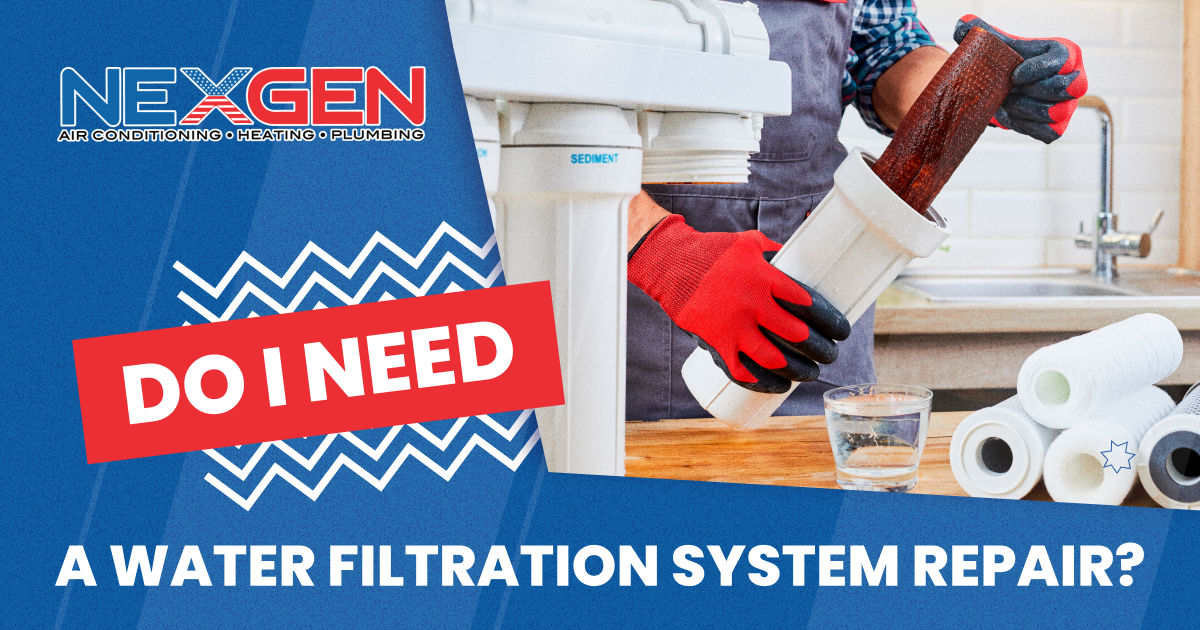
Homeowners in Southern California rely on NexGen for water filtration installation and repair. Just like any other part of your plumbing system, water filtration components need occasional service. Below, we’ll look at the signs you need water filtration system repair and when to schedule service for water treatment equipment.
The most common signs your water filtration system isn’t working properly include:
- Changes In Water Pressure: Low water pressure can signal an issue, such as a clog, in your filtration system. Submerge a shower head in a bucket of water and look for air bubbles. If you see any, the system should be cleaned or replaced. High or inconsistent water pressure warrants calling a plumber, as it can mean your water filtration system is malfunctioning.
- Changes In Water Quality: A bad taste or foul odor can mean the filter needs to be cleaned or replaced. An odor is usually harmless unless it smells like sulfur or hydrogen sulfide. Call a plumber to address potential issues with filtering components or mineral deposits. Cloudy water can mean there’s debris in the system. If the water turns yellow or brown, pipes may be clogged by mineral deposits or the water filtration system may have failed.
- Higher Water Bill: If your water bill has increased and your water usage habits haven’t changed, there could be a leak or other problem with your water filtration system. Call a plumber to check for any issues. Once they fix the problem, your water bill should go back to normal.
- White Residue on Fixtures: If your filtration system softens hard water, and you see white streaks on faucets, shower heads, and other surfaces, it may not be working properly. Other issues with your water supply can cause powdery residue to form. Always assume it’s a plumbing issue and call a professional to address it.
- Parts of Your Home Have No Hot Water: Call for help if hot water is lacking in certain rooms or areas of your home. It can indicate a filtration problem or a clog in your water heater. A plumber can determine where the problem is originating from, fix it, and replace faulty parts.
- Strange Noises: Some water filtration systems will make odd noises if they are malfunctioning. Gurgling, rumbling, or moaning sounds from pipes can occur due to a filtration problem, so contact a professional to assess the situation.
When to Get Your Water Filtration System Serviced
Keeping your water supply clean and clear requires mechanical processes. How frequently filtration equipment is serviced depends on the quality of your municipal water supply, how much water your family uses, and other factors, The type of equipment matters too:
- Reverse Osmosis Filtration Systems: The equipment can contain three or more filters and a reverse osmosis membrane, which should be replaced every three to five years. General filters should be replaced every 12 months.
- Ultraviolet (UV) Systems: Sediment and tannin contamination is common with UV systems. To maintain your filtration system, replace the bulb every 12 months and the sleeve every two years (it should also be cleaned during annual maintenance by a professional).
- Water Softeners: Minerals trapped by ion-charged media build up over time. Saltwater in the brine tank regenerates the media, which can last up to 15 years. If the tank is well-maintained, re-bedding it with new media can restore the system. Otherwise, it may require early replacement.
- Sediment Filters: Sand, sediment, and other debris the filter collects can wear out other parts of the system. The filters should be replaced every six to 12 months. The poorer the water quality, the more frequently the filter will need replacement.
- Iron Filters: Rust stains, odors, cloudiness, and a bad taste can mean there’s a high amount of iron in your water supply or the media in an iron filter is full. Replacing the media can avoid water filtration system repair. Have a professional service the filter every 12 months and ensures the media tank is in good shape.
- Tannin Filters: These remove decomposed organic materials that can stain water. To maintain a tannin filtration system, the media must be cleaned and recharged and the brine tank must be kept half full. Service is required every 12 months. But call for repairs if the water looks tea-colored.
Call NexGen for Water Filtration System Repair
We repair inline and whole-house water filtration systems so they continue to remove heavy metals, chlorine, disinfectants, pesticides, hard water minerals, and other impurities. Our technicians are fully licensed and insured and can address any problem. As a member of our X Protection Plan, you’ll receive priority service, expedited repairs, and an extended parts and labor warranty. Check back often for our latest offers. To request 24/7 service, call (833) 729-9735 today.
8 Effective Leak Detection Methods

Customers in Southern California rely on NexGen for leak detection and repair. Our plumbers employ advanced leak detection methods to find water, gas, or refrigerant leaks. The method used for leak detection depends on the type of leak suspected, the size of the system, how much water is used, and what’s currently known about the problem.
Here are a few common methods used for accurately finding leaks:
- Thermal Imaging: A thermal imaging camera detects temperature changes and displays a map of temperature variations on a screen. Whether it’s hot or cold, leaking water is typically a different temperature than its surrounding environment. Therefore, a thermography camera can find leaks behind walls, under floorboards, and even within concrete. It can also detect varying amounts of moisture where there shouldn’t be, with minimal disruption and no damage to property.
- Video Pipe Inspection: A video pipe inspection camera allows for leak detection via direct observation. Mounted to a long, flexible fiber optic cable, a small camera is inserted at a faucet, plumbing fixture, or other access point. The device transmits images to a monitor as the camera is moved through the system. If there’s a leak, the plumber can see it along with the cause, such as a hole, break, or disconnection. The location is also recorded so the technician can access the damaged section without unnecessary demolition.
- Acoustic Equipment: A plumber can use microphones and listening discs to determine the location of a water leak. By sensing sound, these devices can detect leaks located behind drywall, appliances, cabinets, and various furnishings in your home. When using a listening disc, a technician with headphones places the disc against a surface. The sound is amplified so one can hear running water, even if it’s underground or under brick concrete, or stone.
- Soil Probes: A drainage or sewer line leak can be difficult to locate. The leak can be in your home or under a lawn or yard. A soil probe lets a plumber hear a leak through grass or rock. The closer the probe is to the leak, the louder the sound. But the device doesn’t only help isolate the location of the problem. It can help determine the type of leak, its depth, and the best repair method.
- Soap Bubble Test: The soap solution is sprayed, brushed, or dabbed onto a suspected damaged part of a gas line. Simple and inexpensive, this leak detection method is highly sensitive. The plumber applies the soap solution to an area that’s potentially leaking. The presence of bubbles indicates a gas leak. Raising the gas pressure saves time and increases the odds of finding the problem.
- Pressure Decay Test: Gas supply lines are pressurized with dry air or nitrogen and internal pressure is monitored over time. A fast drop in pressure means there’s a significant leak. A slower drop in pressure indicates a smaller leak. There’s no leak if the pressure remains the same.
- Vacuum Decay/Pressure Rise Test: The part or line is depressurized. Once the pressure is low and stable enough, a test media is introduced and the resulting increase in pressure is measured. But this process only determines that a leak is present. Identifying the location of the leak requires using other methods.
- Refrigerant Sniffers: If a refrigerant leak is suspected, an instrument called a sniffer can detect the chemicals in the substance. Sniffers often use helium and hydrogen as tracer gases, as they have small molecules that can pass through very small leak points. This technique can be used for an air conditioner, freezer, or other type of refrigeration system.
Hire NexGen’s Leak Detection Experts
Our licensed, bonded, and insured plumbers can find a leak no matter where the damage is and whether it’s water, gas, or refrigerant. We use the latest equipment so breaking through walls, floors, or ceilings isn’t necessary. Using proven methods, we can provide leak detection and repair 24/7 and fix the damage promptly and correctly. To receive a free quote and evaluation, call (833) 729-9735 today.
When to Schedule an AC Leak Repair Service
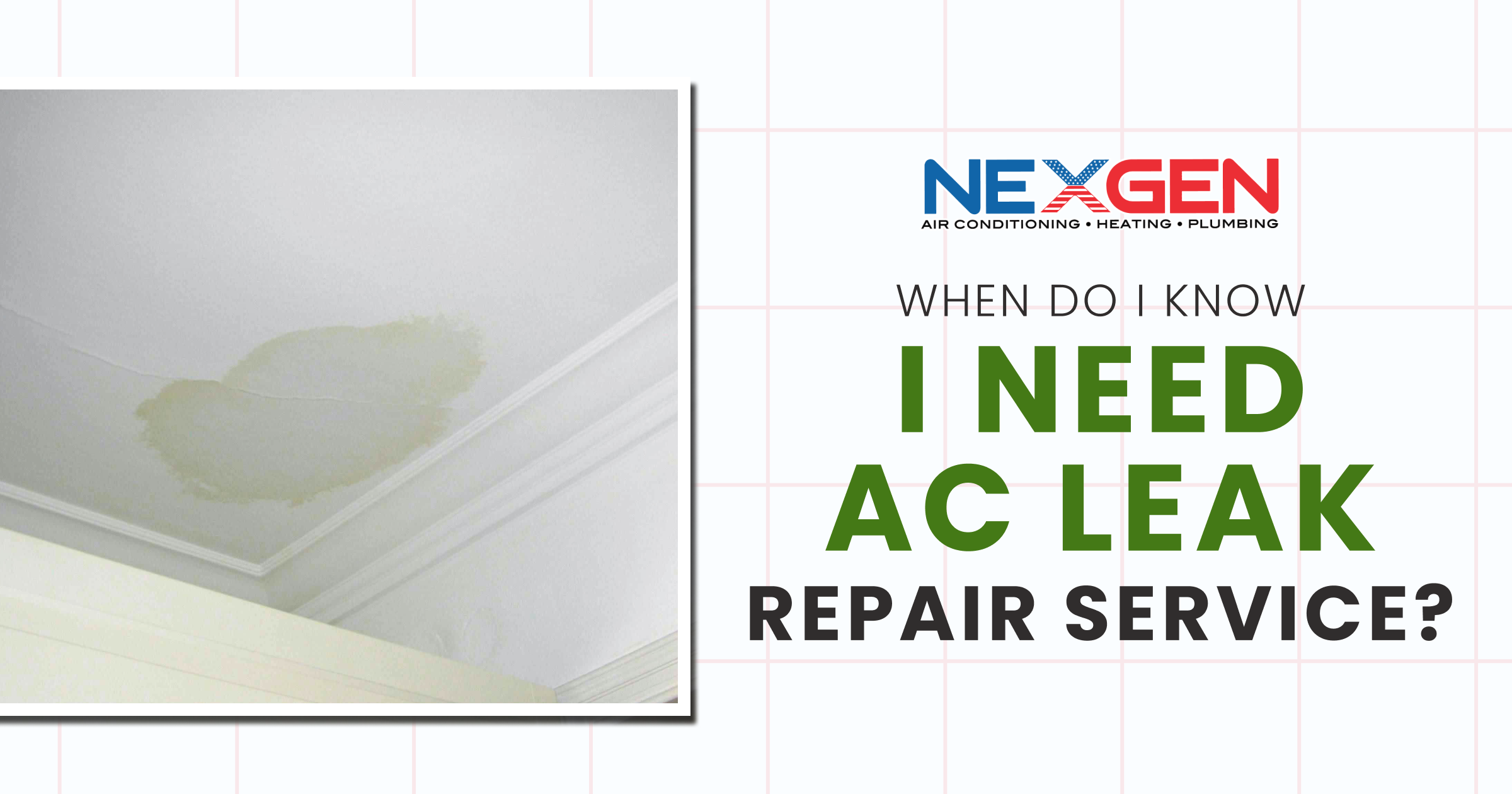
Refrigerant is what enables your AC to absorb heat and cool your home. A coolant leak can cause the system to malfunction and break down. An air conditioner can also leak water. No matter what is leaking from it, the unit needs to be repaired before it’s seriously damaged. Sometimes a leak is barely noticeable. But an air conditioner is good at signaling problems. We’ll look at the common signs of leakage so you know when to schedule an HVAC leak repair service.
Signs of a Refrigerant Leak
A refrigerant leak can originate from the evaporator coil in the air handler, a capillary tube in the condenser unit, or flare fittings where tubing attaches to an AC component. Since your AC requires refrigerant to function properly, the signs of a leak include:
- A Lack of Cooling: Your AC won’t cool the air effectively if it’s low on refrigerant. There will be less to transfer heat away. A dirty filter can prevent an AC from cooling, but if this isn’t the issue, have the unit inspected for a leak.
- Prolonged Cooling Cycles: An air conditioner should cycle in regular intervals, especially when outdoor temperatures don’t change much. But if it’s leaking refrigerant and your home doesn’t get cool enough, it will run longer to compensate.
- Hissing Sounds from the Indoor Unit: A small leak can emit a hissing sound as refrigerant escapes tiny holes and cracks. If the sound is more like bubbling, a larger leak is likely.
- Increased Indoor Humidity: The heat exchange process removes moisture from the air. But if your AC unit isn’t working effectively, its ability to remove humidity will be restricted, increasing dampness and possibly leading to mold growth.
- Frozen Evaporator Coils: When the system can’t absorb heat, the coils get colder and excess condensation can form and freeze. Ice further restricts heat transfer and can damage and break the coils in extreme cases.
- An Exhaust-Like Odor: AC refrigerant is a chemical substance. If it’s leaking, it will release fumes into the air, so the smell of acetone or a fruity or sulfur-like odor may proliferate.
- A High Electric Bill: A refrigerant leak will make your AC work harder. In the process, it will use more energy, so your electric bill will suddenly go up.
A refrigerant leak is extremely dangerous, aside from the other inconveniences it causes. The fumes are a health hazard. Seek medical help if you suspect a leak and experience dizziness, shortness of breath, nausea, loss of focus/coordination, or severe throat, nose, or sinus pain; these are signs of refrigerant poisoning.
Why Your AC May Leak Water
Air conditioners are designed to extract moisture, but a water leak is not a minor issue. It can cause major damage. Professional leak repair services can address the causes of an AC water leak, such as:
- Low Refrigerant Level: If there's less refrigerant, frost and ice can form on the evaporator coil. Water will then drip onto components below it. If your home isn’t getting cool and you hear telltale sounds of a coolant leak, your AC may need leak repair.
- Clogged Drain Line: A clogged condensate drain line is a common cause of an AC leaking water. Dust, dirt, and mold can block the line, preventing water from draining outside. The condensation backs up and has nowhere to go but into your home.
- Blocked Air Filter: If the filter is dirty enough, it can block the flow of air over the evaporator coil, causing it to get cold and freeze. Melting water can fill the drain pan and cause it to overflow. Change the air filter often to prevent poor airflow, excess wear, and damage.
- Broken Drain Pan: When an AC drain pan appears old, rusted, or cracked, have it replaced by a professional. Even if the unit is still working after 12 to 15 years, the drain pan may have worn out.
- Failed Condensate Pump: If the condensate pump breaks, it won’t pump water outside. A technician can determine if it’s working or not and repair or replace the pump as needed. This will stop water leakage and prevent water damage in your home.
NexGen Provides AC Leak Repair Services
At NexGen, our fully licensed and insured technicians can quickly troubleshoot, diagnose, and repair your AC system if it has a refrigerant or water leak. We are available 24/7 for emergencies. Whether your air conditioner isn’t cooling, won’t drain properly, or has a damaged coil, our team will fix it right the first time and avoid any further hazards or damage. Contact us online or call (833) 729-9735 to schedule AC repair.
Understanding Summer Air Conditioner Repairs
The Filter Is Clogged
Your air conditioner is on most or all of the time in summer, so the air filter will clog up more quickly. As dust and dirt get trapped, the system will become more inefficient. A clogged filter can cause it to overheat and shut down. If the unit freezes due to low airflow, it can produce less warm air or turn off.
Disruption of Airflow
When the evaporator coil freezes, there’s usually an issue that’s causing poor airflow. Air must blow over the coil to supply heat for it to absorb. Otherwise, condensation on its surface will freeze. Low refrigerant will also reduce the heat absorption rate.
A blockage in an air duct or a closed register can also impede airflow. The issue can be due to a fan problem as well. If a fan run slowly or not at all, it will reduce airflow and trigger other issues. A faulty thermostat or a malfunctioning air handler could also cause a lack of airflow.
Clogged Condenser Coils
Designed to expel warm air, the outdoor unit’s condenser coils are prone to clogging up with dust, debris, and grime, especially when air pollution is high. If a coil is clogged, it restricts heat transfer. Your AC will work harder, increasing wear and tear, which can cause it to break down or fail prematurely.
As the coils start to clog, the system will consume more energy, so your utility bills may go up. A spike in your monthly bill is a reason to call a professional. Prompt fixes can avoid more costly air conditioner repairs.
Component Failures
Your AC system’s moving parts work harder in the summer. These include the evaporator coil fan, condenser coil fan, fan motors, fan belts, expansion valve, and dampeners. A broken fan blade can reduce system performance. If your AC isn’t working properly, it may also be due to faulty wiring or a problem with a thermostat sensor. Capacitors, typically found on the unit’s circuit board, can fail due to wear and tear, or they can decline in strength, affecting system performance.
Electrical Malfunctions
Aside from an overheated capacitor, air conditioners can develop wiring, contactor, relay, transformer, switches, and other problems that disrupt their electrical flow. Since an AC runs on electricity, such an issue will prevent it from working properly, if at all. Air conditioners are susceptible to electrical problems in summer due to frequent usage and exposure to harsh conditions such as hot temperatures, air pollution, rain, hail, and falling debris.
Lack of Maintenance
Regular maintenance allows technicians to catch problems early and fix them. Breakdowns and major repairs can be avoided. If your AC hasn’t had spring maintenance, it’s at a greater risk of needing repairs in summer (that’s when it’s under the most strain). Such is also the case if the system is outdated. If your AC is over 15 years old, it may be near the end of its useful life, a time when it is most likely to need another repair. The summer heat can put the unit over its tipping point so it stops working.
Call NexGen for Professional Air Conditioner Repair
At NexGen, our licensed professionals repair all common AC problems. We’re Google Certified for Home Services and have highly experienced repair technicians who arrive with replacement parts to get your AC working as quickly as possible. We also offer warranties of up to 12 years and have financing plans available to make budgeting easy. To request air conditioner repair in your Southern California home, call (833) 729-9735 today.
Why Does My HVAC Smell Like Skunk?
Every HVAC problem invokes a sense of dread. Is it something minor, or will you spend hundreds or even thousands of dollars on repairs? Foul odors usually mean big problems. If your HVAC smells like skunk, the source may or may not be rodents, but there’s no doubt a professional should check it out.
A strong, unpleasant odor may suddenly occur for the following reasons:
Rodent Infestation
Small rodents and other animals like nesting in sheltered places. Crawl spaces and air ducts are ideal for them, especially if there’s a food source nearby. An infestation in these places can release particles, odors, and viruses into the air that circulates throughout your home.
To investigate whether you have an infestation in your HVAC system, remove the vent covers and look for signs of animal activity. Hair, food particles, and droppings are telltale signs. If the scent is coming from that area, it will be stronger when you remove the vent cover. Also, check for damage to your home’s foundation and exterior.
If one or both of these issues are present, call an exterminator and someone to clean out your HVAC system.
A Skunk Did Spray Outside Your Home
If your HVAC smells like skunk, one may have sprayed nearby, and the odor may be detectable inside. It can also reach your AC system and propagate through your ductwork. If you can determine that a skunk is outside and probably sprayed, turn off the AC until the smell dissipates. The odor should go away once you turn it on again.
Gas Leak
A skunk odor in your home should be taken seriously because of the potential for a gas leak, especially if you have a furnace or other gas appliances. Although a gas leak usually smells like rotten eggs or sulfur, methyl mercaptan (what gas companies add to make gas leaks detectable) can smell like skunk spray to some people. Natural gas is otherwise odorless but very dangerous.
If you can’t find any other source of the skunk smell, evacuate your home and call for help. The gas can make you sick and carbon monoxide may be present.
Sewer Gas
It’s not hard to confuse the smell of natural gas and sewer gas. Originating from your sanitary sewer line or septic system, these odors are created by methane combined with hydrogen sulfide and other gases. Hydrogen sulfide is produced as plant and animal materials decompose.
One way to deal with a sewer gas odor is to run a rarely-used faucet. The drain may have dried out, allowing sewer gas to back up. Letting the water run can stop this from happening. If your HVAC smells like skunk, check for underutilized plumbing fixtures. If running a faucet doesn’t fix the issue, there may be a broken drain line or clogged pipe.
Therefore, a skunk odor can be caused by an HVAC or plumbing problem, so you’ll need a professional to determine the source.
Call NexGen If Your HVAC Smells Like Skunk
Our HVAC professionals can provide AC repair and maintenance if a skunk odor is in your home. They can also determine if the issue is coming from your plumbing or sewer lines, or if there’s a potential gas leak. We can fix your air conditioning system, repair plumbing (including gas lines), and clean drains as necessary. Affordable, low-interest financing is available upon approved credit. Call (833) 729-9735 to learn more or schedule service.
How Do Tree Roots Get Into Sewer Lines?
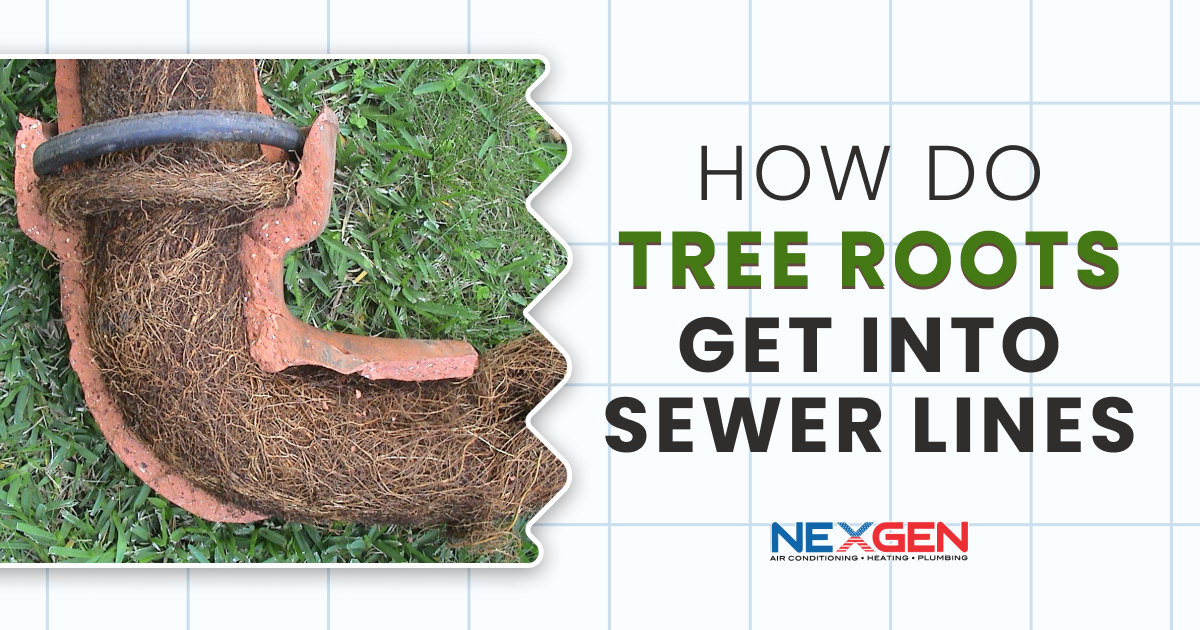
Trees can add shade and beauty to your property. They’re also good at boosting curb appeal. But they’re often not a benefit for your sewer pipes. Tree root intrusion is a more common problem than many people realize. When a customer learns their plumbing woes are caused by tree roots, they often ask, “How do tree roots get into sewer lines?”
To answer that question, let’s first look at how tree roots work. Any tree requires enough water to survive. Water contains the moisture, nutrients, and oxygen needed for a tree to grow and sustain itself (roots naturally grow toward water sources). Sewer lines contain all of these. And just like tree roots, they’re contained underground.
How do roots find the sewer line in the first place? We’ll now explain this in more detail:
The Sewer Pipe Is Damaged
A pipe can develop holes or crack due to corrosion. Ground movement and settling can cause damage as well. No matter how minute an opening is, it can release enough water to attract roots. And the roots can use this entry point to grow into the pipe, fill it up, and catch grease, oil, fats, dirt, and other materials that contribute to a blockage.
But the sewer line doesn’t have to be leaking or broken to attract tree roots.
Sewer Vapors Are Released Into the Soil
As water flows through a pipe, moisture-, oxygen-, and nutrient-filled vapors can escape into the soil, even if there isn’t a true leak, and reach nearby roots. Sensing the direction these vapors came from, roots grow toward the sewer pipe. Tree roots are strong and persistent. They can sometimes break into or crush a pipe; or, if there’s a loose joint or connection, push it apart and begin to grow inside.
Can I Stop Tree Roots From Getting Into Sewer Lines?
If tree roots have reached or gotten into a sewer line, the pipe must be repaired by a professional plumber. Only they have the experience, knowledge, and tools to resolve the problem. Avoid using chemical solutions. They can poison the tree and contaminate the environment. Plus, depending on what the pipe is made of, chemicals can do more damage. If a pipe is already weakened, chemicals can cause it to break down and fail.
However, there are safer ways to prevent tree roots from affecting sewer lines, including:
- Planting Trees Far from the Line: When you plant a new tree, know the location of your sewer line first. Don’t plant the tree nearby. The farther you position trees in your landscaping from a sewer line, the less likely they’ll affect your plumbing.
- Scheduling Annual Plumbing Inspections: During an annual inspection, a technician can run a camera through your pipes to check for blockages and damage. Small issues can be fixed before major plumbing problems occur.
- Replacing Broken Pipes: If you know there’s a drip, crack, or fracture in a sewer line or a pipe has started to corrode, have it replaced by a professional. Prompt repairs reduce the risk of having to ask, “How do tree roots get into sewer lines?” and can increase your plumbing system’s lifespan.
How Do I Know Tree Roots Are In My Sewer?
Aside from a plumbing camera inspection, there are other ways to suspect a tree root problem. Common signs of tree roots in a sewer line include backed-up toilets or plumbing fixtures, soggy areas on your lawn, and frequent drain clogs. The smell of sewage in your home means a sewer line has been compromised. Other signs of damage can range from as subtle as a gurgling toilet to visible water damage along your home’s foundation.
Call NexGen for Tree Root Removal
At NexGen, we provide safe and effective tree root removal services in Southern California. We can use a drain snake with a rotating cable, a rooter machine, or hydro jetting to break up tree roots. Our licensed, insured technicians also fully repair affected sewer lines and take preventative measures to inhibit future intrusions. To learn more or schedule professional tree root removal on your property, contact us online or call (833) 729-9735.
How To Protect Your AC When the Pollen Count Is High
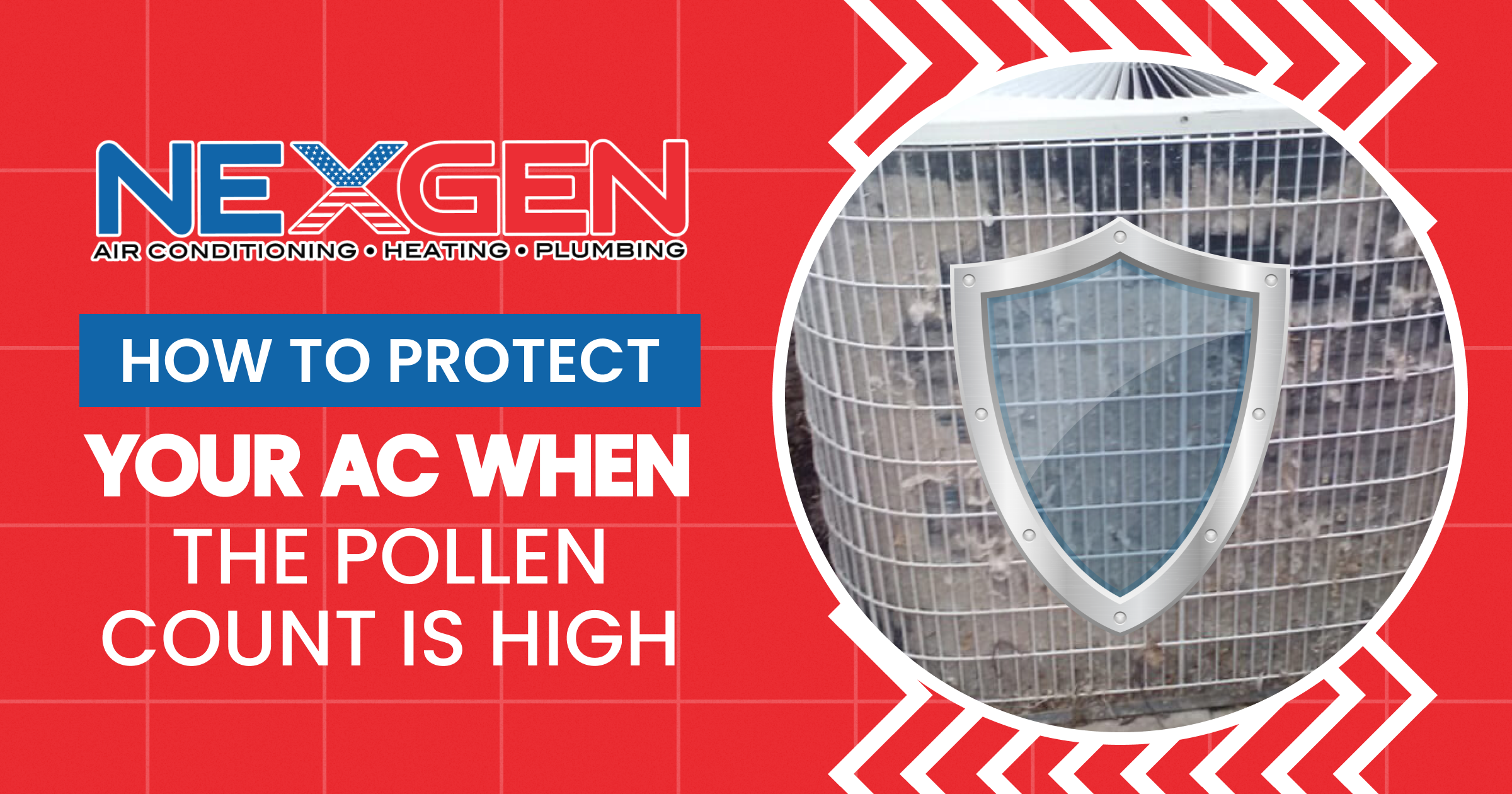
Spring blooms mean pollen is in the air. Pollen from trees, grass, and flowers stays suspended until it settles or you breathe it in. The tiny grains can trigger allergy symptoms and asthma attacks. Pollen also settles on surfaces, so it can mix with dust and build up in your HVAC system. Therefore, numerous issues can occur when the pollen count is high.
Pollen can affect your AC when it builds up on the evaporator coil. This makes it harder for the unit to absorb heat and transfer it out of your home. If pollen settles on the condenser coil, the system will struggle to release heat, causing your air conditioner to overheat, shut down, or be seriously damaged. But here are ways to protect your AC from pollen:
Close the Windows
One of the best defenses against pollen is a physical barrier. While it may be tempting to open windows in mild weather, closing them can keep pollen and other particulates out. Therefore, you can improve indoor air quality and get relief from allergies. The same pollen that triggers your symptoms also won’t reach your air conditioning system.
Clean the Area Around the Outdoor Unit
Debris, including plants, branches, and leaves, can cause pollen to blow into the outdoor condenser unit. To protect it, trim vegetation a few feet away on each side. You can also prevent plants from growing nearby by installing paver bricks or gravel around the unit.
Wash Off the AC
Rinsing off the outdoor unit with a garden hose can wash away pollen and particles. If pollen settles on the unit, it can drift or blow inside. Washing the unit at medium pressure can eliminate grains, powder, and residue so they don’t cause problems.
Change or Upgrade the Air Filter
Indoor air circulates up to six times per hour. This gives pollen plenty of opportunities to blow into your home and clog up your AC filter. Check the filter every week when the pollen count is high. Clean or replace it when the filter has a lot of buildup. The longer you wait, the more pollen, dust, and debris will collect inside.
If the filter clogs quickly, or you have allergies and indoor air quality issues, upgrade your HVAC filter. Some filters use an electric charge to attract particles. But a high-efficiency particulate air (HEPA) filter will remove very fine particles, including pollen grains.
Schedule a Duct Cleaning
The air filter should trap most pollen in the air. However, pollen grains can still circulate and eventually settle in your ductwork. They can reenter the air supply when the AC turns on. In addition, pollen and other debris can form a coating that increases air friction, forcing your AC to work harder. Just a thin layer can interfere with airflow and prevent the unit from cooling your home efficiently.
Install a Whole-Home Humidifier
Dry air makes it easier for pollen to remain suspended and circulate. A humidifier can increase the moisture content, which helps because moisture weighs pollen down. It also helps relieve dryness in your nose and throat which can exacerbate allergy symptoms when the pollen count is high. According to the U.S. Environmental Protection Agency, optimal indoor humidity levels range from 25% to 40%.
Are My Allergies Connected to My Air Conditioner?
If your allergy symptoms are due to contamination in your AC, you may experience sneezing, wheezing, and congestion; dry, itchy skin; and possibly nosebleeds. You may feel irritation and congestion while at home that goes away when you leave. If there’s a mold or mildew smell, or dust or pollen is visibly floating in the air when windows are closed, your AC is almost certainly affected.
Contact NexGen
NexGen provides high-quality HVAC and indoor air quality services, including air duct cleaning, to protect your AC and home regardless of the pollen count. Pollen can contribute to ductwork contamination and blockages. Excessive amounts of particulates in your home can be due to poor sealing. At NexGen, we can help with all these issues and protect your air conditioning system. Call (833) 729-9735 to request service.
8 Signs You Need a Drain Unclogging Service
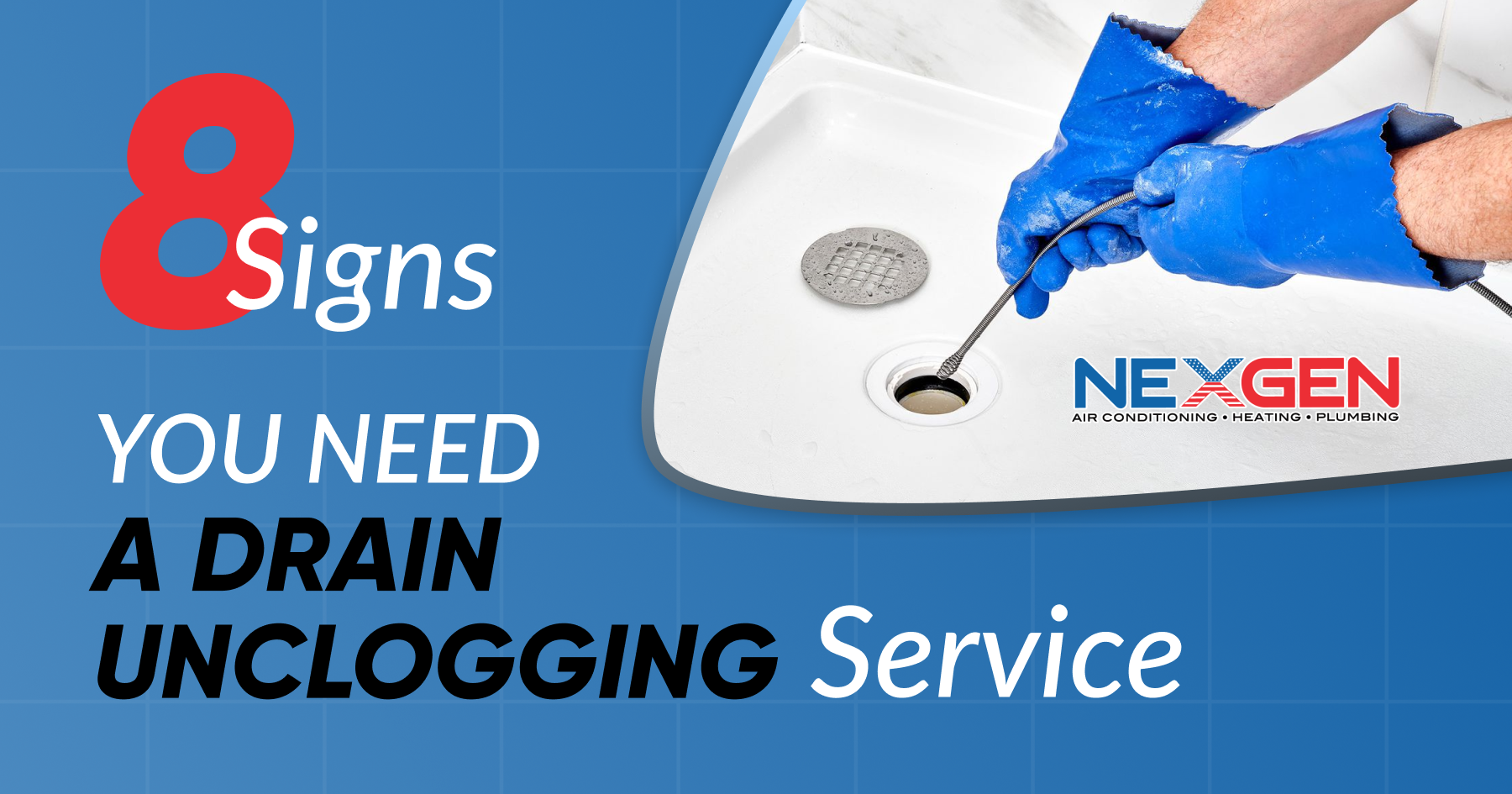
A clogged drain is one of the most common plumbing problems, and nearly everyone eventually deals with one. Sometimes you can resolve the issue with a plunger. But when do you need a professional? Here are the top 8 signs it’s time to call a drain unclogging service.
1. A Pool of Water
No matter how much you enjoy swimming and other water activities, having standing water in your home is never good. Standing water in a sink, tub, or washing machine means a drainage pipe is clogged. Dishwashers and basement floor drains can also clog. Standing water around a toilet is another reason to call for help.
2. A Slow Drain
Soap, grease, hair, and other materials build up in drains and pipes. The problem often starts gradually. Your sink or bathtub may take longer to empty. The problem will only get worse until the drain clogs up completely. So, keep an eye on those drains when you wash your hands, brush your teeth, or take a shower. If one sink or fixture is slow, the clog is probably limited to that drain; if multiple sinks slow up, there may be a sewer line blockage.
3. Clogs Occur Frequently
You cleared your sink drain a few days ago, but it clogged again. If a clog keeps recurring, a serious blockage may be forming. The standard home remedies won’t eliminate such a clog, which may be due to stubborn residue or mineral scale. You’ll need a plumber to provide a drain unclogging service to resolve the issue.
4. Your Home Smells Like Sewage
You expect your home to smell clean and fresh. If a sewer line is clogged, that familiar fresh scent is replaced by foul odors that worsen over time. Your drains may work even though food, waste, and sewage are building up inside. If the smell is coming from a rarely used sink, run the water to fill the P-trap. Otherwise, call a plumber for help. And if you have musty odors from drains, call a professional to check for and clean out any mold.
5. Pipes Are Noisy
A gurgling sound means air bubbles are forming as water pushes past a developing clog. The drain may still be working. You might also see air bubbles rising in the toilet as you run the sink faucet (indicating a possible sewer clog). The noise (and bubbles) should go away once a plumber removes what’s causing the clog.
6. Fruit Flies Are Everywhere
No food scraps are lying around, but fruit flies suddenly appear. They won’t go away no matter how well you clean the kitchen. The likely reason is food buildup in a drainage pipe. A professional plumber is equipped to remove every trace of food from the drainage line. The flies will then move on in search of other food sources.
7. Insects or Rodents in the Sink
Seeing pests in the sink is a good reason to call a drain unclogging service. Bugs and small rodents can get into drain pipes through holes and breaks. A skilled plumber can find the broken pipe, seal it, or make repairs that prevent any other pests from getting in.
8. The Water Bill Went Up
A fluctuating water bill isn’t a concern if it’s not a big change. But a dramatic increase from one month to another is a sign of a plumbing leak. While it’s more subtle than a clogged drain, it means there’s a serious problem. Have a plumber inspect your drains and pipes. They can use pipe inspection cameras to spot hard-to-find issues, fix them, and clean out your drains to prevent further problems.
Contact NexGen for Drain Cleaning Service
NexGen provides drain cleaning services in Southern California by fully licensed, insured technicians. From pipe camera inspection to drain line snaking to hydro jetting, we use the latest tools and techniques to fix clogged drains no matter what’s inside them. Whether the issue is in your sink drain or sewer line, our team will diagnose the cause and get the water flowing again. Call (833) 729-9735 to request drain unclogging service today.